
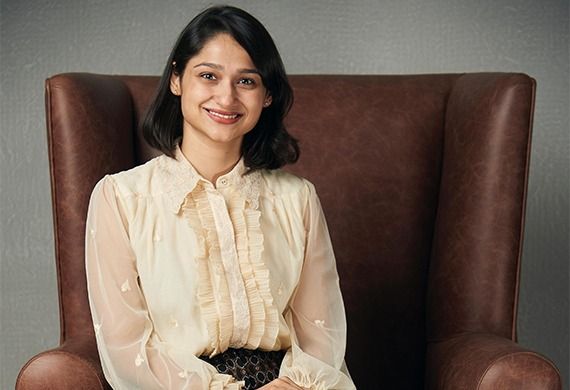

Arushi Kalsi is a globally trained footwear expert and entrepreneur, blending design innovation, disciplined craftsmanship, and sustainability. With experience in Europe and India, she draws on business acumen, artistic sensibilities, and a sporting mindset to create versatile, stylish, and responsibly made footwear.
In an engaging interaction with Women Entrepreneurs Review Magazine, Arushi shares her insights on how globally trained young entrepreneurs are reshaping India’s footwear industry through design thinking, structured systems, and sustainable practices.
To learn more about her journey and vision, read the full article below.
With your global exposure, how do you see young, globally trained entrepreneurs like yourself reshaping the future of India’s footwear manufacturing story today?
With experience across Germany, Italy, and India, I see young, globally trained entrepreneurs reshaping India’s footwear manufacturing by bringing sharper systems, disciplined craftsmanship, and global design thinking. My time in German workshops, at Peter Kaiser and Deichmann, and later in Milan, gave me a clear understanding of quality and process. Bringing that mindset home, I’ve seen how strongly Indian manufacturing can compete when paired with structure and vision. At Overdrive and Metro & Metro, my focus is on merging heritage with innovation. Our generation isn’t imitating global standards anymore — we’re building in a way that positions India to lead.
When you stepped into the ecosystem yourself, what made you feel that young entrepreneurs could introduce a fresher, more globally aware approach to everyday manufacturing decisions?
When I entered the ecosystem, I realised how much potential sat untapped on the factory floor. Germany had taught me process discipline, material research and design-led decisions, but here I saw great craftsmanship without structured systems. Simple changes — refining lasts, improving leather grading, tightening QC loops — lifted output immediately. I also noticed inefficiencies: three people doing one job, workdays starting late, and time lost simply because processes weren’t defined. In a labour-intensive industry with limited formal training, structure matters. Lean manufacturing, clearer workflows and vocational training can transform productivity. Those early wins showed me how young entrepreneurs can modernise everyday decisions.
As you settled in, how did your international training shape the way you viewed materials, design choices, and the growing need for sustainability in Indian footwear?
My international training changed the way I looked at materials, design, and sustainability. In Europe, the mindset was always “buy better, buy durable,” whereas in India it often defaults to “sasta aur accha.” I don’t believe that approach is sustainable. Footwear sits closest to your body, supports long days, and carries your full weight — you can’t compromise on material or fit.
Our international R&D team constantly researches better leathers, components, and constructions because there’s no Plan B in quality manufacturing. Yes, this effort comes at a cost, but it creates products that last longer, feel better, and reduce waste. For me, sustainability starts with making things that don’t need to be replaced quickly.
Working closely with production teams, what experiences showed you how women-led floors can influence the industry’s move toward more thoughtful and inclusive manufacturing?
Working closely with production teams, I saw how women-led floors naturally bring more discipline, structure, and responsibility into manufacturing.
Women are incredibly hardworking and precise with their time — they don’t have the luxury to waste it.
Many of them manage homes, cook, pick up children, and still arrive on the floor at 9 a.m. sharp, ready to work. They don’t idle, stretch breaks, or delay tasks.
When women lead a line, output becomes more consistent, the environment is calmer, and the floor is noticeably cleaner and more structured — much like the homes they run. Their presence pushes the industry toward a more thoughtful, inclusive, and efficiency-driven way of working.
How are globally exposedyoungentrepreneursgraduallypushingIndianfootweartoward world-standard design and responsible production practices?
From my own journey and from watching my peers, I think globally exposed young entrepreneurs are pushing Indian footwear toward world-standard design and responsible production in steady, meaningful ways. Social platforms and global awareness have made the world smaller — you can show a production line in Portugal or Vietnam to your Indian team in seconds and demonstrate what “good” looks like. Change won’t be radical; India is vast and diverse, and progress takes time. But if you’re not progressing, you’re regressing. That’s why we bring international experts to train our teams, advise on systems, and guide improvements within existing setups. Step by step, the mindset is shifting toward quality, accountability, and global benchmarks.
LAST WORD: Advice for Aspiring women Entrepreneurs in Footwear Manufacturing
For young women entering footwear manufacturing, my first advice is simple: don’t be fooled by the glamour attached to the industry. Behind every product is tough, hands-on work and you have to be prepared for that. This is a labour-intensive sector, so people management and patience become your strongest skills.
You can’t walk in expecting radical change on day one. It’s a slow, steady, sometimes exhausting process, especially in a system that has traditionally been male-dominated. But slow doesn’t mean impossible.
And strength doesn’t mean being loud or aggressive, it means being assertive, consistent, and absolutely clear about your standards. The floor respects clarity.
Be prepared, stay curious, learn the craft deeply, and hold your ground with grace. Once the team realises you’re committed, disciplined, and fair, they stand with you — and that’s when real change begins.
Current Issue
Most Viewed
- 1 Talented Indian Female Actors Who Also Moonlight as Successful Producers
- 2 7 Indian Female Podcasters You Must Know About
- 3 7 Powerful Independent Indian Women Journalists Who are Voices of Change
- 4 Ruchikaa Kapoor Sheikh: The Creative Mind Behind Netflix India's Popular Shows
- 5 7 Most Influential Women Educators India has had over the Years
- 6 11 Breakthrough Female Faces Ruling the Indian OTT Platforms
- 7 8 Timeless Female Indian Classical Dancers & their Legacy
- 8 Women's Health Startup HerMD Closing Doors Amid Industry Challenges
- 9 Real Meets Reel: A List of 11 Indian Movies based on Real Women
- 10 Rasha Hassan: A Visionary Leader On A Mission To Transform Dubai's Real Estate Landscape
- 11 5 Indian Women-led IPOs You Must Know About
- 12 11 of the Most Iconic 21st Century Women to become "The First Indian Woman"
- 13 India's 7 Funniest Women Stand-Up Comics You Must Follow
- 14 Aparna Purohit : Leading India's Most Popular OTT Platforms
- 15 How Leaders Can Balance Risk & Innovation in Today's Banking Landscape
- 16 Dr. K. Shilpi Reddy: Sculpting Healthier Futures For The Next Generation With Reforms In Obstetrics Care
- 17 Sylvia Dcosta: A Visionary Business Leader Pushing The Limits And Setting High Professional Standards
- 18 Top 5 All-Rounder Women Cricketers of India
- 19 How Tata AIA is Empowering Women with Insurance That Understands Their Needs


