
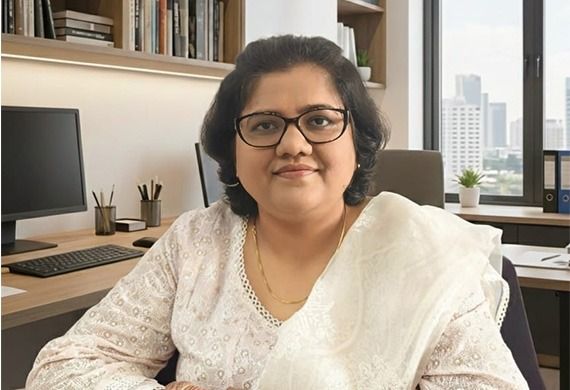

Anjali is a seasoned global logistics professional with nearly 2 decades of experience across inbound and outbound operations, 3PL/4PL management, warehousing, distribution centers, and customs. Known for building control towers, leading change initiatives, optimizing freight, strengthening compliance, and delivering resilient, cost-efficient, on-time global networks.
In an insightful interaction with Women Entrepreneurs Review Magazine, Anjali shares her views on the evolving role of packaging and supply chains. She highlights how sustainability, technology, empathy, and inclusive leadership are reshaping logistics, governance, and global collaboration while balancing scale, efficiency, and long-term responsibility across interconnected systems.
To explore her insights in greater depth and understand her leadership philosophy, read the full article below.
Packaging and logistics often operate at the intersection of sustainability and scale. How is this space evolving to balance efficiency with environmental responsibility today?
Packaging and logistics are evolving rapidly, with equal focus on efficiency and environmental responsibility. Earlier, packaging was mostly single-use and transport routes were not optimized, leading to higher cost and more waste. Today, the industry is shifting toward a circular approach—materials are reused, transport routes are fixed or planned smartly, and overall movement is more controlled and predictable.
A key change is that most packaging materials are now recyclable or reusable. Instead of disposing after one use, companies collect, clean, and send materials back into rotation. This reduces waste, saves cost, and supports sustainability goals. Rotational packaging and return loops are becoming common, especially where volumes are large and frequent.
AI and digital tools are strengthening this transformation. Predictive planning helps optimize load capacity, reduce empty trips, and avoid unnecessary movement. Data also helps forecast demand accurately, ensuring the right material moves at the right time.
In short, packaging and logistics are no longer linear but circular. Companies that reuse materials, design recyclable packaging, and use technology to plan smarter routes are leading the way—achieving scale while protecting the environment.
As a woman leader, what do you see are the greater opportunities to shape the nature of supply chain design and governance?
First, I believe leadership in supply chain is not about men or women—anyone who has skills, clarity, and balance can lead well. But if we talk about opportunities for women, there is definitely a strong space to contribute. Since childhood, many women naturally handle multiple things at once—home, studies, planning, organizing. This ability to multitask fits perfectly with supply chain work, where many activities run together like demand planning, forecasting, logistics, supplier management, and customer need fulfillment.
Today supply chains are global and far more complex. We need leaders who can think in different directions at the same time, connect the dots, and still keep people at the centre. Women are often good listeners, better collaborators, and think long-term. These qualities help in designing supply chains that are efficient, flexible, and more human in approach.
There is also a big opportunity for women to strengthen governance—by bringing more transparency, tracking risks closely, using data for decisions, and focusing on sustainability rather than only cost.
So, the opportunity is not only to participate, but to shape the supply chain of the future—one that is well-planned, more responsible, and built with both logic and empathy.
The packaging industry touches everything from manufacturing to end consumer. How are women’s perspectives adding new depth to decision-making in such interconnected systems?
The packaging industry is deeply interconnected — it links manufacturing, logistics, storage, sustainability, and the final consumer experience. In such a complex chain, decision-making benefits from a wider range of perspectives. Women, through experiences of care, responsibility, and nurturing, often naturally think about protection, usability, and safety — qualities that are at the core of good packaging design.
Rather than seeing packaging only as a material layer around a product, diverse leaders think about how it will travel, how the consumer will open it, if it’s safe for children, and whether it is sustainable after use. This brings more empathy and long-term thinking into decisions. A product survives multiple touchpoints before reaching the consumer, and packaging plays the role of “protection and care” throughout that journey — similar to how upbringing requires attention, understanding, and responsibility.
When leadership includes varied viewpoints, including women, it results in packaging that is not only technically efficient but also human-centered, safe, and environmentally considerate. This balance — performance + empathy — is what’s driving the industry forward.
Having seen logistics from factory floors to global ports, how do women leaders bring empathy and long-term thinking into operational transformation?
When you experience logistics end-to-end — from factory floors, to warehouses, to ports, and finally to the customer — you start looking at the system like it is your own product. This sense of ownership is what truly drives operational transformation. Many women leaders naturally bring this mindset. When we take responsibility, we do it end-to-end, not just for one link of the chain. We think — if this was mine, would I allow delays, safety gaps, poor planning, or waste? The answer is no.
This ownership mindset brings empathy into decision-making. We consider the shop floor worker lifting heavy cartons, the driver transporting goods in tough weather, the team managing customs at ports, and the consumer opening the final package. When we feel responsible for each step, we design systems that work better for everyone involved.
And long-term thinking naturally follows. Instead of just short-term speed, the focus shifts to reliability, sustainability, and continuous improvement. When leaders bring both empathy and ownership into logistics, transformation becomes more meaningful — not just faster, but more human, more sustainable, and more reliable at scale.
Supply chains depend on collaboration across borders. What shifts have you noticed in how women leaders build trust and drive alignment across global teams?
Global supply chains work only when different countries, cultures, and teams operate as one network. Earlier, collaboration was more transactional — information in, output out. But today, global business is driven by relationships, trust, and alignment of goals. I’ve seen a strong shift in how leaders — especially women — are enabling this change.
Women often embrace diversity more naturally. When working across borders, they don’t just push processes; they take time to understand cultures, working styles, and human emotions behind decisions. This builds comfort, not pressure, and trust grows faster. Relationship-building has become just as important as planning or forecasting, because global growth requires people to believe in each other, not just follow instructions.
Another shift is openness to change. With globalization, horizons have expanded — networking, communication, and collaboration are no longer optional.
Women leaders often bring patience, empathy, and adaptability into these interactions, which helps bridge differences and align teams even when perspectives vary.
Today, alignment is not achieved by authority, but by connection. Leaders who listen, understand, and build relationships across cultures — including women — are strengthening the future of global supply chains.
LAST WORD: Advice for women Looking to Lead in Supply Chain
I would tell women who want to lead in supply chain — the impact you can create here is huge, and the world needs more diverse thinking in this space. The journey may not always be smooth. Supply chain is fast, demanding, and unpredictable. But resilience and conviction can take you further than anything else.
Believe in your capability. You don’t need to match anyone — you need to bring your own strengths. Learn the basics deeply: planning, logistics, quality, safety, customers. Once fundamentals are strong, confidence comes naturally. Never hesitate to speak, question, or drive change. Your perspective is valuable.
Also, build relationships — this industry runs on collaboration. The networks you create today will open doors tomorrow. Stay curious, stay adaptable, and most importantly, stay consistent even when results take time.
Current Issue
Most Viewed
- 1 Talented Indian Female Actors Who Also Moonlight as Successful Producers
- 2 7 Indian Female Podcasters You Must Know About
- 3 7 Powerful Independent Indian Women Journalists Who are Voices of Change
- 4 Ruchikaa Kapoor Sheikh: The Creative Mind Behind Netflix India's Popular Shows
- 5 7 Most Influential Women Educators India has had over the Years
- 6 11 Breakthrough Female Faces Ruling the Indian OTT Platforms
- 7 8 Timeless Female Indian Classical Dancers & their Legacy
- 8 Women's Health Startup HerMD Closing Doors Amid Industry Challenges
- 9 Real Meets Reel: A List of 11 Indian Movies based on Real Women
- 10 Rasha Hassan: A Visionary Leader On A Mission To Transform Dubai's Real Estate Landscape
- 11 5 Indian Women-led IPOs You Must Know About
- 12 11 of the Most Iconic 21st Century Women to become "The First Indian Woman"
- 13 India's 7 Funniest Women Stand-Up Comics You Must Follow
- 14 Aparna Purohit : Leading India's Most Popular OTT Platforms
- 15 How Leaders Can Balance Risk & Innovation in Today's Banking Landscape
- 16 Dr. K. Shilpi Reddy: Sculpting Healthier Futures For The Next Generation With Reforms In Obstetrics Care
- 17 Sylvia Dcosta: A Visionary Business Leader Pushing The Limits And Setting High Professional Standards
- 18 Top 5 All-Rounder Women Cricketers of India
- 19 How Tata AIA is Empowering Women with Insurance That Understands Their Needs


