
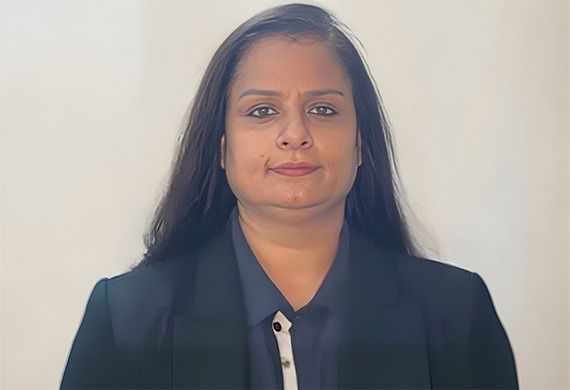

Anuradha Jain is a Bombay University–trained computer engineer whose career spans enterprise software, open-source innovation, and AI-led education for underserved communities. Her SDG-aligned work integrates technology, sustainability, and social empowerment, delivering measurable impact across education, gender equity, and circular economy initiatives.
In an insightful conversation with Women Entrepreneurs Review Magazine, Anuradha shares her perspectives on how women-led, purpose-driven technology and architectural thinking can drive sustainable transformation blending engineering rigor, project management discipline, and social impact to build systems designed for continuity, scale, and long-term change.
To learn more about Anuradha’s journey, philosophies, and real-world impact, read the full article below.
You’ve spent decades using technology as a bridge to sustainable change. Initially what made you believe that women could lead transformation?
My belief emerged the moment I stepped out of pure engineering and into the everyday realities of women in underserved communities. When I began working with Anganwadi workers, adolescent girls, transgender groups, and women facing domestic violence, I saw that once these women were given tools — whether self-defense training, awareness of workplace conduct policies, vocational skills, or digital platforms — they didn’t just rise; they transformed their families and villages. They effectively managed the 'projects' of their own upliftment and community development, showcasing natural capabilities in effective project management. Imagine the difference certified individuals can bring to this mix!”
This was where I realised that technology becomes truly powerful only when placed in the hands of women with purpose, because they naturally use it to uplift entire ecosystems, demonstrating inherent project leadership in achieving social impact and driving successful project outcomes.
As that realization evolved, which early architectural challenges taught you that women often bring a unique clarity and long-term thinking to complex system decisions?
The lesson came early, when I was designing technology solutions as one of the first independent software solution providers. Working with small and medium-sized organizations (SMEs) taught me that clarity, frugality, and sustainability aren’t constraints — they are architectural strengths and critical considerations in strategic project planning and execution.
Women founders and team members constantly pushed for solutions that were not only efficient in the moment but maintainable, secure, and scalable over the long term. This project foresight mindset resurfaced strongly years later when I architected village-level systems for plastic recycling, segregation workflows, supply-chain logistics, and last-mile distribution — proof that women intuitively design for continuity, not just completion, a hallmark of successful, sustainable project outcomes and exemplary project management.
When you moved into sustainable tech frameworks like SHERPA’s SDG guidebooks, how did your architectural mindset help translate big sustainability goals into practical, structured solutions?
When writing corporate SDG guidebooks with global teams, I relied on the architectural habit of decomposition — breaking a massive vision into manageable project targets, then into implementable components and work packages. This work breakdown structure (WBS) approach was fundamental.
These project management systems guided every field project:
Turning SDG 4 into AI-powered educational access for 70,000+ children through focused initiatives.
Turning SDG 5 into training, safety, and employment ecosystems for women via integrated project delivery.
Turning SDG 12 and SDG 13 into end-to-end recycling chains — collection, segregation, shredding, machine utilization, logistics, manufacturing, and community adoption as interconnected project phases.
I treated each SDG like a layered architecture: vision → modules → workflows → metrics → sustainability. This allowed us to define a clear project scope, deliverables, and performance indicators.
That translation from conceptual to actionable project plans came directly from my engineering roots.
And within PMI, how did your architect’s way of thinking influence the learning culture you built through mentoring and daily quiz-driven skill development?
As VP Membership and then VP Academics at PMI Pune Deccan Chapter, I approached learning with an architect's mindset: focused on building scalable, self-sustaining project management training systems designed for maximum project success. I engineered a 'micro-learning engine' through the daily PMP/ACP certification-aligned quiz series, generating over 850 questions that consistently delivered predictable outcomes. Concurrently, I co-founded the Pune Women League, creating a 'learning container' – a monthly, reusable platform designed for structured knowledge sharing and continuous engagement around project management best practices.
Our single-membership pilot was treated as a strategic product launch, emphasizing user personas, experiential value, sticky engagement, and measurable adoption.
This architectural approach fostered a culture where learning transcended episodic events, becoming an ingrained daily habit for project professionals dedicated to achieving project excellence through continuous project management skill development.
Working with universities and startups, how do you help women founders embed sustainable technology choices right from ideation to execution?
My mentorship philosophy is deeply rooted in what I term 'purpose architecture' combined with rigorous systemic thinking. I guide founders to meticulously map the entire project's impact chain – from their initial design decisions all the way through to tangible community outcomes. This is crucial for effective project initiation and stakeholder alignment.
This approach often draws from my experience in resource-constrained environments, where I champion highly sustainable, cost-effective technological choices, such as utilizing recycled materials, renewable energy, digital education, and circular waste-to-product supply chains, always prioritizing stakeholder-driven design as a key project requirement.
I emphasize cultivating a holistic, cyclical perspective rather than linear thinking, urging them to consider the interconnected effects of every project decision on logistics, user experience, long-term maintenance, scalability, and broader societal impact. Through my collaborations on SDG pilot projects with universities, PhD scholars, and student startups, I have observed that young women founders often demonstrate a powerful intrinsic alignment with sustainability. My role is to provide them with the structured architectural lens and project management methodologies needed to translate that inherent passion into robust, real-world systems and deliver successful, sustainable projects.
What key architectural principle would you share with women leaders to adopt as a guiding habit while designing systems, teams, and their own leadership journeys?
My core philosophy, which has been central to my work, is encapsulated in the principle: 'Design for continuity, not completion. This is a critical tenet in project management for achieving lasting organizational value.
This single principle — visible across every village project, every PMI initiative, and every SDG intervention I have worked on — teaches leaders to think beyond the immediate milestone of project delivery, focusing instead on enduring impact and benefit realization.
It encourages:
Building systems with inherent handover capacity for seamless project transitions.
Documenting processes comprehensively for future teams to ensure knowledge transfer and reproducibility.
Designing workflows that are resilient to potential resource gaps to maintain project momentum.
Creating change initiatives that successfully survive leadership transitions, ensuring project benefits are sustained.
Everything I have done — from developing recycling ecosystems and strategic solar-energy planning to implementing women’s self-defense programs — has been architected with continuity as its central and guiding anchor for long-term project success and societal benefit.
Current Issue
Most Viewed
- 1 Talented Indian Female Actors Who Also Moonlight as Successful Producers
- 2 7 Indian Female Podcasters You Must Know About
- 3 7 Powerful Independent Indian Women Journalists Who are Voices of Change
- 4 Ruchikaa Kapoor Sheikh: The Creative Mind Behind Netflix India's Popular Shows
- 5 7 Most Influential Women Educators India has had over the Years
- 6 11 Breakthrough Female Faces Ruling the Indian OTT Platforms
- 7 8 Timeless Female Indian Classical Dancers & their Legacy
- 8 Women's Health Startup HerMD Closing Doors Amid Industry Challenges
- 9 Real Meets Reel: A List of 11 Indian Movies based on Real Women
- 10 Rasha Hassan: A Visionary Leader On A Mission To Transform Dubai's Real Estate Landscape
- 11 5 Indian Women-led IPOs You Must Know About
- 12 11 of the Most Iconic 21st Century Women to become "The First Indian Woman"
- 13 India's 7 Funniest Women Stand-Up Comics You Must Follow
- 14 Aparna Purohit : Leading India's Most Popular OTT Platforms
- 15 How Leaders Can Balance Risk & Innovation in Today's Banking Landscape
- 16 Dr. K. Shilpi Reddy: Sculpting Healthier Futures For The Next Generation With Reforms In Obstetrics Care
- 17 Sylvia Dcosta: A Visionary Business Leader Pushing The Limits And Setting High Professional Standards
- 18 Top 5 All-Rounder Women Cricketers of India
- 19 How Tata AIA is Empowering Women with Insurance That Understands Their Needs


