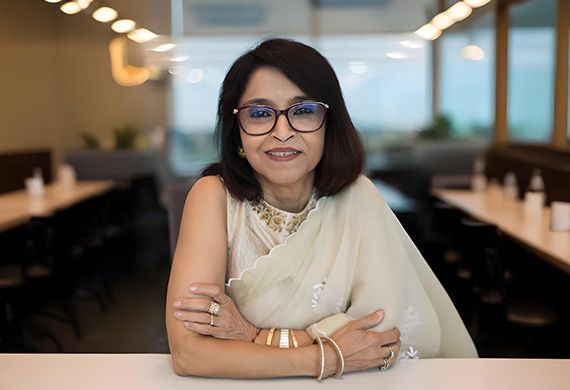

Achal Khanna brings over three decades of global leadership experience, driving growth, building inclusive workplaces, and shaping HR and business ecosystems across APAC and MENA. Recognized for empowering women and advancing leadership excellence, she continues to shape organizations through innovation, mentorship, and transformative vision.
In an insightful interaction with Women Entrepreneurs Review Magazine, Achal reflects on how AI is transforming workforce skills, leadership readiness, and the future of learning. With her global HR experience, she highlights what truly differentiates talent in an AI-driven world.
To learn more about her perspectives and transformative ideas, read the full article below.
You’ve led HR transformation across India, APAC and MENA. How do you see the nature of workforce skills changing as AI and automation become deeply embedded in organizations?
The integration of AI and automation is not eliminating jobs—it’s redefining them. The biggest shift I see across India, APAC, and MENA is toward hybrid skillsets: technical fluency combined with human depth. Skills such as analytical reasoning, digital literacy, and system thinking now need to coexist with empathy, creativity, and judgment.
The new currency of work is adaptability—the ability to learn, unlearn, and relearn continuously.
As AI handles more of the “what” and “how,” the workforce’s value will increasingly depend on why and who—purpose, ethics, and relationships. That is where the real differentiation will lie.
Reflecting on your global experience, which new or emergent skills are you watching most closely and why do they matter in this AI-driven era of work?
Among the most critical emerging skills are data interpretation, design thinking, prompt engineering, and ethical decision-making. These are not just technical capabilities but cognitive shifts that redefine how humans partner with technology. I also closely watch skills like critical reflection and storytelling with data, which help leaders connect machine insights to human outcomes.
The AI-driven era demands agility, curiosity, and emotional intelligence as much as coding or analytics. Those who can connect technology to trust, innovation, and empathy will lead organizations into a more balanced, human-centred digital future.
While guiding large teams at previous roles and now at SHRM, how have you personally helped people transition from old skillsets into those new, AI-ready capabilities?
In every leadership role I’ve held, the focus has been on mindset before skillset. At SHRM and earlier, I encouraged teams to view AI not as a threat but as an enabler of growth. We used a “learn–experiment–apply” loop where employees could safely test new tools while linking them to business outcomes.
The key is contextual learning—helping people understand why a skill matters to their role and how it improves impact.
When people see personal relevance and psychological safety in change, their transition from legacy capabilities to AI-ready competencies becomes organic and lasting.
How must organizations and HR leaders structure learning and reskilling programs to plan future roles instead of just reacting to existing gaps?
Organizations must shift from gap-based learning to anticipatory capability building. Instead of chasing current deficits, HR should co-create a “skills map” that forecasts future roles and aligns learning to business strategy. Continuous learning ecosystems—integrating micro-learning, AI-based learning paths, and mentoring—enables agility. At SHRM, we emphasize that reskilling must be data-driven yet deeply human: analytics can identify where to invest, but leaders must inspire employees to own their growth. The most successful organizations I’ve seen treat learning as a culture, not a corrective action.
As AI augments rather than replaces many jobs, what skillsets will distinguish the workforce that excels from the workforce that struggles -and how can HR develop those skills?
The workforce that thrives in the AI age will combine digital dexterity with human depth. Beyond technical skills, employees who excel will demonstrate adaptability, critical thinking, empathy, and collaborative intelligence—skills that machines cannot replicate. Conversely, those who cling to fixed expertise may struggle.
HR’s role is to cultivate a transformational mindset, encourage experimentation, and reward curiosity.
By blending technology-enabled insights with emotional and social intelligence, we can create a workforce that not only works alongside AI but amplifies its purpose for collective progress.
LAST WORD: Advice For Women Professionals Aiming to Build Future-Proof Skills & Leadership In An AI-Enabled Workplace
For women professionals, future-proofing skills means embracing both technology and self-belief. Learn the language of AI—understand its logic, applications, and limitations—but equally invest in influence, resilience, and authentic leadership. Women often underestimate their readiness for digital transformation, yet they bring invaluable human-centred thinking to it.
My advice: don’t wait for perfect expertise; start with curiosity. Seek mentors, experiment boldly, and let confidence be your constant companion. As AI redefines the workplace, women leaders who combine empathy with digital fluency will shape the most inclusive version of the future.
Current Issue
Most Viewed
- 1 Talented Indian Female Actors Who Also Moonlight as Successful Producers
- 2 7 Indian Female Podcasters You Must Know About
- 3 7 Powerful Independent Indian Women Journalists Who are Voices of Change
- 4 Ruchikaa Kapoor Sheikh: The Creative Mind Behind Netflix India's Popular Shows
- 5 7 Most Influential Women Educators India has had over the Years
- 6 11 Breakthrough Female Faces Ruling the Indian OTT Platforms
- 7 8 Timeless Female Indian Classical Dancers & their Legacy
- 8 Women's Health Startup HerMD Closing Doors Amid Industry Challenges
- 9 Real Meets Reel: A List of 11 Indian Movies based on Real Women
- 10 Rasha Hassan: A Visionary Leader On A Mission To Transform Dubai's Real Estate Landscape
- 11 5 Indian Women-led IPOs You Must Know About
- 12 11 of the Most Iconic 21st Century Women to become "The First Indian Woman"
- 13 India's 7 Funniest Women Stand-Up Comics You Must Follow
- 14 Aparna Purohit : Leading India's Most Popular OTT Platforms
- 15 How Leaders Can Balance Risk & Innovation in Today's Banking Landscape
- 16 Dr. K. Shilpi Reddy: Sculpting Healthier Futures For The Next Generation With Reforms In Obstetrics Care
- 17 Sylvia Dcosta: A Visionary Business Leader Pushing The Limits And Setting High Professional Standards
- 18 Top 5 All-Rounder Women Cricketers of India
- 19 How Tata AIA is Empowering Women with Insurance That Understands Their Needs


