
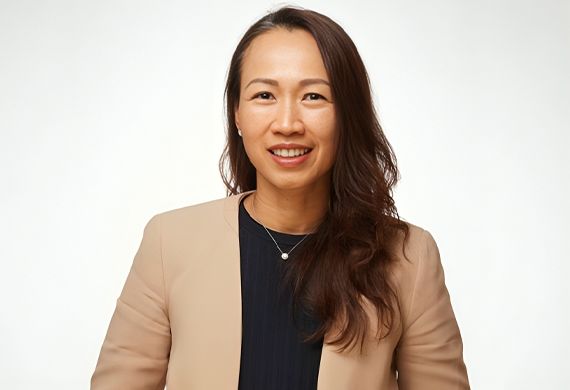

Titi Susanti is an experienced leader who leads strategic sustainability and business development in the Asia-Pacific region. She has over two decades of experience in business development, market expansion and partnerships, she has already established a successful testing company in Indonesia and possesses advanced degrees in business and environmental management.
Titi shares her insights in an engaging conversation with Charulatha M, Senior Correspondent at Women Entrepreneurs Review International Magazine, discussing how ethical sourcing, traceability and sustainability are reshaping the consumer goods and retail sector. She shares her guidance for women leaders to drive authentic, responsible and impactful change in global business.
Consumer goods and retail industry is changing rapidly. What are some major changes that you have observed in how companies approach ethical sourcing today?
Ethical sourcing has shifted from a compliance exercise to a strategic priority. Companies now focus not only on environmental issues but also on labor rights, human rights, and modern slavery risks across global supply chains. International regulations and brand requirements have made these factors integral to procurement standards.
Transparency has become non-negotiable, as regulators and consumers demand assurance that products are responsibly made.
Another key change is inclusivity where smallholders and vulnerable workers are increasingly recognized as vital to sustainable supply chains. Ethical sourcing today is about accountability, inclusivity, traceability and building long-term trust across the value chain
Many companies speak of traceability but often fail to achieve it. Do you think traceability in today's supply chains is difficult? If yes, please elaborate.
I agree that traceability remains one of the toughest challenges in today’s global supply chains. The complexity increases when smallholders and smaller suppliers are involved, as many lack the infrastructure, data management, technical knowledge, or financial resources to meet transparency demands. Regulations such as the EU Deforestation Regulation (EUDR) make this even more pressing, as companies must now provide detailed proof of sourcing origins and sustainability practices. Supporting these players through training, investment, and access to tools is vital to ensure inclusivity. Without this, visibility remains fragmented traceability gaps risk supply disruption and compliance failures.
As a leader, how do you juggle trade developments with ethical sourcing and stability of variable countries and markets?
Balancing trade developments with ethical sourcing requires resilience and long-term thinking. Markets are diverse, regulations are constantly evolving, and socio-political dynamics can shift rapidly, making stability difficult to guarantee.
Business continuity strategies play an important role, helping organizations anticipate risks, adapt quickly, and stay resilient without compromising on ethical practices.
I believe leaders must constantly balance short-term pressures with long-term responsibility. For me by taking a risk-based approach and tailoring strategies to each market’s context, businesses can manage uncertainty while ensuring stability in their supply chains.
Ethical sourcing depends on cooperation from suppliers and partners alike. How do you inspire and coach others in the value chain to sustain a permanent craftsmanship ecosystem?
Ethical sourcing only works if everyone in the value chain is committed, because you’re only as strong as your weakest link. My approach would be to inspire suppliers and partners by building trust, listening to their challenges, and offering practical support to help them succeed. It’s not about policing, but about collaboration and partnership, showing how ethical practices can strengthen resilience, reputation, and market opportunities. Through coaching, training, and sharing knowledge, we encourage suppliers to view sustainability not as a burden, but as an opportunity for growth and long-term success.
What tools can leaders use to embed ethical sourcing and traceability practices into company culture?
Leaders need to embed ethical sourcing and traceability into the very DNA of their organizations. I would say the top-down approach is best fit for this situation. When it comes from the top, it naturally cascades across teams and decision-making. Practical tools such as clear supplier codes of conduct, supplier assessments program to ensure alignment with company’s policy and code of conduct, transparent reporting systems, and risk-based due diligence frameworks help reinforce accountability.
But beyond policies, culture is built through everyday actions: rewarding ethical behavior, integrating sustainability metrics into performance, and creating spaces for employees to raise concerns. When people see that ethical choices are recognized and valued, it becomes second nature, ensuring social responsibility and becoming a core part of business culture.
What’s your advice for global women leaders to remain authentic and true to sustainability and ethical sourcing values?
For women leaders who want to make an impact, my advice is to remain true to your values while embracing challenges along the way.
Early in my career, working in a male-dominated industry, I was often underestimated because of my age and gender. What helped me was deep knowledge, resilience, and being confident. Much like in sports, where discipline and persistence helped me compete as a rock-climbing athlete, leadership is also about taking small steps consistently to reach big goals. Staying true to your principles builds trust and credibility, and I encourage women leaders to lead with authenticity, resilience, and purpose to drive meaningful change.
Current Issue
Most Viewed
- 1 Talented Indian Female Actors Who Also Moonlight as Successful Producers
- 2 7 Indian Female Podcasters You Must Know About
- 3 7 Powerful Independent Indian Women Journalists Who are Voices of Change
- 4 Ruchikaa Kapoor Sheikh: The Creative Mind Behind Netflix India's Popular Shows
- 5 7 Most Influential Women Educators India has had over the Years
- 6 11 Breakthrough Female Faces Ruling the Indian OTT Platforms
- 7 8 Timeless Female Indian Classical Dancers & their Legacy
- 8 Women's Health Startup HerMD Closing Doors Amid Industry Challenges
- 9 Real Meets Reel: A List of 11 Indian Movies based on Real Women
- 10 Rasha Hassan: A Visionary Leader On A Mission To Transform Dubai's Real Estate Landscape
- 11 5 Indian Women-led IPOs You Must Know About
- 12 11 of the Most Iconic 21st Century Women to become "The First Indian Woman"
- 13 India's 7 Funniest Women Stand-Up Comics You Must Follow
- 14 Aparna Purohit : Leading India's Most Popular OTT Platforms
- 15 How Leaders Can Balance Risk & Innovation in Today's Banking Landscape
- 16 Dr. K. Shilpi Reddy: Sculpting Healthier Futures For The Next Generation With Reforms In Obstetrics Care
- 17 Sylvia Dcosta: A Visionary Business Leader Pushing The Limits And Setting High Professional Standards
- 18 Top 5 All-Rounder Women Cricketers of India
- 19 How Tata AIA is Empowering Women with Insurance That Understands Their Needs


