
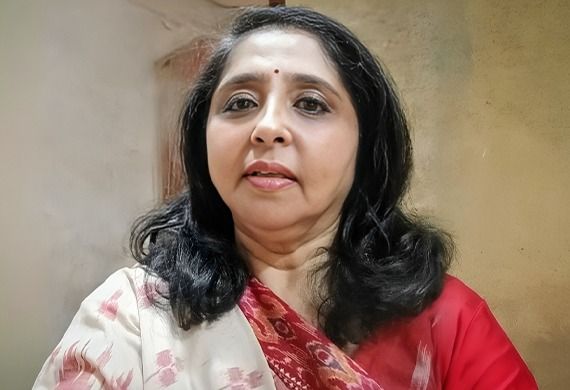

Kunda Jadhav is a senior banking leader with over three decades of experience in global operations, strategy, and transformation. A Six Sigma Black Belt and Diversity Sponsor, she is passionate about building human-centered ecosystems that combine digital intelligence with emotional depth. She supports CSR and inclusion initiatives, mentors women professionals, and continues to champion operational excellence with purpose and heart.
In an impactful interaction with Charulatha M, Senior Correspondent at Women Entrepreneurs Review Magazine, Kunda shares her perspective on operational excellence highlighting how digital transformation, human-centric leadership, empathy, and behavioural change together shape resilient, future-ready organizations in an increasingly dynamic and technology-driven business landscape.
To learn more about Kunda’s leadership philosophy and transformation journey, read the full article below for deeper insights.
With digital disruption and changing workforce dynamics reshaping the industry, how has your perspective on operational excellence matured over the years?
Indeed! Over the years, my view of operational excellence has evolved from being purely process-driven to deeply people-centric. Earlier, excellence purely meant efficiency, accuracy, and compliance. In today’s world, it is all about adaptability, empathy, and engagement. Digital disruption has automated many functions, but it has also highlighted what cannot be replaced viz - human judgment, collaboration, and purpose. The modern workforce seeks meaning as much as productivity, and that shift has redefined how we measure success.
True operational excellence now lies in creating systems where technology amplifies human potential, not replaces it. It is indeed a continuous balance between digital precision and human connection. Therefore, true excellence lies where digital precision and human connection converges.
In leading large-scale change, how do you ensure operational excellence is not only technology-driven, but equally anchored in human experience and behavioral transformation?
Technology can accelerate processes, but people sustain transformation. My approach has always been to begin with human behaviour — understanding what motivates, what creates resistance, and what builds pride. Digital tools then become enablers of that human aspiration. I invest in building narratives that explain why change matters, not just how it works. Embedding behavioural transformation means linking performance with purpose.
When employees feel emotionally connected to the transformation, technology adoption and operational discipline follow naturally.
Operational excellence, therefore, is not an IT project — it’s a cultural evolution that starts with empathy and ends in empowerment.
Can you share an example where a human-centred technique reshaped a core operational process, perhaps accomplishing both efficiency and deeper engagement across teams or customers?
An example that stands out is when in one of my earlier roles, we redesigned a customer onboarding process at scale. Instead of starting with process maps, we began with “day-in-the-life” conversations—with frontline employees and customers.
Their insights revealed emotional friction points that no metric could capture. By re-engineering the workflow and introducing intuitive digital tools, we reduced the turnaround time significantly, but more importantly, employee ownership surged. Teams began suggesting improvements proactively. The process became not just faster, but more humane. That experience reinforced my belief that efficiency and empathy are not trade-offs—they are partners in sustainable transformation.
As virtual synergy accelerates decision-making what frameworks or mindsets have helped sustain consistency, trust, and empathy across geographically dispersed operations?
In a hyperconnected world, I have learned that digital synergy without emotional coherence leads to fatigue and fragmentation. To sustain trust and alignment across regions, I focus on three elements — clarity, cadence, and connection. Clear goals provide direction and purpose, regular cadence builds rhythm and discipline, and connection fosters trust and transparency. I encourage authentic dialogue and visible leadership — people need to feel seen, not just be online.
At one point, I initiated a “Walk the Talk” series – stepping out of the office with team members, one by one, for open conversations during short walks. Those sessions brought me closer to my teams, built trust, and revealed more insight than formal reviews ever could. The mindset shift is from managing tasks to enabling presence, Virtual synergy thrives when we humanise technology – and connection begins with genuine conversations. - using it to bridge distances, not widen divides.
How can a leader cultivate a culture where operational excellence is viewed not as a compliance goal, but as a continuous, human -powered evolution of the way the organisations operate?
Culture is shaped by what leaders reward, recognize, and repeat. The leaders should try to make operational excellence a living narrative — not a checklist; also, to celebrate small wins, amplify stories of process innovation, and link improvement to pride, not policing. When teams see how excellence enhances their own sense of value and customer impact, they begin to own it.
I once learned from a mentor that clarity is the highest form of care. When people under ‘why’ behind excellence, they own the ‘how’. My mantra has been –
operational excellence should make people feel capable, not constrained
When employees experience that shift, excellence becomes self-sustaining — a shared way of thinking, not a corporate mandate.
LAST WORD: Advice for Women Leaders Aspiring to Drive Operational Transformation
My advice to women leaders is to lead with both vision and vulnerability. Operational transformation is not just about mastering systems; it is about mastering self-awareness. Use empathy as your compass, foresight as your map, and resilience as your anchor. The pandemic reminded us that leadership is not about having all the answers but about creating spaces for people to adapt, learn, and stay connected amid uncertainty. In a digitizing world, technology may have kept us working, but empathy kept us together. So, blend strength with sensitivity, structure with flexibility, and most importantly- never underestimate the power of listening! My biggest lesson learned: ‘even in disruption, humanity is the most enduring form of excellence’
Current Issue
Most Viewed
- 1 Talented Indian Female Actors Who Also Moonlight as Successful Producers
- 2 7 Indian Female Podcasters You Must Know About
- 3 7 Powerful Independent Indian Women Journalists Who are Voices of Change
- 4 Ruchikaa Kapoor Sheikh: The Creative Mind Behind Netflix India's Popular Shows
- 5 7 Most Influential Women Educators India has had over the Years
- 6 11 Breakthrough Female Faces Ruling the Indian OTT Platforms
- 7 8 Timeless Female Indian Classical Dancers & their Legacy
- 8 Women's Health Startup HerMD Closing Doors Amid Industry Challenges
- 9 Real Meets Reel: A List of 11 Indian Movies based on Real Women
- 10 Rasha Hassan: A Visionary Leader On A Mission To Transform Dubai's Real Estate Landscape
- 11 5 Indian Women-led IPOs You Must Know About
- 12 11 of the Most Iconic 21st Century Women to become "The First Indian Woman"
- 13 India's 7 Funniest Women Stand-Up Comics You Must Follow
- 14 Aparna Purohit : Leading India's Most Popular OTT Platforms
- 15 How Leaders Can Balance Risk & Innovation in Today's Banking Landscape
- 16 Dr. K. Shilpi Reddy: Sculpting Healthier Futures For The Next Generation With Reforms In Obstetrics Care
- 17 Sylvia Dcosta: A Visionary Business Leader Pushing The Limits And Setting High Professional Standards
- 18 Top 5 All-Rounder Women Cricketers of India
- 19 How Tata AIA is Empowering Women with Insurance That Understands Their Needs


