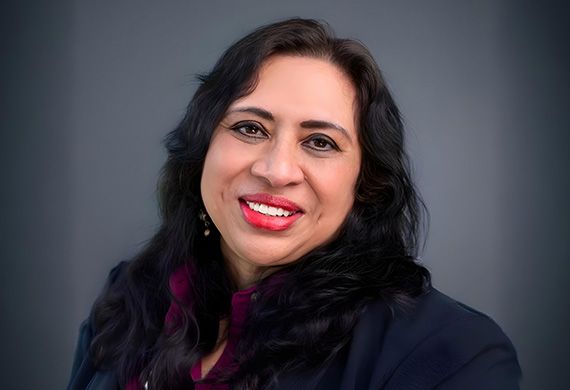

With over three decades of leadership experience, Ranjana Maitra has shaped businesses in the fields of Healthcare, Life Sciences, and Education. She is renowned for driving innovation, digital transformation, and global growth. She champions inclusive leadership and helps organizations thrive across international markets.
In an impactful interaction with Women Entrepreneurs Review Magazine, Ranjana shares her views on how global education, mentorship, and immersive experiences empower women to lead with confidence, embrace STEM and innovation. She also talks about turning opportunities into impact—guiding young women to emerge as bold, capable leaders shaping a greater inclusive and connected world.
To know more about Ranjana’s leadership journey, thoughts on global education and advice for young women in India and SEA, read the following interview.
How are global education programs evolving to empower women students to step confidently into leadership roles across borders?
Global education programs today are evolving in profound ways to empower women to step confidently into leadership roles across industries. Increasingly, universities are designing initiatives that blend academic excellence with purpose-driven leadership, cross-cultural engagement, and real-world exposure.
For women, these experiences go beyond academic achievement. They serve as platforms to build confidence, networks, and a global mindset. At the University of New Haven, we offer an innovative Women in Leadership micro credential that enables women to develop strategies and interpersonal skills that position them for greater career success.
Exposure to diverse perspectives and new problem-solving approaches helps students reimagine leadership not merely as a title, but as a way to create impact through collaboration, empathy, and innovation.
How did your personal experience of pursuing global education empower your leadership journey?
I was fortunate to be raised in a progressive family that rose above stereotypes and encouraged both my sister and me to pursue our ambitions. I had the privilege of accessing global education and earning my MBA at the University of New Haven, Connecticut, in the early 1990s something quite uncommon for women at that time. My family’s encouragement gave me the courage to follow my dreams.
The experience of living and studying in the U.S. expanded my worldview and opened doors to opportunities I had never imagined. It was a defining moment that sparked a lifelong commitment to learning. Learning enabled change, opened new doorways, and inspired me to continuously evolve. There was no looking back, the dye had been cast.
In my corporate career spanning 28 years at TCS and Wipro, I could easily step into global roles across continents because my educational foundation was strong. Understanding culture has been instrumental in managing diverse global teams. My time at the University of New Haven, studying and living with international students taught me the true meaning of diversity and offered invaluable life lessons.
In my earlier corporate role, leading a global team of ~4,000 employees, these early learnings proved indispensable. Diversity is not only about culture or gender; it encompasses perspectives, mindsets, and lived experiences. How one manages a team in the Philippines is very different from leading teams in Atlanta or Bucharest, and that cultural agility stems from early exposure to global education.
Forward-thinking institutions are now embedding mentorship, leadership labs, and international immersions into their frameworks, recognizing that empowerment must extend beyond the classroom. Such initiatives allow women to connect with global role models, engage in dialogue on equity and inclusion, and build the resilience needed to navigate complex global systems.
The focus is gradually shifting from access to agency, ensuring that women not only enter global spaces but also have the power to shape them.
The true success of global education will be measured not just by how many women graduate, but by how confidently they go on to lead, influence, and inspire others.
As the world becomes ever more interconnected, education must continue to serve as the bridge that enables women to transform opportunity into leadership, and leadership into lasting social and global change.
In what ways do international partnerships provide women with exposure to different industries and early global career opportunities?
International academic partnerships today play a transformative role in creating pathways for women to explore diverse industries and pursue global career opportunities early in their professional journeys. These collaborations between universities, industry leaders, and research institutions serve as dynamic platforms where education meets experience — and potential meets opportunity.
For women students, such partnerships provide invaluable exposure through internships, joint research projects, global immersion programs, and cross-border mentorship. By engaging with varied professional environments, students gain an understanding of global industry standards, workplace cultures, and emerging technologies that are shaping the future of work.
This philosophy guides my approach as the brand ambassador of the University of New Haven, an alum and as Chairperson of the Western Region of CII’s Indian Women Network (IWN). Nurturing talent, creating opportunities, and building bridges across academia and industry empowers not only women, but the entire ecosystem that supports inclusive community and business development.
A focus on building international partnerships helps dismantle barriers that often limit women’s access to global networks. These collaborations create spaces for women to connect with professionals and peers worldwide, building confidence and competencies that transcend local boundaries. This early exposure encourages women to envision themselves not just as participants, but as leaders in global industries, from technology and finance to sustainability and the creative sectors.
Such partnerships also model inclusion by ensuring that opportunities are accessible, merit-based, and designed with a gender-inclusive lens. When institutions intentionally craft exchange programs and research collaborations to promote equity, they enable women to translate academic learning into meaningful global careers.
A case in point is the collaboration between the University of New Haven and MKSSS’s Cummins College of Engineering for Women (CCEW), Pune, on a community-focused project titled “Pyrolysis of Household Waste: A Sustainable Approach for Solid Waste Management and Production of Soil Fertilizer.” Faculty and students from both institutions have jointly worked on this initiative, with a University of New Haven team visiting CCEW Pune in March 2025 to refine design and implementation details. The project is now ready for rollout, a proud example of academic collaboration driving sustainable community impact while expanding learning horizons for women engineers.
Ultimately, international partnerships go beyond academic exchange.
They serve as launchpads for women’s leadership and innovation, equipping the next generation to shape industries and drive global progress with insight, empathy, and resilience.
In STEM and technology, how are international programs enabling women to gain practical experience and excel in fast-changing fields?
In the rapidly evolving world of STEM and technology, international education programs are playing a pivotal role in empowering women to gain the hands-on experience needed to excel in fields shaping our future. These programs go far beyond academic learning, they immerse women students in real-world problem-solving, innovation ecosystems, and cross-cultural collaboration.
By connecting universities with global research centers, technology hubs, and industry leaders, international programs expose women to emerging frontiers such as artificial intelligence, data science, biotechnology, and sustainable engineering. Through joint projects, internships, and global competitions, women students learn to apply theoretical knowledge to practical challenges, developing both technical expertise and the confidence to drive innovation.
Equally vital are the mentorship and peer networks these programs foster. Working alongside international experts and students from diverse backgrounds broadens perspectives, builds adaptability, and strengthens global professional networks. These experiences not only enhance employability but also inspire women to pursue leadership and entrepreneurship within the ever-expanding STEM ecosystem.
I have personally mentored hundreds of women students who have gone on to study at the University of New Haven, many of whom now lead inspiring global careers. I have always believed in the power of women in STEM. Even during my corporate journey at TCS and Wipro, I actively championed this cause and ensured that my business units included and promoted the highest number of women professionals in STEM roles.
The University of New Haven stands at the forefront of STEM education, offering more than 55 STEM-designated programs that equip students with the technical expertise global employers value. Nearly 60% of our female students from India are enrolled in STEM programs. The University continues to build new pathways and opportunities to increase women’s participation in STEM fields, recognizing that these careers will play a defining role in innovation, job creation, and shaping a more sustainable and equitable world. The launch of our Women in STEM initiative is a reflection of this commitment.
Through the CII Indian Women Network – Chairperson Western Region , and with the support of the University of New Haven and my President Jens Fredricksen, I am deeply engaged in driving this initiative forward to ensure that more women have access to global STEM opportunities.
As the demand for future-ready talent grows, international programs must continue to prioritize inclusivity ensuring that women have equal access to labs, research, and innovation platforms worldwide. Doing so not only nurtures skilled professionals but also inspires a generation of women who will lead with curiosity, creativity, and courage in the digital age.
How are universities integrating real-world projects and industry collaborations to equip women with skills for future-ready careers?
Universities around the world are reimagining their role and responding to a new mandate to move beyond traditional teaching and become catalysts for experiential learning and professional growth. A key aspect of this transformation is the integration of real-world projects and industry collaborations into academic programs, equipping women students with the skills, confidence, and adaptability needed for future-ready careers.
These collaborations allow women to engage directly with industry challenges, innovation labs, and interdisciplinary projects that mirror the complexities of today’s workplaces. Whether through consulting assignments, capstone projects, or startup incubators, students learn to translate classroom learning into actionable solutions, developing critical thinking, communication, and leadership abilities along the way.
For women in particular, such experiences are game changers. They provide both technical and managerial exposure, as well as access to networks and mentors who can open doors to global opportunities.
Working on projects alongside industry professionals builds credibility and confidence, helping women see themselves as equal contributors and future leaders in spaces that have traditionally been male dominated.
At the University of New Haven, we are developing a pioneering Center for Innovation and Applied Technology that takes industry collaboration to a new level. The Center will provide opportunities for companies to work directly with faculty experts and students to address real-world business and technology challenges. In India, we have also partnered with leading companies such as Forbes Marshall to bridge the gap between academia and industry. As a member of the CII Western Region Task Force for Education for the past four years, I have been deeply involved in advancing this initiative, ensuring that the academic-to-industry pipeline is inclusive and future-focused.
By embedding industry collaboration into the academic journey, universities are helping to bridge the gap between education and employability. When these initiatives are designed to be inclusive encouraging women’s participation and leadership, they create a powerful cycle of empowerment.
The result is a new generation of women graduates who are not just workforce-ready, but future-ready: confident, innovative, and equipped to thrive in an ever-evolving global economy.
How can participation in global classrooms help women students build adaptability, problem-solving abilities, and cross-cultural understanding for future success?
The concept of the global classroom has become a defining feature of contemporary education. It is within these physical and virtual spaces that ideas, perspectives, and collaborations transcend borders. For women students, participation in such environments is far more than an academic experience — it is a journey of self-discovery, adaptability, and leadership development.
In diverse, multicultural classrooms, women engage with peers from different countries, disciplines, and viewpoints. This exposure cultivates openness, empathy, and the ability to navigate complex cultural dynamics - essential skills for success in an interconnected world. Learning alongside international cohorts strengthens problem-solving abilities, as students approach challenges from multiple angles and learn to build consensus across perspectives.
Global classrooms, whether in-person or virtual, mirror the complexity of the real world. They demand flexibility, critical thinking, and emotional intelligence — qualities that prepare women to lead effectively in rapidly changing professional and social contexts. Through collaborative projects, global case studies, and cross-border discussions,
women learn to communicate with clarity and confidence while appreciating how leadership manifests differently across cultures.
Ultimately, participation in global classrooms equips women with the resilience and perspective needed to thrive in diverse teams, industries, and communities. It transforms them from learners into global citizens — equipped not just with knowledge, but with the capacity to connect, collaborate, and contribute meaningfully in environments that value both competence and compassion.
From my own experience, I have found global classrooms to be among the most powerful learning spaces, offering real-time insights, diverse perspectives, and lived examples that shape one’s ability to lead across cultures, manage diverse teams, and excel in global roles.
What guidance would you give young women from India and Southeast Asia to make the most of global learning opportunities?
For young women from India and Southeast Asia, global learning represents far more than the chance to study abroad. It is an opportunity to expand one’s worldview, build meaningful networks, and develop the mindset needed to lead with confidence and empathy in an interconnected world.
My advice is simple: be curious, be courageous, and be committed to growth.
Curiosity opens doors.
Approach every new environment with a learner’s mindset. Observe, listen, and engage deeply with cultures and perspectives different from your own. These experiences will broaden your understanding of the world and strengthen your ability to adapt and collaborate across contexts.
Courage is equally essential.
Many young women hesitate to step outside their comfort zones, especially in unfamiliar global settings. Yet, it is precisely in those moments of uncertainty that the most powerful learning happens. Speak up. Take initiative. Embrace opportunities that challenge you - whether leading a project, presenting research, or connecting across disciplines. Growth lies on the other side of courage.
Commit to growth not just for personal advancement, but for collective impact.
Bring back insights, ideas, and best practices to contribute to your communities and countries. Global education should not distance you from your roots; it should deepen your sense of purpose and responsibility.
When young women approach global learning with openness, resilience, and a sense of purpose, they don’t just build careers. They become catalysts for change, shaping a more inclusive and interconnected future.
We are all defined by our values, choices, and actions. They determine who we are, what we do, and what we aspire to become. They make us unique, and being unique is empowering in itself.
And above all, remember the importance of giving.
We each play a part in our organizations, communities, and society. We must give as much as we receive. I am who I am today because of my mentors, parents, and many others who guided me on my journey. It is now our turn to look around, identify those who need guidance, and offer them a ladder they can climb — so that one day, they too can stand tall and inspire others. The chain must continue.
Current Issue
Most Viewed
- 1 Talented Indian Female Actors Who Also Moonlight as Successful Producers
- 2 7 Indian Female Podcasters You Must Know About
- 3 7 Powerful Independent Indian Women Journalists Who are Voices of Change
- 4 Ruchikaa Kapoor Sheikh: The Creative Mind Behind Netflix India's Popular Shows
- 5 7 Most Influential Women Educators India has had over the Years
- 6 11 Breakthrough Female Faces Ruling the Indian OTT Platforms
- 7 8 Timeless Female Indian Classical Dancers & their Legacy
- 8 Women's Health Startup HerMD Closing Doors Amid Industry Challenges
- 9 Real Meets Reel: A List of 11 Indian Movies based on Real Women
- 10 Rasha Hassan: A Visionary Leader On A Mission To Transform Dubai's Real Estate Landscape
- 11 5 Indian Women-led IPOs You Must Know About
- 12 11 of the Most Iconic 21st Century Women to become "The First Indian Woman"
- 13 India's 7 Funniest Women Stand-Up Comics You Must Follow
- 14 Aparna Purohit : Leading India's Most Popular OTT Platforms
- 15 How Leaders Can Balance Risk & Innovation in Today's Banking Landscape
- 16 Dr. K. Shilpi Reddy: Sculpting Healthier Futures For The Next Generation With Reforms In Obstetrics Care
- 17 Sylvia Dcosta: A Visionary Business Leader Pushing The Limits And Setting High Professional Standards
- 18 Top 5 All-Rounder Women Cricketers of India
- 19 How Tata AIA is Empowering Women with Insurance That Understands Their Needs


