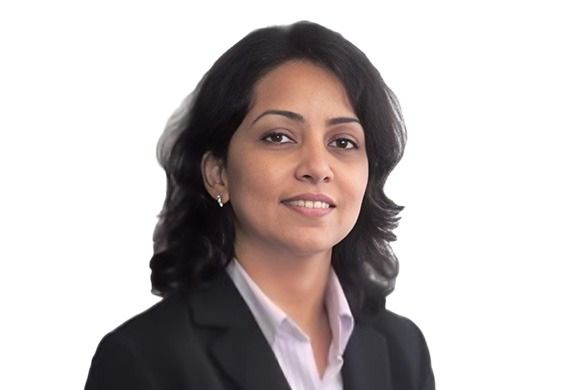

Human Resources (HR) is not an isolated function. It works at the intersection of people, business, culture, and technology. Veteran HR leader, Irani Srivastava Roy, Head of HR, India and Emerging markets, Signify, works at this intersection by balancing between empathy and business judgement. Armed with over 23 years of experience spanning HR leadership, consulting, organisational transformation, and business partnering, she has built a career across industries and geographies, with a focus on people strategy, talent, organisation design, DEI, and change management.
Irani’s journey has also shaped a broader view of leadership — one that values authenticity, adaptability, thoughtful decision-making, and the ability to balance immediate business priorities with sustainable outcomes.
In conversation with Women Entrepreneurs Review Magazine, Irani reflects on the experiences that have shaped her approach to HR and leadership, from her early years in hospitality to her current role at Signify. She also explores how AI and changing workforce expectations are influencing organisational structures, capabilities, and the future of work.
Through the conversation, she shares her perspective on continuous learning, inclusive leadership, human judgement, and creating workplaces where people and businesses can evolve together.
For deeper insights on HR leadership, read this following interview.
Q1. With nearly three decades in HR, how did your early career experiences influence the direction and professional identity you gradually built?
A. My early career took an unexpected turn from what I had imagined would be the conventional path. During my stint with the Taj Group, an interaction with my training manager changed the way I looked at HR. I saw how she could bring out the best in people and help them grow in ways that could never really be captured in a spreadsheet.
That experience made me realise that HR was not just about processes and policies. At its heart, it was about people, potential and creating an environment where individuals could do their best work. Even after my MBA, when there were several other career options available to me, I chose to follow that conviction.
Over the years, my experiences across different businesses and roles have only strengthened that belief. I have learnt that a career does not always have to follow a prescribed path. For me, purpose, curiosity and the opportunity to make a difference have been the things that have mattered most.
Q2. As your career expanded across roles and responsibilities, how did your approach to people, work, and professional growth begin to change?
A. As my career evolved, my understanding of HR changed quite significantly. Early on, I was more focused on getting the processes right. With experience, I began to see that HR cannot operate in isolation from the business. What we do has a direct bearing on the organisation, its culture and ultimately its performance.
Over time, I also became a big believer in systems thinking. I learnt to look beyond the immediate question or problem and understand the interdependencies between people, business priorities, culture and the wider organisation. Sometimes the right answer is not the quickest answer. You have to balance what needs to be achieved in the near term with what will create sustainable outcomes over the longer term. That broader perspective has probably been one of the most important shifts in my approach to work and leadership.
I have also become much more conscious of the balance between empathy and business judgement. You need to listen to people and understand their perspectives, but you also need to have the courage to make difficult decisions when they are right for the organisation. I think that balance comes with experience.
Q3. Working across diverse geographies and cultures, how did international exposure influence the way you understood leadership and workplace relationships?
A. Working across different professional and cultural environments has reinforced something very simple for me: while organisations may operate differently, people at the core are almost the same. Their contexts may be different, but their need to be heard, respected and valued is universal.
I have learnt that there is no single formula for leadership. What works in one environment may not work in another. You have to listen, observe and understand the context before deciding how you want to lead.
At the same time, I believe leaders have a greater responsibility to appreciate diverse points of view and listen consciously. Diverse perspectives do not always mean everyone will agree, and that is okay. The leader’s role is to create the space for those perspectives to be heard and then have the conviction to bring the team together and move forward with the decisions required.
As you moved into larger leadership roles, how did you develop a leadership style that remained authentic while adapting to different professional environments?
My leadership style has evolved through the people and experiences I have encountered over the years. One thing I have remained conscious of is being authentic and transparent. I have never believed in changing who you are to fit into a particular environment. At the same time, authenticity does not mean being rigid. Different people and situations require you to listen differently, communicate differently and adapt your approach.
Over time, I have come to value trust, patience and the importance of giving people the space to bring their own perspectives and strengths to the table.
I believe leadership is about creating an environment where people feel empowered to contribute and take ownership, while providing the clarity and direction needed to move forward.
For me, staying true to your values while remaining open to learning and evolving is what makes leadership authentic.
Q4. With growing exposure to business transformation, how did your role in HR evolve from supporting people priorities to influencing organizational direction?
A. My view of HR has changed from seeing it as a function that supports the business to recognising that it can help shape the business.
At Signify, that means thinking about people and business questions together. What capabilities will we need in the future? What kind of culture will help us perform? How do we build continuity and develop the right talent while the business itself is evolving?
AI is also accelerating a fundamental shift in how we organise ourselves and how work gets done. It is not just changing individual jobs or skills; it is prompting organisations to rethink roles, teams, capabilities and the way work is structured. This makes HR's role increasingly important in helping shape the organisation for the future. The challenge is to bring together technology and human centered, while balancing performance, purpose and sustainable outcomes.
I see the role of HR as bringing these things together—technology and human judgement, performance and purpose, business needs and what is right for people.
Q5. As workforce expectations continue to change, how has your own career journey shaped the way you think about adaptability and continuous professional growth?
A. My career has taught me that you can never assume you have figured everything out. The moment you start believing that the world changes around you. That is why I have always believed in staying curious and continuing to learn. Technology is changing, businesses are changing and what people expect from their workplaces is changing. We have to keep learning if we want to remain relevant.
In recent years, I have deliberately spent time learning about design thinking and agile ways of working and applying some of those approaches in my work. I also read extensively and write regularly. Both help me step back from the day-to-day and think differently.
For me, adaptability is not just about responding quickly when something changes. It is about being willing to learn, question what you already believe and remain open to people and ideas that may be different from your own.
Q6. As a woman in senior leadership, how have you approached building a career that reflects both your professional aspirations and personal values?
A. I have been fortunate to be shaped by some very strong women. My grandmother and my mother were both fiercely independent. They had strong opinions, strong convictions and never felt the need to apologise for being ambitious.
They taught me something that has stayed with me: ambition and nurturing do not have to be opposing choices. You can care deeply about your family and still want to build something meaningful professionally. They also taught me that having a point of view is important. You do not always have to take the most conventional path simply because it is the path everyone else is taking.
I have carried those lessons with me through my career. I also don't really believe in work-life balance. For me, work and life are integrated. There are different priorities at different points in time, and you learn to make space for all of them.
Outside work, my love for wildlife has always been a big part of who I am. I grew up with that interest because of my parents, and volunteering with the Palamau Tiger Reserve has given me a way to stay connected to it. It is something very different from my day job, but equally important to me.
For me, staying true to your values is not about separating your professional and personal lives. It is about being the same person in both—continuing to learn, doing work that matters to you and making time for the things and people that matter outside work as well.
Q7. For young women entering leadership today, what career mindset can help them make thoughtful choices while building credibility and long-term professional growth?
A. I would tell young women not to measure their careers against someone else’s timeline. There will always be someone who seems to be moving faster, getting promoted earlier or achieving something you have not yet achieved. That is not a useful way to look at your own journey.
Build credibility by doing good work, taking ownership and being willing to learn. Ask for feedback, even when it is uncomfortable. And do not underestimate the importance of judgement and relationships—both take time to develop.
I would also say that you do not have to become someone else to become a leader. Your empathy, your perspective and your ability to understand people are strengths. You do not need to leave those behind as you become more senior.
And don't let your career become your entire identity. The experiences you have outside work—your family, friendships, interests and the things you care about—also shape the kind of leader you become.
Most importantly, if you choose a path thoughtfully, give it your best. And if that path happens to be unconventional, don't be afraid of it. Some of the best decisions in a career are not necessarily the most obvious ones.
LAST WORD: Advice for women professionals who want to build purposeful careers while defining success on their own terms:
My own career did not follow a very planned path. My experience at the Taj Group made me realise that HR was something I wanted to pursue, and I chose it even when there were other, more conventional options available.
That has shaped my view of success. You don't always need to know exactly where you are going; you need to know why you are choosing the path you are on. Stay curious, work hard and be open to where the journey takes you.
For me, a purposeful career is one where you can look back and feel that the choices you made were true to who you are.
Current Issue
Most Viewed
- 1 Talented Indian Female Actors Who Also Moonlight as Successful Producers
- 2 7 Indian Female Podcasters You Must Know About
- 3 7 Powerful Independent Indian Women Journalists Who are Voices of Change
- 4 Ruchikaa Kapoor Sheikh: The Creative Mind Behind Netflix India's Popular Shows
- 5 7 Most Influential Women Educators India has had over the Years
- 6 11 Breakthrough Female Faces Ruling the Indian OTT Platforms
- 7 8 Timeless Female Indian Classical Dancers & their Legacy
- 8 Women's Health Startup HerMD Closing Doors Amid Industry Challenges
- 9 Real Meets Reel: A List of 11 Indian Movies based on Real Women
- 10 Rasha Hassan: A Visionary Leader On A Mission To Transform Dubai's Real Estate Landscape
- 11 5 Indian Women-led IPOs You Must Know About
- 12 11 of the Most Iconic 21st Century Women to become "The First Indian Woman"
- 13 India's 7 Funniest Women Stand-Up Comics You Must Follow
- 14 Aparna Purohit : Leading India's Most Popular OTT Platforms
- 15 How Leaders Can Balance Risk & Innovation in Today's Banking Landscape
- 16 Dr. K. Shilpi Reddy: Sculpting Healthier Futures For The Next Generation With Reforms In Obstetrics Care
- 17 Sylvia Dcosta: A Visionary Business Leader Pushing The Limits And Setting High Professional Standards
- 18 Top 5 All-Rounder Women Cricketers of India
- 19 How Tata AIA is Empowering Women with Insurance That Understands Their Needs


