
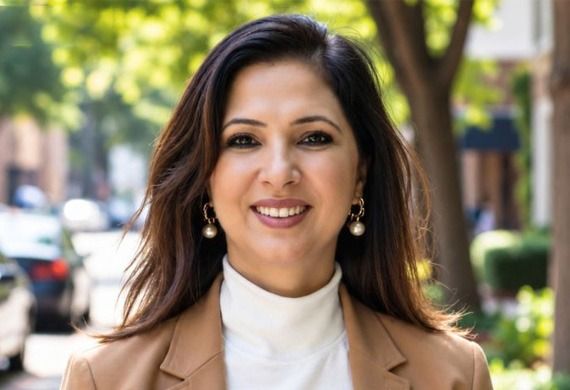

In an era where AI is rapidly reshaping workplaces, HR leadership is no longer confined to managing people processes alone; it is about preparing organizations and talent for constant transformation. For HR leader Ruchi Ahluwalia, the true challenge is not whether AI will replace jobs, but whether people are equipped to evolve alongside technology while preserving empathy, creativity, and human connection at work.
With over 25 years of experience across industries such as IT, healthcare, automobile, pharma, financial services, and engineering, Ruchi has built a reputation for turning HR into a strategic business enabler. Passionate about DEI and digitalization, she is known for driving people-centric transformation, fostering inclusive cultures, and aligning talent strategy closely with long-term business outcomes.
In an engaging interaction with Women Entrepreneurs Review Magazine, Ruchi shares her insights on redefining HR in an AI-first world, building future-ready talent, challenging conventional leadership boundaries, and creating inclusive workplaces that balance technology, business growth, and human potential.
For deeper insights on HR leadership in the AI era, read the interview below.
Q1. As a Chief People Officer in an AI-first organization, how do you redefine human potential while balancing automation, empathy, and long-term workforce relevance?
A. I have never lost sleep over AI taking jobs. What keeps me up is the thought of people not being ready for what comes next — and that is a very different problem, one that HR leaders can actually solve.
At Digitide, we made a deliberate choice early on: let AI do what AI does well, so people can do what only people can. We built eight AI agents to handle high-volume, repetitive work across the employee lifecycle. That freed our teams to focus on judgment, creativity, and genuine human connection — things no algorithm can replicate. Alongside that, we run Digiwaive, our enterprise-wide AI skilling initiative, because workforce relevance does not happen by accident. It is designed.
The framing I keep coming back to is this: the future belongs to people who can collaborate with machines, not compete with them. When I walk our floors, I want every person to feel that their best work is still ahead of them. That is the promise we have made, and we keep it — one learning investment, one leadership conversation at a time.
Q2. Having led across diverse industries, how have these transitions shaped your ability to challenge traditional HR boundaries and influence business outcomes meaningfully?
A. Moving across six industries — pharma, automobile, financial services, healthcare, engineering, and IT — taught me one enduring truth: the fundamentals of human performance do not change, but the context always does. And it is that contextual agility that has been my biggest asset. At Carl Zeiss, I learned what operational precision really looks like. At Scania, I learned to speak the language of business outcomes fluently. At Quess and now Digitide, I learned to build HR at scale without letting it lose its humanity. Every transition meant unlearning what felt comfortable and re-earning credibility from scratch. That is uncomfortable in the moment, but it builds a kind of courage that is hard to develop any other way.
What it gave me is the ability to sit in business conversations — not just a HR ones — and genuinely contribute. I can read a P&L, challenge a strategy, and make a talent case in terms that boards actually respond to. That is not a skill I was handed. It was built, industry by industry.
Q3. You're often seen as a business manager beyond HR, how do you consciously build that identity while navigating expectations placed on women in leadership?
A. I built it by staying deliberately uncomfortable. I ask to be in rooms where HR is not expected. I read the P&L. I ask our business leaders what is keeping them up at night — not just what they need from people. The business-partner mindset is not a title you claim; it is a practice you show up for every single day.
As for being a woman in leadership — I made a decision early on to spend zero energy managing other people's perceptions. What I do instead is focus entirely on outcomes.
Consistent, visible impact has been my most effective response to limiting expectations.
It works better than any argument. What I do care about deeply is making space. Every time I take my seat at the table without apology, I am also holding it open for the woman behind me who has not yet walked in. Representation is not optics — it is infrastructure. And building that infrastructure, quietly and consistently, is something I take seriously.
Q4. As a strong advocate of DEI and digitalization, how do you ensure inclusion evolves beyond policy into measurable cultural and business transformation?
A. Policy is the floor, not the ceiling. We never confuse having a DEI policy with having an inclusive culture — those are very different things. At Digitide, inclusion shows up in our data, our promotions, our hiring slates, and our ERGs. Forty-eight percent of our leadership today is home-grown — a number that is only possible if inclusion is a consistent practice, not a periodic programme. We track diversity metrics the same way we track business metrics: with rigor, accountability, and visible consequence when we fall short. Digitalization has actually strengthened our DEI work — our AI tools remove bias from sourcing, our learning platforms are equally accessible across locations and roles, and Nikki.ai listens to every voice regardless of hierarchy. Inclusion, done right, also drives performance: diverse teams solve harder problems, and that is a business outcome I am happy to put in front of any board.
LAST WORD: Reflecting on your journey of redefining HR as a strategic driver, what advice would you offer women aiming to lead transformation at scale?
A. Three things, and I mean all of them:
Get ruthlessly curious about the business — not just your function. The HR leaders who drive real transformation are the ones who understand revenue, risk, and customers as deeply as they understand talent. That fluency is earned, not given. Go earn it.
Do not wait for permission to think big. I have rarely been handed influence. I have built it by solving problems that mattered before anyone asked me to. That is how credibility accumulates — and credibility is the real currency of transformation.
And third — invest in your people as much as you invest in your strategy. Because transformation at scale is not a spreadsheet exercise. It is a human one. The leaders I admire most are not remembered for the rooms they walked into. They are remembered for what they built once they got there.
Build something real. Be consistent. And never underestimate what your own credibility — earned one decision at a time — can quietly open up.
Current Issue
Most Viewed
- 1 Talented Indian Female Actors Who Also Moonlight as Successful Producers
- 2 7 Indian Female Podcasters You Must Know About
- 3 7 Powerful Independent Indian Women Journalists Who are Voices of Change
- 4 Ruchikaa Kapoor Sheikh: The Creative Mind Behind Netflix India's Popular Shows
- 5 7 Most Influential Women Educators India has had over the Years
- 6 11 Breakthrough Female Faces Ruling the Indian OTT Platforms
- 7 8 Timeless Female Indian Classical Dancers & their Legacy
- 8 Women's Health Startup HerMD Closing Doors Amid Industry Challenges
- 9 Real Meets Reel: A List of 11 Indian Movies based on Real Women
- 10 Rasha Hassan: A Visionary Leader On A Mission To Transform Dubai's Real Estate Landscape
- 11 5 Indian Women-led IPOs You Must Know About
- 12 11 of the Most Iconic 21st Century Women to become "The First Indian Woman"
- 13 India's 7 Funniest Women Stand-Up Comics You Must Follow
- 14 Aparna Purohit : Leading India's Most Popular OTT Platforms
- 15 How Leaders Can Balance Risk & Innovation in Today's Banking Landscape
- 16 Dr. K. Shilpi Reddy: Sculpting Healthier Futures For The Next Generation With Reforms In Obstetrics Care
- 17 Sylvia Dcosta: A Visionary Business Leader Pushing The Limits And Setting High Professional Standards
- 18 Top 5 All-Rounder Women Cricketers of India
- 19 How Tata AIA is Empowering Women with Insurance That Understands Their Needs


