
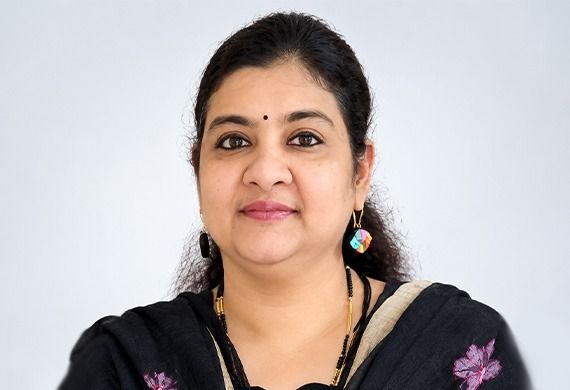

For decades, workplace inclusion has been measured by presence: how many seats at the table are filled. But presence without structural change rarely means belonging. Real inclusion isn't about inviting people into rooms built without them in mind; it's about redesigning those rooms altogether, dismantling the biases and systems that quietly decide who gets heard, promoted, or expected to adapt just to survive.
HR leader, Gayathri Shankar’s perspective on leadership reflects exactly this shift—from managing representation to engineering access. Drawing on 25-years of experience in human resources and organizational strategy, Gayathri argues that authentic inclusion cannot be delegated to policy alone; it must be embedded into how a business operates, decides, and grows.
Gayathri Shankar, Head Equality, Diversity and Inclusion, Ramboll, brings 25 years of experience across multinational organizations, with specialization in strategic and operational HR, business partnering, talent management, and organizational planning.
In an insightful interaction with Women Entrepreneurs Review Magazine, Gayathri talks about her journey as a leader and the lessons learnt along the way. She talks about influencing business decisions beyond HR, advancing equality and inclusion, and creating workplaces where women can lead authentically and make a lasting impact.
Read the complete article for deeper insights on Gayathri’s leadership philosophy as an HR leader.
Q1. When you began your HR career 25 years ago, how did your understanding of leadership evolve beyond career advancement into creating workplaces where women could genuinely belong and thrive?
A. Early in my career, leadership meant driving performance, climbing the ladder, and mastering systems. But over two decades in human resources—and seeing firsthand who had a seat at the table and who was left listening from the margins—my definition shifted fundamentally.
Real leadership isn't about personal upward mobility; it's about structural access.
I realized that offering women a seat at the table was only the first step. True inclusion requires changing the room itself—dismantling systemic friction, building cultures of psychological safety, and creating environments where women don't have to alter who they are just to succeed.
Leadership evolved from managing talent to actively shaping ecosystem spaces where women don't just survive, but genuinely belong, influence, and thrive.
Q2. How did transitioning across talent, learning, performance, and HR partnering progressively shape your confidence as a woman influencing business decisions?
A. Moving across talent, learning, performance, and business partnering allowed me to see the organization through multiple lenses, which changed how I viewed my own voice. Early on, domain expertise gave me credibility, but stepping into direct business partnering forced me to connect human strategy to real business outcomes.
Confidence didn't come from knowing every answer; it came from realizing that a deep understanding of people is a core business leverage point. Navigating those different spaces taught me to stop asking for permission to speak and start bringing data-backed, empathetic insights directly to decision-making tables.
Q3. At what point did you realize your career was moving beyond HR expertise toward becoming a trusted voice for organizational transformation?
A. The shift happened when conversations with business leaders stopped being about reactive HR solutions—like filling roles or managing policy—and started focusing on long-term strategy, culture, and organizational capability.
I realized I had crossed that threshold when executives began inviting me to the table before key business decisions were finalized, asking not just "How do we roll this out?" but "How will this shape our people and culture?" Moving from solving operational pain points to aligning human potential with business vision transformed my role from HR functional expert to strategic partner in driving meaningful change.
Q4. How has every leadership role prepared you to champion Equality, Diversity and Inclusion with greater authenticity, influence, and long-term business impact?
A. Every leadership role I’ve held was essentially a masterclass in how workplaces actually function—giving me a clear view of where systemic biases hide, where talent gets bottlenecked, and how decisions are truly made. That operational groundedness is what gives EDI work its authenticity; it keeps it from becoming abstract policy or performative gestures.
When you understand the commercial, strategic, and human levers of a business, championing inclusion stops being a side conversation. Authenticity comes from lived operational experience, influence comes from speaking the language of business strategy, and long-term impact happens when diversity isn't treated as a initiative, but built directly into the DNA of how the organization grows.
Q5. After decades of enabling others' growth, how have you intentionally continued investing in your own evolution as a woman leader?
A. Investing in my own growth meant unlearning the idea that leadership is a destination where you stop being a student. When you spend decades supporting everyone else's trajectory, it is easy to put your own expansion on autopilot. I have had to make self-investment intentional—whether that is staying curious about shifting workplace dynamics, pursuing continuous professional mastery, or stepping into uncomfortably new strategic challenges.
Equally important has been surrounding myself with networks of women leaders who sharpen, challenge, and inspire me. For me, evolution isn't just about accumulating more expertise; it’s about constantly expanding my perspective so I can lead with clarity, relevance, and fresh purpose.
Q6. How has your experience balancing business priorities with people strategies redefined your leadership philosophy throughout different stages of your professional journey?
A. Early in my journey, I viewed business priorities and people strategies as two distinct forces—one focused on outcomes, the other on culture. But navigating complex growth, structural shifts, and changing workforce dynamics made me realize that performance and empathy are not a trade-off; they are interdependent.
Over time, my leadership philosophy evolved from managing this balance to unifying it. Business goals dictate where an organization needs to go, but human capability and trust determine if you actually get there. Today, I lead with the conviction that the strongest business strategy is one anchored in human potential—because when people feel valued, supported, and aligned with a purpose, sustained business results naturally follow.
Q7. What personal mindset shifts helped you transform years of HR experience into purposeful leadership that empowers women beyond workplace representation?
A. The most critical shift was moving from asking "How do we help women fit in?" to "How do we redesign the environment so they can lead authentically?"
For a long time, traditional workplace strategies focused on helping women adapt to existing systems—teaching resilience or negotiation within frameworks that weren't built with them in mind. Transforming that HR experience into purposeful leadership meant shifting from gatekeeping representation to actively dismantling hidden friction. It required viewing empowerment not as a headcount metric or a headcount goal, but as the intentional creation of access, influence, and psychological safety—ensuring women don't just gain entry, but have the space to shape the future of the organization.
Q8. Looking back, what career decision unexpectedly became the strongest foundation for leading inclusion, influence, and meaningful organizational change today?
A. The most impactful decision was stepping out of specialized HR silos into generalist business partnering and cross-functional roles early on.
Instead of viewing human resources strictly through policy or compliance, immersing myself in direct business operations forced me to understand the commercial drivers, hidden bottlenecks, and cultural realities of how decisions get made. That operational exposure transformed inclusion from an abstract ideal into a strategic lever. It taught me that real influence—and lasting organizational change—doesn't come from pushing programs from the outside, but from embedding equity directly into the operational heart of the business.
LAST WORD: What advice would you share with women determined to build influential careers through continuous learning, purpose, and authentic leadership over time?
First, stop asking for permission to belong—ground your confidence in continuous learning and master the core drivers of your business so your voice carries strategic weight.
Second, lead authentically instead of trying to fit into traditional moulds that weren't built for you; true influence comes from reshaping the space, not conforming to it.
Finally, anchor your career in a purpose larger than a title. When you focus on creating real value and opening doors for others, career growth becomes a natural byproduct, and your impact extends far beyond your immediate role.
Current Issue
Most Viewed
- 1 Talented Indian Female Actors Who Also Moonlight as Successful Producers
- 2 7 Indian Female Podcasters You Must Know About
- 3 7 Powerful Independent Indian Women Journalists Who are Voices of Change
- 4 Ruchikaa Kapoor Sheikh: The Creative Mind Behind Netflix India's Popular Shows
- 5 7 Most Influential Women Educators India has had over the Years
- 6 11 Breakthrough Female Faces Ruling the Indian OTT Platforms
- 7 8 Timeless Female Indian Classical Dancers & their Legacy
- 8 Women's Health Startup HerMD Closing Doors Amid Industry Challenges
- 9 Real Meets Reel: A List of 11 Indian Movies based on Real Women
- 10 Rasha Hassan: A Visionary Leader On A Mission To Transform Dubai's Real Estate Landscape
- 11 5 Indian Women-led IPOs You Must Know About
- 12 11 of the Most Iconic 21st Century Women to become "The First Indian Woman"
- 13 India's 7 Funniest Women Stand-Up Comics You Must Follow
- 14 Aparna Purohit : Leading India's Most Popular OTT Platforms
- 15 How Leaders Can Balance Risk & Innovation in Today's Banking Landscape
- 16 Dr. K. Shilpi Reddy: Sculpting Healthier Futures For The Next Generation With Reforms In Obstetrics Care
- 17 Sylvia Dcosta: A Visionary Business Leader Pushing The Limits And Setting High Professional Standards
- 18 Top 5 All-Rounder Women Cricketers of India
- 19 How Tata AIA is Empowering Women with Insurance That Understands Their Needs


