
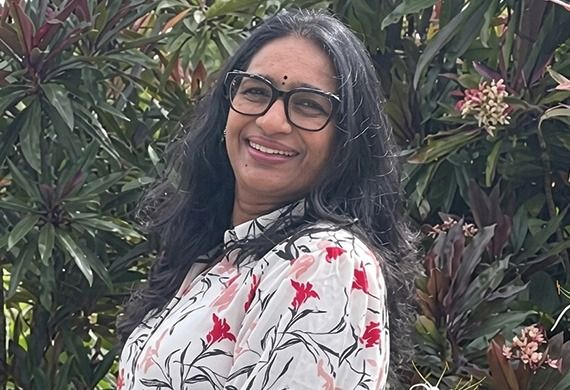

Early discourse around AI adoption often followed a ‘doom rhetoric’. However perceptive leaders look beyond and make the most of the AI advantage. For Tech leader Jyothsna Kuchimanchi, that journey began by letting go of the assumption that AI would replace human judgement. Having worked across AI and digital transformation projects, she strongly believes that AI enhances human decision-making rather than competing with it.
Jyothsna is a digital transformation and innovation leader with deep expertise in business strategy, change management, and AI-driven practices. She has led impactful initiatives across global organizations, driving operational excellence and customer-centric solutions.
In conversation with Women Entrepreneurs Review Magazine, Jyothsna shares her perspective on how meaningful digital transformation begins with understanding people, not just technology. Drawing from her journey in AI and experience strategy, she highlights the power of empathy, influence-led leadership, and human-centered design in driving measurable and sustainable change.
To learn more about Jyothsna’s insights on AI, leadership, and transformation, read the full article below.
Q: Your journey has focused on connecting people, ideas, and technology. When did you first recognize that digital transformation is driven by understanding people, not just implementing technology?
A: Very early in my career, I realized I was more interested in understanding why a problem existed than rushing to apply a technological fix. Technology, by itself, doesn’t create transformation but people do. Every successful initiative I’ve worked on began with clarity around the business challenge and empathy for the people experiencing it daily.
Coming from a design-thinking perspective,
I place strong emphasis on listening deeply and designing frictionless experiences that feel intuitive rather than imposed.
When that human foundation is established, technology naturally becomes an enabler of meaningful change.
I also believe transformation must sustain itself by delivering measurable value, rather than relying indefinitely on capital investment.
Q: As you moved deeper into AI and digital transformation, how did your thinking change around designing technology solutions that deliver measurable business impact?
A: As my work with AI deepened, my thinking shifted from viewing it as a productivity tool to seeing it as a catalyst for reimagining entire journeys. The real opportunity isn’t in accelerating existing processes, but in questioning whether those processes still serve their purpose. I began focusing on critical moments where users experience friction or uncertainty and redesigning those touchpoints to feel seamless and intentional.
That mindset has since evolved toward building experiences that are hyper-personalized, context-aware, and intuitive. When AI anticipates needs instead of reacting to them, it creates outcomes that feel natural for users and meaningful for the business.
Jyothsna Kuchimanchi’s 5 Key Insights on the Future of AI Leadership:
1. Digital transformation starts with people, not technology
2. AI should enhance human judgment, not replace it
3. The real power of AI is reimagining experiences, not just improving efficiency
4. Influence-driven leadership is more effective than authority-driven leadership
5. Future-ready organizations must prioritize ethical, human-centered AI
Q: While integrating human judgment with AI intelligence, what assumptions did you have to challenge most, and how did those moments shape your approach to transformation?
A: One of the most important assumptions I had to unlearn was that AI should replace human judgment. Early narratives often positioned AI as a way to remove subjectivity, but experience taught me otherwise.
The strongest outcomes emerge when AI enhances human decision-making rather than competing with it. That realization changed how I approach transformation not by designing systems that remove people from the loop, but by intentionally elevating their role.
Machines are incredibly effective at handling scale, speed, and patterns, while humans bring context, empathy, and ethical reasoning. Designing for that balance has become central to how I think about responsible and sustainable transformation.
Q: You emphasize collaboration over authority in driving change. How has this influence-led leadership style helped you build trust and deliver results in complex transformation programs?
A: In complex transformation efforts, authority alone rarely drives meaningful change. Real progress comes from influence, from earning trust rather than assuming it.
I’ve found that when business teams are treated as partners and brought into the journey early, the dynamics shift completely. Listening to their perspectives, involving them in decisions, and allowing them to co-create solutions builds shared ownership. That sense of inclusion reduces resistance and accelerates adoption. When people feel heard and invested, change feels less disruptive and more empowering.
Influence-led leadership creates momentum that lasts well beyond the lifecycle of a program.
Q: As AI, automation, and experience strategy continue to mature, what do you see as the next critical shift organizations must make to remain relevant and consumer-centered?
A: The next shift is moving beyond intelligent systems toward more thoughtful ones. Many organizations already have access to AI and automation, but relevance will depend on how intentionally those tools are applied.
The focus must extend past efficiency and scale to designing experiences that feel human, which are intuitive, contextual, and respectful of consumer trust. This also requires stronger commitments to ethics, transparency, and responsible data use.
Organizations that remain consumer-centered will be those that continuously listen, adapt in real time, and embed empathy into their design processes, rather than treating experience as an afterthought.
LAST WORD: Advice for Women Leaders Aiming to Drive Digital & AI-Led Transformations, Particularly on Building Confidence, Influence, and Resilience
I would encourage women leaders to trust the perspective they bring that it is often deeply empathetic, systems-oriented, and grounded in real impact. Confidence doesn’t come from having all the answers, but from asking thoughtful questions and staying curious. Influence grows through consistency, collaboration, and delivering value, not through asserting authority.
Resilience comes from understanding that resistance or setbacks are often part of changing entrenched systems, not a reflection of personal capability. Build strong networks, seek out allies, keep learning, and use your voice intentionally. Your perspective matters, especially in shaping more human-centered transformations.
Disclaimer: The views expressed are personal and do not represent any organization or employer.
Current Issue

Most Viewed
- 1 Talented Indian Female Actors Who Also Moonlight as Successful Producers
- 2 7 Indian Female Podcasters You Must Know About
- 3 7 Powerful Independent Indian Women Journalists Who are Voices of Change
- 4 Ruchikaa Kapoor Sheikh: The Creative Mind Behind Netflix India's Popular Shows
- 5 7 Most Influential Women Educators India has had over the Years
- 6 11 Breakthrough Female Faces Ruling the Indian OTT Platforms
- 7 8 Timeless Female Indian Classical Dancers & their Legacy
- 8 Women's Health Startup HerMD Closing Doors Amid Industry Challenges
- 9 Real Meets Reel: A List of 11 Indian Movies based on Real Women
- 10 Rasha Hassan: A Visionary Leader On A Mission To Transform Dubai's Real Estate Landscape
- 11 5 Indian Women-led IPOs You Must Know About
- 12 11 of the Most Iconic 21st Century Women to become "The First Indian Woman"
- 13 India's 7 Funniest Women Stand-Up Comics You Must Follow
- 14 Aparna Purohit : Leading India's Most Popular OTT Platforms
- 15 How Leaders Can Balance Risk & Innovation in Today's Banking Landscape
- 16 Dr. K. Shilpi Reddy: Sculpting Healthier Futures For The Next Generation With Reforms In Obstetrics Care
- 17 Sylvia Dcosta: A Visionary Business Leader Pushing The Limits And Setting High Professional Standards
- 18 Top 5 All-Rounder Women Cricketers of India
- 19 How Tata AIA is Empowering Women with Insurance That Understands Their Needs


