
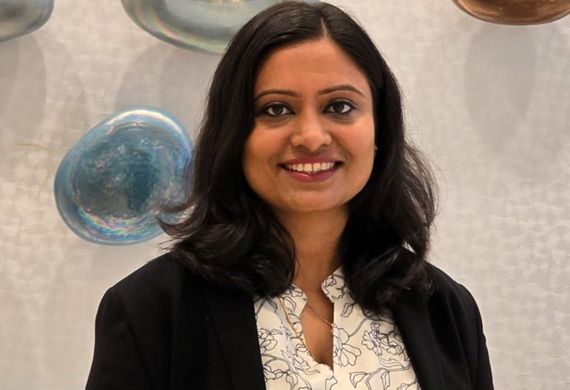

Anita Hariharan, a Chartered Accountant with over 15 years of experience in financial services, specializes in Private Equity Funds, IFRS, client engagement, audit, and project planning. She is passionate about Diversity, Equity, and Inclusion.
In an engaging interaction with Women Entrepreneurs Review Magazine, Anita discusses the future trajectory of the private equity fund services industry, strategies for balancing cost-effective offshoring with localized expertise, and managing challenges in accounting and reporting during M&As and restructurings.
How do you foresee the future trajectory of the private equity fund services industry, especially in terms of adapting to changing investor demands and increasing market volatility?
Managing investor relations across multiple jurisdictions does create unique challenges for alternative fund managers as they must balance regulatory compliance while maintaining strong, transparent relations with their investors. Investors do expect consistent updates not just on fund performance but also risk management regardless of where they are based. However, differing local customs and regulations complicate these communications requiring fund managers to adapt reports that are specific to jurisdictions while ensuring clarity and consistency across investor base.
Few regions also have mandate for ESG disclosures, and this makes it critical for fund managers to implement a reporting framework that meets both regulatory standards and investor needs. Regulatory reporting may also vary either quarterly or annual region to region. For fund managers, aligning these timelines is crucial to maintaining unified investor experience and ensuring timely responses to investor concerns. Effective coordination of reporting schedules helps foster investor confidence, showing a commitment to transparency and attentiveness. Beyond regulatory compliance, adhering to local GAAP principles in each jurisdiction introduces another layer of complexity.
Amongst these changing investor demands and increasing market volatility it is highly important that Fund managers and service providers utilize automated reporting tools that consolidate and standardize data from multiple jurisdictions allowing them to provide clear, timely and relevant information to investors. As private fund managers expand their operations globally, partnering with a service provider that offers centralized, single source solutions across jurisdictions becomes invaluable. Service providers with industry led technology further enhance efficiency, enabling fund managers to automate processes, maintain data accuracy and provide detailed reporting that meet investor demands, while elimination cost and resources associated with building and maintaining inhouse technology. A service provider with right mix of global capabilities, robust technology and centralized delivery empowers fund managers to focus on growth and investor relations while meeting regulatory demands and navigating global challenges efficiently.
What strategies do you implement to strike a balance between the cost-effectiveness of global offshoring and the need for localized expertise to manage complex fund structures and regulatory compliance, particularly in diverse international markets?
To clarify, I currently lead the co-sourcing (otherwise known as hybrid fund administration) and shadow admin model for US clients as part of leading global service provider. I have led multiple transitions in offshoring units in my past experience as well. However, let’s talk about the co-sourcing model vs offshoring model. The two vastly different operating models that private capital firms have traditionally relied on—fully in-house teams or complete outsourcing to third-party providers—both have their strengths and weaknesses. The in-house model is often resource intensive, requiring significant investments in technology, personnel, and ongoing training. And while it offers control and potentially a greater ability to tailor processes to a firm’s specific needs, keeping up with regulatory changes and technological advancements can sometimes become overwhelming for internal teams.
On the other hand, outsourcing offers cost savings, scalability, and access to specialized expertise, although some outsourcing models can lead to a loss of control and potential misalignment between the service provider and the fund manager’s objectives.
Co-sourcing, however, represents a hybrid model that combines the best of both worlds. Co-sourcing in private capital operations brings five key benefit which we always strategize on and that works positively for both the fund and service provider:
- Enhanced flexibility and control: Co-sourcing allows firms to maintain control over critical operations while gaining the flexibility to scale up or down as needed. This adaptability is crucial in an industry where fund sizes, structures, and investor demands vary widely.
- Access to expertise and technology: Partnering with a service provider through a co-sourcing arrangement provides access to specialized expertise and cutting-edge technology that may be cost prohibitive to develop in house. This includes advanced data analytics, compliance tools, and investor reporting platforms.
- Cost efficiency: Co-sourcing can lead to significant cost savings by reducing the need for large in-house teams and expensive technology investments. It also enables firms to pay for services as they need them, moving from a high fixed cost structure to a variable cost structure.
- Improved risk management: By partnering with a service provider, private capital firms can benefit from the provider’s risk management practices and industry insights. This can help mitigate operational risks, ensure compliance with regulatory requirements, and improve overall governance.
- Scalability: As firms grow or launch new funds, co-sourcing allows for seamless scaling of operations without the need for extensive hiring or infrastructure development. This is particularly advantageous for firms managing multiple funds with varying strategies and requirements.
What are some of the most challenging aspects of managing changes in accounting and reporting functions during M&A or large-scale restructurings? How can firms ensure continuity and mitigate risks during such transitions, especially when scaling or offshore operations are involved?
The PE industry is continuously evolving especially more strategies introduced to build better commitment base from Investors, across multi-jurisdiction and sectors. There’s also more demand to invest in new strategies – either in new products like credit, infrastructure, renewable energy or restructuring like setting up comingled/continuity funds with the best of existing and new onboarded investors commitments. In any of these scenarios the top 3 elements that pose operational challenges for any offshore or co-sourcing unit can be -Data source/systems, Recon and controls and Consistency using current technology.
Data source and Systems – When there are strategic or large scale restructurings, it is highly important that transaction data for accounting and reporting comes from a reliable system where complex fund structures can be set up and a trial balance helps in effective building of financial models. Example, a one stop solution service provider would have the global architecture to support Credit reporting via Geneva, Infrastructure via Yardi and Equity via Investran irrespective of whichever current license the Fund manager holds.
Recon and controls – Reconciliation of cash and securities via different systems is the backbone of any Fund setup that can ensure accurate reporting. Documenting every transaction, from trade settlements to fee allocations, ensures transparency and facilitates oversight. Even in illiquid asset classes, near real-time reconciliation can identify and resolve discrepancies promptly. Teams must prioritize addressing errors, backed by thorough investigation and resolution processes.
Technology – Using the right tech architecture and workflows can always ensure there is continuity, consistency and risk management in operations to provide accurate results and exception management. This also provides reliability to Fund managers of uniform reports generated and managing volumes of investor queries which can be addresses without delays and by using standardized templates.
The financial services industry experiences constantly evolving regulations. How do you anticipate new regulations and what proactive measures do you take to stay ahead of the changes?
As I mentioned earlier, amongst changing regulatory demands in multi-jurisdictions and tax laws, there’s a constant need to meet changing investor demands and market volatility. Operationally, it’s important to be cognizant to align changing fund structures and reporting requirements using high quality data and controls.
Example - As private markets grow and regulatory demands intensify, fund managers are increasingly turning to specialized SPV management to streamline operations and enhance compliance. Fund and corporate service providers have deep expertise in navigating complex regulatory environments. They ensure that SPVs comply with legal and regulatory requirements, including reporting and governance standards. These firms are skilled in handling the administrative, operations, and compliance tasks associated with maintaining SPVs. This includes formation, qualification, acting as registered agent, annual report filings and business licenses, providing an address, acting as director and/or officer, setting up and maintaining corporate records, managing board meetings, performing bookkeeping, periodical management accounts, drafting annual financial statements, coordinating audits, cash management, and payroll, and ensuring compliance with all obligations. Service providers have established processes and systems in place for managing the corporate governance of SPVs efficiently by handling corporate secretarial matters and financial reporting under one roof.
We see three steps to staying on top of new regulations and changes in reporting/tax laws:
1. Knowledge and understanding
A strong understanding of both local and global regulations is increasingly important for the countries you are operating in. One example is the MiFID II framework in Europe. We know that the impacts on fund managers can range from compliance costs that coincides with the need for enhanced reporting and compliance systems, to budget implications in terms of having to pay for research. Other implications can also include the need for greater product governance, and further transparency around reporting activities.
2. Proactivity and communication
It is essential for fund managers to be proactive in anticipating issues with compliance and implement strategies to deal with those issues. Communication is key. To implement those mitigating strategies, fund managers need to maintain consistent communication with investors, compliance officers, and legal advisors to help identify and remedyrisks, in order to address them before they become an issue at a later date.
3. Technology and training
Another way of compensating for compliance risks is leveraging technology and operating models. It is also important for internal members of staff to be adequately trained and educated, so that internal processes are as smooth and efficient as possible, and compliance issues can be responded to proactively and efficiently.
What do you foresee as the biggest technological disruption on the horizon for Private Equity fund accounting services? How do you foresee technology bridging the gap between compliance, reporting, and efficiency within your offshoring units?
Globalization and increasing pace of innovation are accelerating the frequency of disruption and the impact it can have on PE. PE firms have usually always had to be quick to respond to disruptive trends. It is important to consider the effect of digital disruption on their portfolios as well as their internal operations. They must also continuously adjust their strategy and decision-making framework, with consideration to how disruption affects industries, portfolios, and internal firm operations. In my experience with offshoring and co-sourcing, the best way to bridge gap to build efficiency comes with AI solutions (Artificial intelligence)
- Processes like waterfall calculations, investor reporting, management reporting and cap call/distribution notices become more robust through automations
- Use of advanced analytics help in management fee calculations and adjustments for complex fund structures and LPs
- AI can be applied to valuations, using qualitative and quantitative variables to estimate the odds of achieving higher risk-adjusted returns. Building customized AI also helps in providing uniform solutions for large volumes of invoices, vendor management and mail management.
Current Issue

Most Viewed
- 1 Talented Indian Female Actors Who Also Moonlight as Successful Producers
- 2 7 Indian Female Podcasters You Must Know About
- 3 7 Powerful Independent Indian Women Journalists Who are Voices of Change
- 4 Ruchikaa Kapoor Sheikh: The Creative Mind Behind Netflix India's Popular Shows
- 5 7 Most Influential Women Educators India has had over the Years
- 6 11 Breakthrough Female Faces Ruling the Indian OTT Platforms
- 7 8 Timeless Female Indian Classical Dancers & their Legacy
- 8 Women's Health Startup HerMD Closing Doors Amid Industry Challenges
- 9 Real Meets Reel: A List of 11 Indian Movies based on Real Women
- 10 Rasha Hassan: A Visionary Leader On A Mission To Transform Dubai's Real Estate Landscape
- 11 5 Indian Women-led IPOs You Must Know About
- 12 11 of the Most Iconic 21st Century Women to become "The First Indian Woman"
- 13 India's 7 Funniest Women Stand-Up Comics You Must Follow
- 14 Aparna Purohit : Leading India's Most Popular OTT Platforms
- 15 How Leaders Can Balance Risk & Innovation in Today's Banking Landscape
- 16 Dr. K. Shilpi Reddy: Sculpting Healthier Futures For The Next Generation With Reforms In Obstetrics Care
- 17 Sylvia Dcosta: A Visionary Business Leader Pushing The Limits And Setting High Professional Standards
- 18 Top 5 All-Rounder Women Cricketers of India
- 19 How Tata AIA is Empowering Women with Insurance That Understands Their Needs


