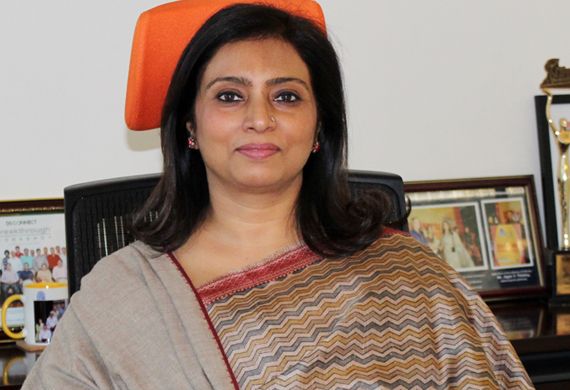

Simin Askari leads the alignment of HR with business growth across diverse sectors in India. With over 30 years of experience in media, retail, and manufacturing, she excels in strategic HR management, SOPs, and performance enhancement, driven by a commitment to diversity, innovation, and collaboration.
In a recent conversation with Women Entrepreneurs Review magazine, Simin discusses aligning HR strategies with business growth and vision, leveraging AI for crafting business processes and workflows, and ensuring effective matrix management. She also explores future trends in AI and HR for the food and beverage industry, emphasizing preparation for emerging changes.
Given the current market landscape and the rapid changes in the food and beverage industry, how do you ensure that your HR strategies are aligned with business growth projections and the overall business vision?
In the dynamic and ever-evolving food and beverage (F&B) industry, aligning HR strategy to business goals is paramount to success. At DS Group, we recognize the importance of understanding key business elements-such as vision, growth projections, future plans and industry trends to form our HR strategies effectively. By meticulously aligning our HR initiatives with these crucial factors, we ensure our workforce is well prepared to navigate future complexities and support the company’s long-term objectives.
We have partnered with one of the largest consultancies in the country to assist us in preparing our organizational structures for future demands. This collaboration involves comprehensive evaluation of current roles, profiles and structural systems to ensure that they are aligned with the future prospects and goals of the business. This proactive approach will help us maintain a competitive edge and drive sustained growth in the dynamic food and beverage sector.
Our recruitment and talent management strategies are meticulously aligned with the future needs of our industry. Leveraging technology and fostering innovation is crucial in all our roles, and we ensure everyone at the organization is well-equipped with necessary technological skills.
We understand the importance of upskilling our employees and have implemented a digital DS Learning Academy. This AI and ML enabled academy not only keeps our employees updated with the latest in their fields, but also provides a hyper-personalized learning journey to make learning compatible to each individual needs and learning requirements. Through these efforts, we strive for excellence in creating sustainable value for all stakeholders, fostering agility and readiness in our workforce to achieve our ambitious business goals.
In the context of ensuring business process efficiencies, how has AI helped in the strategizing and implementation of well-defined business processes, SOPs, and workflows for all functions within an organization?
AI has transformed the way organizations strategize and implement business processes, SOPs, and workflows across all functions. By automating monotonous tasks and optimizing workflows, AI has not only streamlined operations but also enhanced efficiency and accuracy to a great extent. Its real-time data analysis capabilities enable quicker decision-making, empowering organizations to respond promptly to market changes and operational needs. Especially in a FMCG industry where we operate, AI-driven predictive analytics provides valuable insights into sales forecasting and inventory management, ensuring that inventory levels are aligned with demand forecasts, thus optimizing costs and improving customer satisfaction.
AI is transforming many functions within the FMCG sector. In HR management, AI analyzes employee data to predict attrition risks and identify top performers at risk of leaving, enabling proactive retention strategies. In marketing, AI algorithms analyze consumer behaviour and preferences to create highly targeted campaigns, maximizing the effectiveness of our advertising spend. In supply chain, AI optimizes routes and schedules for transportation, reducing delivery times and costs.
Overall, AI not only improves process efficiencies but also empowers organizations to make data-driven decisions, improve productivity, and maintain competitiveness in today's dynamic business landscape.
Managing a diverse workforce across various geographies presents unique challenges. How do you ensure effective matrix management and what role does technology play in facilitating this process?
We are a large sized company, present in various locations in India and abroad. In that scenario, managing a diverse workforce uniquely becomes paramount to the business. According to me, clearly defining the organizational structure, with transparency of goals and reporting hierarchy is the key to managing matrix reporting in different geographies. At DS Group, we understand that clear communication is crucial in ensuring matrix structures are successful.
Technology plays a crucial role in facilitating this process by providing advanced tools for virtual collaboration, real-time project tracking, and data analytics. These technologies enable us to bridge geographical gaps, ensure transparency, and foster a cohesive work environment, ultimately driving organizational success across all regions.
With the increasing use of AI in HR, what measures do leaders need to take to ensure compliance with regulatory standards and ethical considerations in the deployment of AI technologies?
As we continue using AI in almost all functions, including HR; leaders must prioritize several measures to ensure adherence with regulatory standards and uphold ethical considerations. It is important to ensure transparency and a clear communication about how AI is utilized in recruitment, performance evaluation, and other HR processes. Data privacy and security are paramount, requiring compliance to strict regulations to protect organizational data. At DS Group, we have a full-fledged IT team that safeguards our data, and closely monitors usage and violations in case there is any.
Besides, we also have regular audit systems for fairness and diversify training datasets in order to mitigate bias in AI algorithms. Training programmes are extremely important to educate HR professionals and employees about AI's implications and ethical considerations in this regard. By incorporating these measures, leaders can harness AI's benefits in HR while fostering a fair and ethical workplace environment.
How do you manage the transition and change management processes when introducing new AI-driven HR practices to ensure smooth adoption and minimal disruption to the business?
While change is the only constant, one of the most difficult processes is adopting the change. Transitions can be extremely difficult and face backlash on different levels, so there needs to be guided approach in terms of introducing any kind of change in an organization.
Introducing new AI-driven HR practices involves managing transition and change management processes effectively to ensure smooth adoption and minimal disruption to the business. As a first step, it is important to clarify the objectives of the change, ensuring everyone realizes the purpose and benefits behind its implementation. It is always better to engage with stakeholders right from the planning phase, thereby allowing for gathering insights and addressing concerns proactively. At DS Group, we don’t believe in sudden changes. Most of the times we begin with implementing pilot programs and once successful, do the complete implementation. Comprehensive training sessions to familiarize employees with the new practices, fosters confidence and competence. Tailoring the transition to accommodate the organization's culture and existing workflows helps in easing acceptance, leveraging familiarity with previous change initiatives.
What future trends do you foresee in the intersection of AI and HR within the food and beverage industry, and how are leaders needed to prepare their organization to adapt to these changes?
In the food and beverage industry, the intersection of AI and HR is poised to bring transformative changes such as advanced talent analytics, personalized employee experiences and enhanced predictive capabilities for workforce planning. Future trends include Generative AI driven recruitment processes by creating personalized job descriptions and identifying the best fit candidates efficiently. AI powered learning and development platforms that provide trainings tailored to suit individual needs,and sophisticated algorithms that predict and mitigate attrition, and also enhance engagement and satisfaction
As HR evolves, there will be also be continued shift towards hyper developed, automated processes aimed at optimizing efficiency across all functions, from recruitment to compliance reporting. AI can completely revolutionizing talent management that involves automating tasks such as job description drafting, resume parsing, and virtual interviews for candidates. Besides, there is a continued shift towards the use of predictive analytics that will be crucial in talent management, workforce planning, and anticipating future needs like turnover rates and skill gaps.
To make their workforce future ready, leaders must invest in AI technologies and upskill their teams to leverage these predictive insights effectively. The future of AI in HR is already unfolding, demanding proactive approach from leaders who seek to innovate, optimize operations, and cultivate a workforce prepared for the challenges and opportunities that lie ahead in our industry.
Current Issue
Most Viewed
- 1 Talented Indian Female Actors Who Also Moonlight as Successful Producers
- 2 7 Indian Female Podcasters You Must Know About
- 3 7 Powerful Independent Indian Women Journalists Who are Voices of Change
- 4 Ruchikaa Kapoor Sheikh: The Creative Mind Behind Netflix India's Popular Shows
- 5 7 Most Influential Women Educators India has had over the Years
- 6 11 Breakthrough Female Faces Ruling the Indian OTT Platforms
- 7 8 Timeless Female Indian Classical Dancers & their Legacy
- 8 Women's Health Startup HerMD Closing Doors Amid Industry Challenges
- 9 Real Meets Reel: A List of 11 Indian Movies based on Real Women
- 10 Rasha Hassan: A Visionary Leader On A Mission To Transform Dubai's Real Estate Landscape
- 11 5 Indian Women-led IPOs You Must Know About
- 12 11 of the Most Iconic 21st Century Women to become "The First Indian Woman"
- 13 India's 7 Funniest Women Stand-Up Comics You Must Follow
- 14 Aparna Purohit : Leading India's Most Popular OTT Platforms
- 15 How Leaders Can Balance Risk & Innovation in Today's Banking Landscape
- 16 Dr. K. Shilpi Reddy: Sculpting Healthier Futures For The Next Generation With Reforms In Obstetrics Care
- 17 Sylvia Dcosta: A Visionary Business Leader Pushing The Limits And Setting High Professional Standards
- 18 Top 5 All-Rounder Women Cricketers of India
- 19 How Tata AIA is Empowering Women with Insurance That Understands Their Needs


