
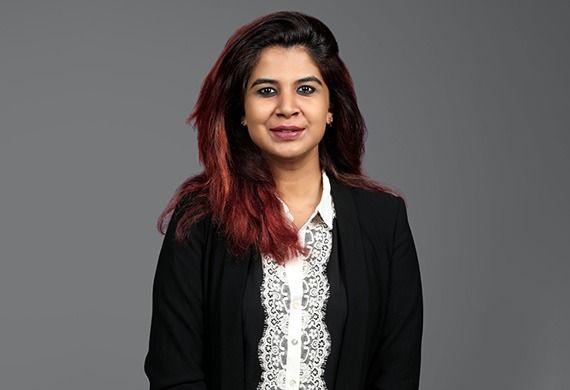

A dynamic HR leader with over 20 years of experience across IT and consulting, Nimisha excels in driving large-scale change, talent management, DEI initiatives, and building agile, resilient workplace cultures. She is recognized for insights on leadership, organizational development, and the future of work.
In an insightful interaction with Charulatha M, Senior Correspondent at Women Entrepreneurs Review Magazine, Nimisha shares her views on how AI, automation, and portfolio careers are reshaping leadership, focusing on human judgment, inclusion, and the evolution of people strategies in a dynamic work environment.
To learn more about navigating modern leadership challenges, read the full article below.
As AI, automation, and portfolio careers reshape work itself, how do you see the purpose of people leadership being redefined in today’s evolving business landscape?
AI will transform the cultural identity of leadership. Leaders will become enablers than task managers. According to the World Economic Forum (2025), nearly 44% of workers’ core skills will change within the next five years due to automation and AI. Routine work is being augmented or replaced by intelligent systems, which means leaders are no longer valued for directing tasks but for orchestrating human creativity, empathy, and collaboration, the capabilities machines cannot replicate.
At the same time, the workforce is fragmenting. The rise of portfolio and gig careers—with over 50% of professionals projected to engage in freelance or multi-role work by 2030 (Upwork, 2024) is eroding traditional hierarchies. Leadership must therefore evolve from managing static teams to curating dynamic networks of talent, often across organizational and geographic boundaries. The ability to think ahead of times and establish connections that go a long way is what leaders will be known for.
When these shifts first started influencing decision-making, what leadership assumptions did you personally have to unlearn to stay relevant as a people leader?
I have always been a professional who relied heavily on insights and data, shaped by my background in consulting. With the advent of AI, I have been able to augment and structure my thinking in smarter, more strategic ways. What I have had to embrace, however, is a new way of viewing talent like pieces of a dynamic jigsaw puzzle that must fit together in innovative configurations.
In the past, for critical roles, gig workers were rarely considered. Today, they have become an integral part of the workforce ecosystem, a vital cog in the organizational engine.
The world of work is shifting from linear career paths to models of mutual growth, where professionals pursue portfolio careers, balancing multiple roles, projects, and ventures.
This evolution is fundamentally rewriting the social contract between employers and employees, redefining how value, purpose, and belonging are created in the modern workplace.
In your experience, where do leaders often overestimate technology’s role and underestimate human judgment in shaping performance and accountability?
Today, we are all yearning towards mastering the AI–human equilibrium. The challenge isn’t choosing between data and judgment it’s integrating both and drawing the lines at the right point. Technology provides clarity, but human judgment provides meaning. Data gives us the “what,” but leadership gives us the “why.” Leaders who thrive in this new era will use technology not as a substitute for judgment, but as a lens for developing foresight and clarity.
Another delicate area is measuring performance vs. understanding contribution. Technology can track outputs sales, productivity, project milestones, but it struggles to capture the intangibles that drive true performance: creativity, collaboration, resilience, and discretionary effort. Leaders often overestimate performance dashboards and underestimate the value of contextual judgment the ability to interpret why someone performs the way they do.
As a woman CHRO, how do you balance decisiveness with inclusion while designing leadership norms that work across generations and increasingly fluid career paths?
As a woman CHRO, I have learned that leadership today is less about commanding clarity and more about creating space for collective intelligence. In a world of multi-generational teams and fluid career paths, leadership norms can no longer be one-size-fits-all. The workforce today spans four or even five generations, each with distinct expectations: Boomers value stability, Gen X seeks autonomy, Millennials prioritize purpose, and Gen Z demands authenticity and flexibility. Meanwhile, career journeys are no longer linear, they are porous, portfolio-based, and deeply personal.
It is not about being a woman or a man, the time today is to build empathetic, inclusive, safe cultures that stands the machine driven eco system around us.
Where screen time significantly exceeds personal time with humans. Hence balancing decisiveness with inclusion is not a gendered trait it’s a modern leadership imperative. But as women leaders, we often lead this transformation by example: bringing empathy to power, listening without losing clarity, and shaping systems that honor both individual purpose and collective progress.
Looking at today’s workforce expectations, what leadership behaviors do you believe will quietly become obsolete, even though many organizations still rely on them?
Bureaucratic, hierarchy-driven organizations where decision-making power rests in a few hands are quietly becoming obsolete. Leadership models built on control and presence rather than purpose are increasingly being questioned. Managing by attendance, enforcing fixed timelines, or restricting employees to physical offices are no longer markers of productivity or commitment.
Today’s workforce thrives on empowerment, autonomy, and trust. They value impact over optics and outcomes over activity. The belief that authority stems from hierarchy or title is rapidly losing relevance. Employees now seek partnership, not paternalism, they want to co-create, not comply. In hybrid and cross-functional environments, the best ideas often emerge from collaboration across levels and functions, not from the corner office. According to Gartner (2025), organizations that emphasize empowerment over control experience up to 37% higher innovation output. The leaders of tomorrow will act as facilitators of collective intelligence, not gatekeepers of decisions.
LAST WORD: Advice for Women Leaders Preparing for Senior Roles
Be authentic. Follow your gut with conviction. Be the leader who learns faster, collaborates deeper, and leads more humanly. Someone with strong tenacity consistently bounces back from challenges and embraces change with confidence and grace. Because in a world of shifting roles and redefining skills, relevance belongs to those who stay curious, stay connected, and stay authentic.
Current Issue
Most Viewed
- 1 Talented Indian Female Actors Who Also Moonlight as Successful Producers
- 2 7 Indian Female Podcasters You Must Know About
- 3 7 Powerful Independent Indian Women Journalists Who are Voices of Change
- 4 Ruchikaa Kapoor Sheikh: The Creative Mind Behind Netflix India's Popular Shows
- 5 7 Most Influential Women Educators India has had over the Years
- 6 11 Breakthrough Female Faces Ruling the Indian OTT Platforms
- 7 8 Timeless Female Indian Classical Dancers & their Legacy
- 8 Women's Health Startup HerMD Closing Doors Amid Industry Challenges
- 9 Real Meets Reel: A List of 11 Indian Movies based on Real Women
- 10 Rasha Hassan: A Visionary Leader On A Mission To Transform Dubai's Real Estate Landscape
- 11 5 Indian Women-led IPOs You Must Know About
- 12 11 of the Most Iconic 21st Century Women to become "The First Indian Woman"
- 13 India's 7 Funniest Women Stand-Up Comics You Must Follow
- 14 Aparna Purohit : Leading India's Most Popular OTT Platforms
- 15 How Leaders Can Balance Risk & Innovation in Today's Banking Landscape
- 16 Dr. K. Shilpi Reddy: Sculpting Healthier Futures For The Next Generation With Reforms In Obstetrics Care
- 17 Sylvia Dcosta: A Visionary Business Leader Pushing The Limits And Setting High Professional Standards
- 18 Top 5 All-Rounder Women Cricketers of India
- 19 How Tata AIA is Empowering Women with Insurance That Understands Their Needs


