
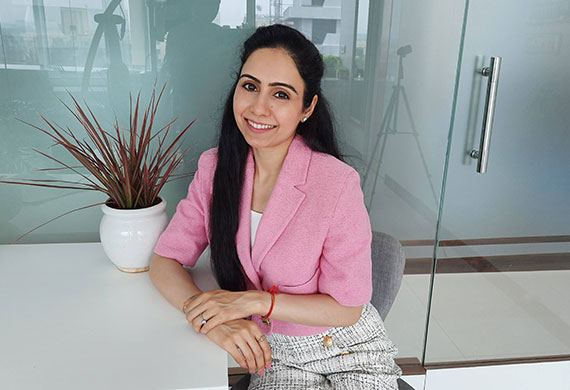

Dr. Surbhi Bhatia L practices both basic & advanced dental treatments at Lifeberries Healthcare. She is recognized as one of the best endodontists in Pune. She completed her B.D.S. from B.F.U.H.S Punjab and her M.D.S in Conservative Dentistry and Endodontics from B.D. Sharma University Haryana. She worked in a reputed Dental College in Haryana as Senior Lecturer for more than two years. Dr. Surbhi is a fellow of the International College of Continuing Dental education in Singapore. She is associated with the Indian Dental Association and a life member of the Indian Association of Conservation Dentistry and Endodontics.
Over the past decade, dentistry has undergone a major transformation with significant technological advancements and innovation in medical sciences. The evolution of dentistry has led to new developments that are making life easier for patients and improving their overall treatment experience. 3D printing (also known as additive manufacturing) is emerging as one of the most revolutionizing technologies in dentistry both in dental practices via "chair-side" 3D printing and in off-site dental laboratories for more demanding print jobs. Dental procedures and laboratories are using 3D printing for various applications, such as printing models to making thermoset dental aligners, prostheses, and dental tools.
Here are five ways 3D printing is revolutionizing dentistry.
Enhanced Dental Product Quality
The traditional methods involved manually creating dental products, which held a high risk of contamination. Besides, the entire process of manufacturing, processing of raw materials, and moulding was quite challenging. Moreover, before 3D printing hit dentistry, patients had to bite on a rubber like substance called alginate to create a negative mould out of their mouth. Later the mould was filled with plaster like substance to create a positive model of the patient's teeth. If the mould had some errors, the treatment took a lot of time and led to adverse outcomes. However, 3D printing ensures that the products are accurate and have a reduced risk of contamination. Now, orthodontists use an intraoral wand to create an accurate 3D image of the patient's mouth in no time, and the errors are almost negligible. Later the image is used to print the required object through the 3D printer, be it a tooth, crown, bridge, or other dental product. Even the most delicate structure could be easily created by building up layer-by-layer, and the entire process is controlled by a software program.
Improved Outcomes of Periodontal Surgeries
Although numerous attempts have been made to regenerate and heal periodontal defects, many areas remain challenging due to non-contained defects, lack of support, and site protection for grafted materials. However, computer-aided rapid prototyping allows enhanced visualization of the surgical site and thus helps the better treatment of periodontal disease. Besides, computer-assisted designs offer accurate models over which the transplantation of the grafts can be planned. Moreover, digital technologies enable clinicians to view, plan and prepare the surgical site for stimulating and aligning the intricacy of the donor's tooth, making it possible to have a less traumatic and better-adjusted tooth compared to bone interaction.
Mass Customization of Dental Aligners
More than a million dental aligners can be manufactured using 3D printing. Each aligner is created to cater to a personalized treatment plan. Thanks to advancements in the 3D industry, more and more companies are designing and manufacturing aligners and offering cheaper, faster, and simpler solutions to stay competitive. With 3D printing, creating unique geometries at a large scale was possible. Moreover, 3D printing offers consistent, accurate, efficient, cheaper, and often superior alternatives to many traditional manufacturing processes.
Less Material Wasted with 3D-printed teeth
In the conventional method, technicians create a basic dental impression and then hollow it out for further intervention, meaning 80% of the material is wasted. On the other hand, 3D printers require a definite amount of powder to create a component, which helps generate less wastage and ensures environmental sustainability. Besides, the whole process of creating dentures through 3D printing is much faster compared to the traditional manufacturing. Since dental 3D printers provide highly accurate results, there is no need to correct or make other required dental items, which saves patient's money, reduces overall procedure time, and enhances patient experience.
Better Patient Experience
Dental 3D printers create models of patients' problematic areas in preparation for surgery. This helps them prepare for an upcoming surgery, reducing anxiety for patients and increasing patient acceptance. Besides, leveraging digital solutions make the processes faster as they remove redundant steps and make the patient's visit quicker and easier. Moreover, the products manufactured using 3D printing are aesthetically pleasing, and treatments are more accurate and less invasive for the patients, which minimizes downtime. All of this helps patients have a good experience, and it takes only several days to finish the process compared to traditional processes, which can take months to create desired outcomes.
With the growing trend of customization and increased focus of patients on opting for less invasive dental procedures, the need for 3D printing will increase in the coming years.
Current Issue

Most Viewed
- 1 Talented Indian Female Actors Who Also Moonlight as Successful Producers
- 2 7 Indian Female Podcasters You Must Know About
- 3 7 Powerful Independent Indian Women Journalists Who are Voices of Change
- 4 Ruchikaa Kapoor Sheikh: The Creative Mind Behind Netflix India's Popular Shows
- 5 7 Most Influential Women Educators India has had over the Years
- 6 11 Breakthrough Female Faces Ruling the Indian OTT Platforms
- 7 8 Timeless Female Indian Classical Dancers & their Legacy
- 8 Women's Health Startup HerMD Closing Doors Amid Industry Challenges
- 9 Real Meets Reel: A List of 11 Indian Movies based on Real Women
- 10 Rasha Hassan: A Visionary Leader On A Mission To Transform Dubai's Real Estate Landscape
- 11 5 Indian Women-led IPOs You Must Know About
- 12 11 of the Most Iconic 21st Century Women to become "The First Indian Woman"
- 13 India's 7 Funniest Women Stand-Up Comics You Must Follow
- 14 Aparna Purohit : Leading India's Most Popular OTT Platforms
- 15 How Leaders Can Balance Risk & Innovation in Today's Banking Landscape
- 16 Dr. K. Shilpi Reddy: Sculpting Healthier Futures For The Next Generation With Reforms In Obstetrics Care
- 17 Sylvia Dcosta: A Visionary Business Leader Pushing The Limits And Setting High Professional Standards
- 18 Top 5 All-Rounder Women Cricketers of India
- 19 How Tata AIA is Empowering Women with Insurance That Understands Their Needs


