
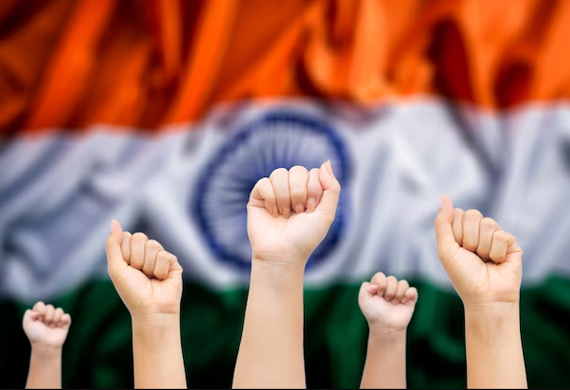

India's Women's Reservation Bill, known as the Nari Shakti Vandan Adhiniyam, was passed in September 2023, reserving one-third of parliamentary seats for women, including those for marginalized communities. This monumental leap toward gender equality in Indian politics illuminates the path forward.
In September 2023, a historic moment unfolded in Indian politics. The Women's Reservation Bill, known as the Nari Shakti Vandan Adhiniyam, achieved the long-awaited breakthrough, passing through both houses of Parliament. This historic legislation is designed to radically enhance female representation and participation in Indian politics.
It reserves one-third of the seats in the Lok Sabha, India's lower house, and the state legislative assemblies, exclusively for women. Notably, these reserved seats also encompass those already allocated for the Scheduled Castes and Scheduled Tribes, some of the most marginalized communities in the nation delving into the multifaceted facets of this bill, elucidating its journey, implications, and the optimism it has ignited.
A Leap Towards Gender Parity
At its heart, the Women's Reservation Bill is a pivotal stride towards gender equality in politics. By reserving one-third of seats in legislative bodies for women, it seeks to address the glaring gender disparity that has long plagued Indian politics.
The significance of this legislation is magnified by its extension to reserved seats for the Scheduled Castes and Scheduled Tribes, ensuring that marginalized communities are not left behind in the drive for gender parity. This substantial leap will not only amplify women's voices in the political arena but also promote their active participation in shaping India's future.
A Long and Arduous Journey
The Women's Reservation Bill's journey to becoming law was far from smooth. It made its initial appearance in Parliament in 1996 when then-Prime Minister H.D. Deve Gowda tabled it. However, the bill encountered formidable resistance, particularly from political parties and groups who questioned its viability, potential impact, and feasibility in practice.
Opposition persisted over the years, with some male politicians expressing fears about surrendering their seats and authority to women. This arduous path was marked by debates, discussions, and at times, heated confrontations within the political landscape.
Support Amidst the Struggle
Throughout this rough journey, the Women's Reservation Bill found reliable advocates. Women's rights activists, civil society organizations, and progressive politicians rallied behind its cause. Their compelling arguments stressed the bill's necessity in achieving gender equality in the Indian democracy.
They pointed to successful examples from other nations like Rwanda, Nepal, and Bangladesh, where similar measures had dramatically boosted women's political representation. Advocates also highlighted the manifold benefits of having more women in decision-making positions, such as improved governance, development, and social welfare.
The turning point in the bill's journey arrived when Prime Minister Narendra Modi took up its mantle as a critical component of his government's vision for women-led development. Modi's announcement of his intent to pass the bill during the G20 summit in Italy in July 2023 showcased a clear commitment to advancing gender equality and women's empowerment on a global stage.
His determination garnered support from various political leaders, transcending party lines. Former Congress president Sonia Gandhi and West Bengal Chief Minister Mamata Banerjee were among those who urged the swift passage of the bill.
Celebration of Historic Success
On September 18, 2023, the Lok Sabha resoundingly voted in favour of the bill, with a staggering 454 votes in favour and a mere two against. The following day, the Rajya Sabha unanimously lent its support.
Now, the bill stands at the precipice of becoming law, pending the president's assent. Its passage was celebrated as a historic triumph, with Modi and other leaders extending their heartfelt congratulations to the women of India. Modi declared that the bill would herald a new era of women's empowerment and an enhanced female presence in Indian politics.
While the bill's passage marks a significant milestone, its implementation is neither immediate nor straightforward. The legislation stipulates that it will come into effect only after the next census is completed and constituencies are redrawn based on population demographics. These processes entail intricate technical and legal complexities, guaranteeing a multi-year journey.
Additionally, the bill leaves details concerning the allocation and rotation of reserved seats for women among different constituencies to be determined by future parliamentary legislation.
Despite the challenges that lie ahead, the Women's Reservation Bill's significance remains undiminished. It is a historic step that acknowledges the pivotal role of women in Indian politics and society. It represents progress towards realizing gender equality and justice within India's democracy. It serves as a wellspring of inspiration for millions of Indian women, encouraging them to aspire to political leadership and active participation.
Today, as we celebrate this landmark achievement, we recognize the resilience and determination that have brought us to this juncture. It is a victory for every Indian woman, a testament to her strength, and a promise of a brighter, more inclusive future.
Current Issue

Most Viewed
- 1 Talented Indian Female Actors Who Also Moonlight as Successful Producers
- 2 7 Indian Female Podcasters You Must Know About
- 3 7 Powerful Independent Indian Women Journalists Who are Voices of Change
- 4 Ruchikaa Kapoor Sheikh: The Creative Mind Behind Netflix India's Popular Shows
- 5 7 Most Influential Women Educators India has had over the Years
- 6 11 Breakthrough Female Faces Ruling the Indian OTT Platforms
- 7 8 Timeless Female Indian Classical Dancers & their Legacy
- 8 Women's Health Startup HerMD Closing Doors Amid Industry Challenges
- 9 Real Meets Reel: A List of 11 Indian Movies based on Real Women
- 10 Rasha Hassan: A Visionary Leader On A Mission To Transform Dubai's Real Estate Landscape
- 11 5 Indian Women-led IPOs You Must Know About
- 12 11 of the Most Iconic 21st Century Women to become "The First Indian Woman"
- 13 India's 7 Funniest Women Stand-Up Comics You Must Follow
- 14 Aparna Purohit : Leading India's Most Popular OTT Platforms
- 15 How Leaders Can Balance Risk & Innovation in Today's Banking Landscape
- 16 Dr. K. Shilpi Reddy: Sculpting Healthier Futures For The Next Generation With Reforms In Obstetrics Care
- 17 Sylvia Dcosta: A Visionary Business Leader Pushing The Limits And Setting High Professional Standards
- 18 Top 5 All-Rounder Women Cricketers of India
- 19 How Tata AIA is Empowering Women with Insurance That Understands Their Needs


