
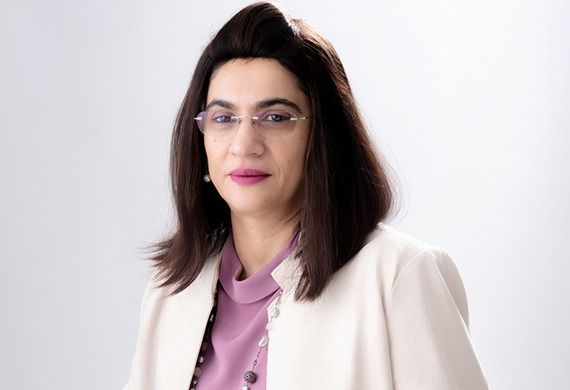

Some careers are defined by the milestones they achieve. Others become meaningful because of the people they empower and the legacy they help preserve. Kavita Prasad’s journey brings both dimensions together, spanning more than three decades of leadership, business growth, inclusion, and cinematic heritage preservation.
As Managing Director and one of the Founding Directors of Prasad Corp (heritage preservation and digital post production studio), Kavita has played a significant role in shaping the organisation’s global presence and advancing its digital film restoration capabilities. Her work has contributed to the preservation of thousands of films while also opening doors for women and differently-abled professionals in specialised fields.
In conversation with Women Entrepreneurs Review magazine, Kavita reflects on the experiences that shaped her leadership, the principles that have guided her across 35 years, and the importance of creating workplaces where people are given the opportunity to grow, contribute, and build meaningful careers.
Kavita’s reflects on ger leadership journey and highlights that meaningful progress is built gradually—through learning, credibility, perseverance, and the ability to recognize potential where others may overlook it. Through initiatives such as Venus and HOPE, she has transformed this belief into action by creating opportunities for women, hearing-impaired professionals, and differently-abled individuals.
Read the full article below to know more about Kavita Prasad’s leadership journey.
Q1. Building a global legacy around preserving cinematic heritage is extraordinary. What inspired you to believe a woman could lead such an ambitious vision?
A. I didn't enter this industry with a grand vision of leading it. After completing my MBA, I began my career at Citibank, and it was only after my marriage into the Prasad family that I gradually became involved in the business. What started as supporting finance, marketing and sales evolved into a journey of more than 35 years.
Working in the film post-production and restoration industry, I found myself in a predominantly male environment. Rather than viewing that as a barrier, I focused on learning the business, building credibility through consistency and staying committed to the work. Over time, I realised that leadership is not defined by gender, but by passion, perseverance and the willingness to keep learning.
Q2. As that vision gradually became reality, what personal transformation helped you evolve from a founding leader into a globally respected Managing Director?
A. I don't think of it as a transformation, but rather as a journey of continuous learning. When I first joined the organisation, my focus was on understanding the business and contributing wherever I could, whether it was finance, marketing or sales. As the company grew, I gradually took on greater responsibilities and learned something new at every stage.
One of the biggest lessons for me has been that leadership is not about having all the answers. It is about listening, trusting your team and creating an environment where people can grow and take ownership. Working with clients and partners across different countries has also taught me the importance of building lasting relationships and consistently delivering quality. Those experiences have shaped the way I lead today.
Q3. While expanding across international markets, how did you overcome moments when your leadership was tested simply because you were a woman?
A. There were certainly occasions early in my career when clients were surprised to see a woman leading discussion, particularly in an industry that was overwhelmingly male. Those moments required patience, preparation and confidence.
Rather than allowing assumptions to define me, I focused on understanding the business deeply and earning trust through knowledge, consistency and delivery.
Whether working with clients in India or overseas, I found that credibility is built over time. When people see your commitment and the quality of your work, gender gradually becomes secondary to your capabilities. That experience also strengthened my belief that workplaces should create equal opportunities where women are recognised as leaders by default, not as exceptions.
Q4. Your journey introduced many women to specialized digital restoration careers. What inspired you to create opportunities that perhaps you never had yourself?
A. When I joined the industry, there were very few women in technical or operational roles, particularly in film restoration. About 15 years ago, we decided to challenge that mindset by launching what we internally called the "Venus Project." We recruited women with no prior experience, trained them in specialised restoration software and created a supportive work environment for them to grow.
The initiative exceeded our expectations. The women performed exceptionally well, attrition was minimal, and their success encouraged us to bring more women into technical roles. Today, women lead several key production functions within our organisation. For me, it was never about increasing numbers, but about recognising talent irrespective of gender and creating opportunities for people to build meaningful careers.
Q5. Later, you expanded inclusion through initiatives supporting the differently-abled professionals. How did these experiences redefine your understanding of leadership as a woman?
A. One of the initiatives I am particularly proud of is introducing opportunities for hearing-impaired professionals within our restoration teams. We invested in trainers who could communicate through sign language and built an environment where they could develop specialised restoration skills and contribute meaningfully to our work.
That experience reinforced an important lesson for me: inclusion is not about charity; it is about recognising capability and creating opportunities for people to succeed. Leadership is about building an environment where everyone, regardless of their background or abilities, has the opportunity to contribute, learn and grow. That philosophy continues to shape the culture we strive to build at Prasad.
Q6. Restoring thousands of films demands patience and purpose. How has that philosophy influenced the way you have built your own career over decades?
A. The philosophy that has guided me throughout my career comes from our founder, who often spoke about the "Four Ps"- Passion, Perseverance, Patience and Purity of Thought. Those principles have shaped not only the way we restore films but also the way I have approached leadership.
Film restoration is meticulous work that requires patience, attention to detail and respect for the creator's original vision. Building a career is very similar. Success rarely comes overnight; it requires perseverance, continuous learning and staying true to your values. Looking back over more than 35 years, I believe these principles have helped me navigate challenges while staying focused on building something meaningful and lasting.
Q7. Leading nationally significant heritage preservation projects carries immense responsibility. How did those milestones strengthen your confidence and perspective as a woman leader?
A. Working on projects such as the National Film Heritage Mission has been a deeply meaningful experience. Restoring films is not just about preserving old negatives; it is about safeguarding stories and cultural memories for future generations. Being entrusted with that responsibility has been both humbling and rewarding.
These projects have reinforced my belief that good leadership is built on collaboration, patience and trust. Film restoration brings together people with different expertise, and every project is a collective effort. As a woman leader, these experiences have strengthened my confidence that commitment, knowledge and teamwork matter far more than gender. They have also reminded me that preserving our cinematic heritage is a responsibility that extends beyond technology, it is about respecting the vision of the original filmmakers while ensuring these films can continue to inspire future generations.
Q8. Looking back after more than thirty-five years, what part of your leadership journey fills you with the greatest pride beyond business achievements and recognition?
A. Looking back, what gives me the greatest satisfaction is not any particular award or milestone, but seeing people grow. It has been incredibly rewarding to watch young professionals develop into leaders, see more women take on technical and leadership roles, and create opportunities for individuals who may not otherwise have had them.
For me, leadership is about creating an environment where people have the opportunity to learn, grow and contribute. If Prasad has become a place where people feel respected, valued and empowered to build meaningful careers, then that is an achievement that means far more to me than any business milestone or recognition.
LAST WORD: Advice for women aspiring to build enduring careers while creating workplaces where future generations of women can truly thrive?
I would encourage women to believe in their abilities, remain committed to continuous learning and never hesitate to take on challenging roles. Leadership is not about proving yourself repeatedly; it is about consistently delivering with integrity and purpose.
I also believe workplaces must intentionally create opportunities where women can learn, lead and grow. The next generation should not have to overcome the same barriers that many of us faced. If organisations focus on capability rather than assumptions, and if leaders actively mentor and support future talent, we can create workplaces where women are recognised not as exceptions, but as an integral part of leadership.
Current Issue
Most Viewed
- 1 Talented Indian Female Actors Who Also Moonlight as Successful Producers
- 2 7 Indian Female Podcasters You Must Know About
- 3 7 Powerful Independent Indian Women Journalists Who are Voices of Change
- 4 Ruchikaa Kapoor Sheikh: The Creative Mind Behind Netflix India's Popular Shows
- 5 7 Most Influential Women Educators India has had over the Years
- 6 11 Breakthrough Female Faces Ruling the Indian OTT Platforms
- 7 8 Timeless Female Indian Classical Dancers & their Legacy
- 8 Women's Health Startup HerMD Closing Doors Amid Industry Challenges
- 9 Real Meets Reel: A List of 11 Indian Movies based on Real Women
- 10 Rasha Hassan: A Visionary Leader On A Mission To Transform Dubai's Real Estate Landscape
- 11 5 Indian Women-led IPOs You Must Know About
- 12 11 of the Most Iconic 21st Century Women to become "The First Indian Woman"
- 13 India's 7 Funniest Women Stand-Up Comics You Must Follow
- 14 Aparna Purohit : Leading India's Most Popular OTT Platforms
- 15 How Leaders Can Balance Risk & Innovation in Today's Banking Landscape
- 16 Dr. K. Shilpi Reddy: Sculpting Healthier Futures For The Next Generation With Reforms In Obstetrics Care
- 17 Sylvia Dcosta: A Visionary Business Leader Pushing The Limits And Setting High Professional Standards
- 18 Top 5 All-Rounder Women Cricketers of India
- 19 How Tata AIA is Empowering Women with Insurance That Understands Their Needs


