
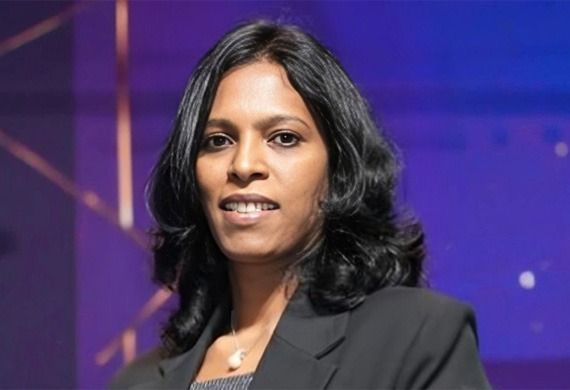

The marketing function holds the transformative power to reshape internal decision-making by embedding customer insights across all business processes believes Vasanthy Rajamannar, Head of Marketing, Mettler-Toledo India.
In conversation with the Women Entrepreneurs Review Magazine, Vasanthy, an industry veteran with 22 years of experience, spoke about marketing’s power in terms of reshaping internal decision-making, building trust to introduce new technologies & markets and more.
Vasanthy also shares her views on how women marketing leaders today leverage strategic influence to drive customer-centric business growth, moving beyond traditional campaign delivery to build stronger customer relationships and contribute to long-term value creation across the organization.
Vasanthy has successfully managed omnichannel marketing, product management, and business development across diverse sectors. She has driven digital marketing initiatives in the B2B space, enhancing brand presence through e-commerce, customized campaigns, and integrated strategies.
To learn more about how marketing can be much more than a communications function and women marketing leaders reshaping the future of marketing, read the full interview below.
How do women marketing leaders leverage strategic influence to establish a different perspective on how business approaches customers and the marketplace, rather than merely delivering a campaign?
Women marketing leaders today leverage their strategic influence by introducing diverse perspectives that challenge conventional marketing approaches. They move beyond the traditional role of campaign delivery to deeply understand customer needs and market dynamics.
This comprehensive understanding enables them to craft strategies that foster stronger customer relationships and drive business growth in innovative ways. By prioritizing collaboration and data-driven insights, these leaders reshape how businesses engage with their audiences, ensuring that marketing efforts are aligned with broader organizational goals and contribute to long-term value creation.
How can marketing reshape internal decision-making so customer understanding becomes a business priority rather than a marketing agenda?
Marketing reshapes internal decision-making by embedding customer insights across all business processes, rather than isolating them within marketing functions. This requires fostering cross-functional collaboration where customer feedback and market trends are actively shared with product teams, sales, and Business leadership teams.
Demonstrating the direct impact of customer understanding on outcomes such as product innovation, customer satisfaction, and revenue growth elevates customer-centricity as a core organizational value. Additionally, leveraging data analytics and customer journey mapping makes customer understanding tangible and actionable, ensuring it becomes a priority company-wide.
How does marketing build trust to introduce new technologies and markets in a way that makes customers feel secure, clear, and predictable?
Marketing builds trust in introducing new technologies and markets through transparent communication and awareness. By clearly articulating the benefits, functionalities, and safety of innovations, marketing helps customers feel informed and confident. Using real-world case studies, testimonials, and demonstrations makes the technology tangible and relatable. Consistent messaging that addresses potential concerns and sets realistic expectations further fosters a sense of security and predictability.
Ultimately, marketing serves as a bridge aligning technological advancements with customer needs, which builds long-term trust and loyalty.
When expansion begins, how can storytelling evolve so customers feel part of the journey rather than passive recipients of innovation or change?
As expansion begins, storytelling should shift from simply presenting products or innovations to creating immersive narratives that invite customers to actively participate in the journey. This involves sharing authentic stories about the challenges, values, and vision driving the expansion, highlighting customer testimonials and experiences, and showing how customer feedback shapes the innovation process.
Engaging customers through interactive platforms, social media campaigns, and personalized content fosters a sense of community and belonging.
By positioning customers as partners rather than passive recipients, marketing builds emotional connections that deepen loyalty and support sustained growth.
As the brand expands into different regions, how can customer experience remain consistent while still respecting the cultural differences of each market without weakening the brand identity?
Maintaining a consistent customer experience while respecting cultural differences requires balancing global brand standards with local customization. The core brand identity—centered on precision, reliability, and innovation—serves as the foundation for all interactions. Marketing strategies are then adapted to reflect unique preferences, values, and communication styles of each market. Empowering local teams to contextualize the brand experience, while adhering to global quality and service benchmarks, ensures customers worldwide receive a seamless yet culturally resonant experience. This approach strengthens brand trust and loyalty without compromising brand integrity.
LAST WORD: One Principle That Turns Marketing from a Communication Function to a Business Engine
A pivotal principle emphasized by women leaders in industrial sectors is "customer-centric strategic alignment." This principle involves deeply integrating customer insights into every facet of business strategy, ensuring marketing initiatives drive tangible business outcomes such as innovation, operational efficiency, and revenue growth. By advocating for marketing as a driver of value creation rather than mere messaging, women leaders foster trust and belief among customers and internal stakeholders, positioning marketing as a critical partner in shaping business success.
Current Issue

Most Viewed
- 1 Talented Indian Female Actors Who Also Moonlight as Successful Producers
- 2 7 Indian Female Podcasters You Must Know About
- 3 7 Powerful Independent Indian Women Journalists Who are Voices of Change
- 4 Ruchikaa Kapoor Sheikh: The Creative Mind Behind Netflix India's Popular Shows
- 5 7 Most Influential Women Educators India has had over the Years
- 6 11 Breakthrough Female Faces Ruling the Indian OTT Platforms
- 7 8 Timeless Female Indian Classical Dancers & their Legacy
- 8 Women's Health Startup HerMD Closing Doors Amid Industry Challenges
- 9 Real Meets Reel: A List of 11 Indian Movies based on Real Women
- 10 Rasha Hassan: A Visionary Leader On A Mission To Transform Dubai's Real Estate Landscape
- 11 5 Indian Women-led IPOs You Must Know About
- 12 11 of the Most Iconic 21st Century Women to become "The First Indian Woman"
- 13 India's 7 Funniest Women Stand-Up Comics You Must Follow
- 14 Aparna Purohit : Leading India's Most Popular OTT Platforms
- 15 How Leaders Can Balance Risk & Innovation in Today's Banking Landscape
- 16 Dr. K. Shilpi Reddy: Sculpting Healthier Futures For The Next Generation With Reforms In Obstetrics Care
- 17 Sylvia Dcosta: A Visionary Business Leader Pushing The Limits And Setting High Professional Standards
- 18 Top 5 All-Rounder Women Cricketers of India
- 19 How Tata AIA is Empowering Women with Insurance That Understands Their Needs


