
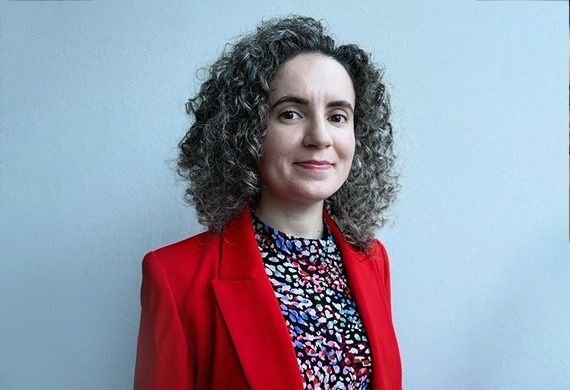

The most impactful careers are often built not by following established paths, but by creating opportunities where none exist.
As organizations accelerate their AI and automation journeys, the leaders creating the greatest impact are those who can seamlessly connect technology, business strategy, and people. For Veronica Gribincia, Head of Automation & AI at Grundfos, transformation is not just about implementing intelligent technologies; it is about building trust, enabling collaboration, and creating environments where innovation can thrive.
Based in Singapore, Veronica leads global AI and automation initiatives from strategy and development to enterprise-wide adoption. Throughout her career spanning research, analytics, strategy, and leadership, she has consistently stepped into emerging opportunities, proving that influence is earned by creating value long before authority is formally granted.
In an insightful conversation with Women Entrepreneurs International Review Magazine, Veronica shares her perspectives on creating influence beyond formal authority, navigating unconventional career paths, leading transformation in global organizations, balancing technical depth with strategic leadership, and redefining what leadership means in an AI-driven world. As a woman leader in AI, she also offers valuable insights for women aspiring to build careers driven by purpose, innovation, and lasting impact.
Read the complete interview to explore Veronica’s leadership journey and key takeaways on AI leadership.
Your career spans research, analytics, strategy, and leadership. How did each transition redefine your ambition as a woman professional?
A. Starting early in my career, I was drawn to solving problems outside traditional role responsibilities. Most often, I discovered that the largest challenges don’t sit within teams, but where work, information and accountability changed hands. With each transition, I found myself drawn to emerging problems that lacked a clear owner rather than established roles.
I was surprised that the most interesting opportunities didn’t come from a predefined career path, but from creating value before there was a formal mandate.
Over time, my ambition shifted from pursuing the next role to helping shape what the next role could be. In my experience, the most meaningful career growth comes from solving problems that organizations have not yet fully defined.
You consistently moved into emerging, undefined roles. What gave you the confidence to build careers where clear roadmaps rarely existed?
I have worked in both highly structured environments and in roles where the path forward was far less defined. Over time, I realised I thrive in the latter. Not because I enjoy uncertainty for its own sake, but because that is often where the greatest opportunities for learning, growth and impact exist.
What gave me the confidence was not certainty, but experience.
I have succeeded at some things and failed at many others, and I learnt that failure is often part of growth rather than the end of the story
As I challenged some of my own limiting beliefs, I became less focused on having all the answers and more comfortable learning as I went.
Your progression reflects increasing influence rather than conventional career progression. How did you intentionally shape opportunities instead of simply accepting them?
There were several occasions where I developed a strong conviction about a business opportunity before it was widely recognised. Rather than waiting for a formal role to be created, I started contributing, building credibility and demonstrating what was possible. That often meant taking on work outside my job description, bringing people together across functions, and being vocal about a vision I believed in.
Over time, I observed that influence often precedes authority. Organisations rarely create roles based on potential alone; they create them once they can clearly see the value. That taught me an important lesson: if you believe strongly in a direction, don't wait for permission to start contributing. Build momentum, create value, and let the role catch up with the work.
As your responsibilities expanded internationally, how did your definition of leadership evolve beyond delivering results to creating organizational influence?
A. During my career, I noticed that neither results nor relationships are enough on their own. You can have a great network, but without results your credibility is limited. Equally, you can consistently deliver results, but your impact will eventually be constrained by what you can achieve yourself. Being in the same company for seven years taught me the value of investing in people, helping others, and not hesitating to ask for help when needed. And building a close circle of trusted partners, and a broader network across the organisation is essential.
Organisational influence sits at the intersection of trust and results. You need both. Relationships may open doors, but consistent delivery is what keeps them open.
Your career demonstrates both technical depth and business leadership. How did you ensure neither became secondary while advancing professionally?
A. I have not maintained a perfect balance, and I don’t think that is realistic. As my responsibilities grew, it became increasingly difficult to maintain the same level of technical depth while also leading change at an organisational level. I had to learn to let go of being the expert in every discussion.
I believe transformation goes far beyond technical excellence. It requires alignment, adoption, communication and execution. Rather than trying to know everything myself, I focused on surrounding myself with highly capable colleagues who could challenge my thinking and bring deep expertise to the table. That taught me that leadership is not about having all the answers, but about bringing the right people together to solve the right problems.
Leading transformation often requires challenging established thinking. How did you earn the credibility to influence decisions beyond your formal responsibilities?
A. Looking back, a big part of my journey was being surrounded by leaders and mentors who saw potential in me before I fully saw it in myself. They created opportunities for me to contribute to challenges that sat outside traditional organisational boundaries and encouraged me to step into spaces that were not clearly defined.
As I did, I discovered that influence is rarely granted; it is earned. Having ideas was never enough on its own. I had to back them up with data, deliver tangible results, and build trust over time. The combination of supportive mentors and leaders, a strong network and a focus on execution gave me the credibility to contribute far beyond my formal responsibilities.
Having grown through multiple strategic roles, how has your relationship with leadership changed as your sphere of influence expanded globally?
I have never believed that leadership requires a formal title. Early in my career, I led in different ways—by openly sharing what I was learning, creating communities where people could learn from one another, and designing more inclusive ways of working. I found that bringing people together around a common purpose could create almost as much impact as formal authority.
As I moved into leadership roles, I had the opportunity to learn more about leading across cultures and balancing management with leadership. Over time, I realised that my role is not to be the centre of the universe for my team, but to provide direction, support and space for people to grow beyond me.
Many women pursue leadership by following proven paths. Your journey appears intentionally unconventional. What convinced you that creating your own path carried greater value?
A. I never consciously chose an unconventional path. What shaped my career was a conviction that some of the most important opportunities sat between established functions. I repeatedly saw organisations struggle to connect business ambitions with technology execution, and I felt there was significant untapped potential in helping bridge that gap.
Over time, I became convinced that the greatest impact could be created at the intersection of the two. It was not always easy. I was often building the bridge while walking on it, navigating organisational complexity, resistance and uncertainty along the way.
Looking back, I was not chasing a different career path; I was pursuing a problem I believed was worth solving.
LAST WORD: Looking at your entire career journey, what should today's women redefine about leadership to build influence that extends far beyond executive titles?
One quote has guided me throughout my career: “People will forget what you said, people will forget what you did, but people will never forget how you made them feel” by Maya Angelou.
We are living through a period of enormous change. Technology is democratising knowledge, roles are evolving, and many people are navigating increasing stress and uncertainty. In that environment, the ability to create trust, connection and belonging becomes even more important. The leaders who create the greatest impact are often those who help people feel heard, valued and capable of making a positive contribution. For me, that is where leadership starts and where lasting influence is built.
Current Issue
Most Viewed
- 1 Talented Indian Female Actors Who Also Moonlight as Successful Producers
- 2 7 Indian Female Podcasters You Must Know About
- 3 7 Powerful Independent Indian Women Journalists Who are Voices of Change
- 4 Ruchikaa Kapoor Sheikh: The Creative Mind Behind Netflix India's Popular Shows
- 5 7 Most Influential Women Educators India has had over the Years
- 6 11 Breakthrough Female Faces Ruling the Indian OTT Platforms
- 7 8 Timeless Female Indian Classical Dancers & their Legacy
- 8 Women's Health Startup HerMD Closing Doors Amid Industry Challenges
- 9 Real Meets Reel: A List of 11 Indian Movies based on Real Women
- 10 Rasha Hassan: A Visionary Leader On A Mission To Transform Dubai's Real Estate Landscape
- 11 5 Indian Women-led IPOs You Must Know About
- 12 11 of the Most Iconic 21st Century Women to become "The First Indian Woman"
- 13 India's 7 Funniest Women Stand-Up Comics You Must Follow
- 14 Aparna Purohit : Leading India's Most Popular OTT Platforms
- 15 How Leaders Can Balance Risk & Innovation in Today's Banking Landscape
- 16 Dr. K. Shilpi Reddy: Sculpting Healthier Futures For The Next Generation With Reforms In Obstetrics Care
- 17 Sylvia Dcosta: A Visionary Business Leader Pushing The Limits And Setting High Professional Standards
- 18 Top 5 All-Rounder Women Cricketers of India
- 19 How Tata AIA is Empowering Women with Insurance That Understands Their Needs


