


The great Indian food story is being rewritten not only in large factories and processing plants, but across small farms, in community kitchens and through the ideas of women entrepreneurs building the next generation of homegrown food brands. From biofortified staples and millet-based products to healthier snacks, plant-based alternatives and organic foods, these women founders are combining India's agricultural strengths with science, innovation and modern consumer needs.
As India celebrates its 80th Independence Day, the food processing industry has emerged as an important pillar of the country's manufacturing and economic growth. India's food processing market is estimated to exceed ₹33 lakh crore in 2024-25 and is projected to reach $535 billion by the end of FY26, according to data cited by IBEF. The sector contributes significantly to both manufacturing and agriculture while accounting for a sizeable share of India's exports. Government initiatives, including the Production Linked Incentive Scheme for Food Processing Industries (PLISFPI), are further encouraging investment and strengthening domestic food-processing capabilities.
Women entrepreneurs are becoming an increasingly visible force within this ecosystem. Women-led enterprises account for close to 39% of India's registered MSMEs, according to the Ministry of MSME, and their role in food and agri-processing extends well beyond launching consumer-facing brands. Many are building farmer networks, creating employment, establishing manufacturing facilities and developing Indian products that are finding markets beyond the country.
For these entrepreneurs, Make in India goes beyond manufacturing a product domestically. It is about strengthening supply chains, creating opportunities for local communities, using India's agricultural resources, developing indigenous products and building businesses that can compete in global markets.
This Independence Day, the Women Entrepreneurs Review team spotlights 10 women-led food brands that are strengthening India's food ecosystem through homegrown products, domestic manufacturing, farmer partnerships and innovative business models.
Yoga Bar - Suhasini Sampath & Anindita Sampath
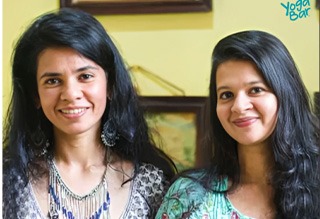 Sisters Suhasini and Anindita Sampath founded Yoga Bar in Bengaluru in 2014, spotting a gap for clean-label, protein-rich snacks in India's market. The brand's portfolio spans health-oriented bars, snacks and everyday nutrition products. Its 60,000 sq. ft. fully automated, in-house manufacturing facility at the India Food Park in Tumkur, Karnataka, gives the founders direct control over production and quality while employing more than 150 local people. By investing in owned manufacturing rather than relying entirely on outsourced production, the Sampath sisters have rooted production, quality control and employment firmly within India, strengthening domestic capability in the health-food category.
Slurrp Farm - Meghana Narayan & Shauravi Malik
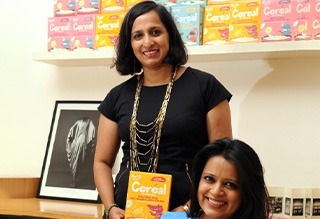 Meghana Narayan and Shauravi Malik founded Slurrp Farm in 2016 to bring the nutritional wisdom of India's traditional kitchen into modern children's food. The brand's range includes cereals, pancakes, noodles and snacks built around millets and whole grains. Through parent company Wholsum Foods, it manufactures across facilities in Uttar Pradesh and Haryana, aligning with India's push to promote millets as nutritious, climate-resilient crops. Slurrp Farm has since expanded into the US, UK and UAE, showing how products developed around Indian ingredients and manufactured domestically can carry the country's food heritage to international consumers.
Also Read: Changemakers: 7 Women Entrepreneurs Taking the Make in India Movement Forward
FarmDidi - Manjari Sharma
 Manjari Sharma founded FarmDidi in 2020 with a model placing rural women at the centre of food production. The startup offers pickles, chutneys, masalas, ghee and papad through a decentralised network of FSSAI-compliant community kitchens across Maharashtra, run by trained women entrepreneurs known as "Didis." More than 1,000 women across over 100 self-help groups have been mobilised into the formal food economy.
As Manjari explains, "By connecting women-led home and small-scale food businesses with consumers across India, FarmDidi helps traditional producers access larger markets and build sustainable livelihoods." The model preserves recipes and traditions while strengthening a self-reliant food ecosystem.
Cosmix - Vibha Harish
 Vibha Harish started Cosmix in Bengaluru in 2019 after her own experience with PCOS led her towards plant-powered nutrition. What began in a 550 sq. ft. room has grown into a 14,000 sq. ft. ISO- and HACCP-certified facility producing around 2,500 units daily. Cosmix develops plant-based nutrition products using adaptogens and superfoods sourced from farmers across India. Rather than depending on contract manufacturers, Vibha and co-founder Soorya Jagadish built an in-house production ecosystem for greater quality control. Sourcing from Indian farmers while scaling domestic manufacturing, Cosmix is helping build capacity in the country's growing clean-nutrition sector.
Open Secret - Ahana Gautam
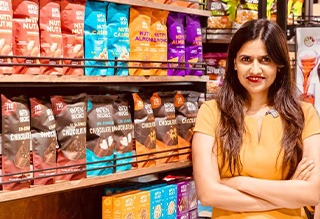 After stints at P&G and General Mills, IIT Bombay and Harvard Business School graduate Ahana Gautam founded Open Secret in 2019 to make India's packaged snacks healthier. Quality-control challenges with contract manufacturing led her to set up Open Secret's own facility in Bhandup, Mumbai, staffed largely by women. Having crossed ₹100 crore in turnover, the company is now expanding with a new sustainability-focused facility of roughly 8,200 sq. m, expected to create around 2,500 direct and 50,000 indirect jobs. Ahana's investment in domestic manufacturing ties product quality directly to local employment and economic opportunity.
Better Nutrition - Aishwarya Bhatnagar
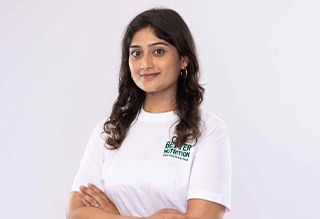 Aishwarya Bhatnagar co-founded Better Nutrition with Prateek Rastogi in Lucknow, developing biofortified staples including atta, rice, pulses and daliya enriched with iron and zinc. The company works with more than 20,000 farmers through its Kisan Ki Dukan network, operating at a run-rate of over 150 tonnes a month.
Aishwarya says, "Make in India is not just about manufacturing products within the country; it is about building stronger, more self-reliant food systems from the ground up." That philosophy starts at the seed, using biofortification to bring nutrient-dense staples from Indian farms into households, connecting agriculture, sourcing and nutrition in one domestic value chain.
ProMeat - Pranjuli Garg
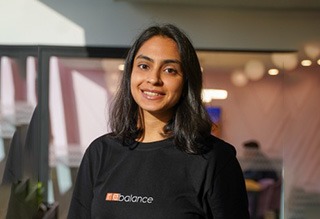 Pranjuli Garg, with co-founders Debabrata Das and Sugriv Gupta, launched ProMeat in 2020 to build plant-based alternatives to chicken using India's own underused and indigenous crops rather than imported protein formulations. Founded in Delhi and now based in Mumbai, ProMeat supplies more than 50 restaurants and hotel chains, including JW Marriott and ITC Hotels, manufacturing through a dedicated co-manufacturing facility. The startup estimates its products cut carbon dioxide emissions by around 90% compared with conventional meat. By pairing Indian agricultural resources with food technology and domestic manufacturing, Pranjuli is extending Make in India into an emerging protein category.
Repeat Gud - Isha Jhawar
 At 23, Isha Jhawar founded Repeat Gud in Chhattisgarh in 2022 after her own health experiences pushed her to create condiments free of refined sugar and palm oil. She produces ketchup, mayonnaise, and other sauces, arriving at her formulations after 172 product trials. Isha built her manufacturing unit in Dhamtari, close to her home base in Raipur, keeping production near her roots for tighter quality control. Her funding win on Shark Tank India brought further visibility. Isha's journey highlights the entrepreneurial potential of India's Tier-2 cities, proving food brands can scale nationally from outside traditional startup hubs.
Naturally Yours - Priya Prakash
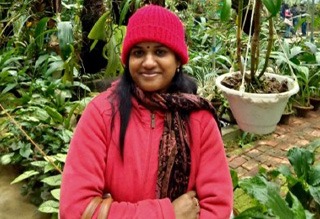 Biotechnologist and nutrition coach Priya Prakash co-founded Naturally Yours with her husband Vinod Kumar in Mumbai in 2010, when natural and organic options were scarce in Indian retail. The brand now offers more than 100 products spanning rice, dal, oils, healthy noodles and gluten-free pasta, built on a sourcing and processing network of farmers and partners across India. It also focuses on fair pricing for farmer groups, including millet growers in Anantapur. Priya's approach shows how a homegrown brand can create value across the supply chain, keeping domestic sourcing and farmer livelihoods central to its growth.
Praakritik - Dharmishtha Goenka
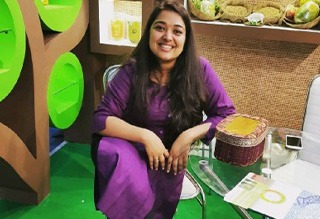 Dharmishtha Goenka co-founded Praakritik in Mumbai in 2014 to make certified organic food more accessible to Indian households while supporting sustainable farming. The company offers organic flours, oils, sweeteners and spices, sourced through a network of nearly 2,000 farmers across India. Its products carry NOP, NPOP, USDA and USFDA certifications, helping Praakritik serve domestic consumers while expanding into markets such as Singapore and the Middle East. By building a supply network rooted in Indian agricultural communities, Goenka's brand shows how India-grown products can earn consumer trust at home while building credibility abroad.
Also Read: 7 Proven Leadership Habits that Define Successful Women CXOs
Women Entrepreneurs Are Building India's Next Food Economy
Together, these women-led food startups demonstrate the many ways Make in India is taking shape across the country's food sector. Some are investing in large-scale manufacturing facilities, while others are creating decentralised production networks within rural communities. Some are working directly with thousands of farmers, while others are using Indian crops and food technology to develop products in emerging categories.
What connects them is a commitment to building within India through manufacturing, farmer partnerships, product development, employment and stronger domestic supply chains. Their journeys show that India's food-processing opportunity is not simply about producing more - it is about creating stronger capabilities, adding value to Indian agricultural resources and developing products that meet the evolving needs of consumers at home while competing internationally.
This Independence Day, their stories serve as a reminder that Make in India is not only about what the country manufactures, but also about the entrepreneurs, farmers, workers and communities who build that future together.
Current Issue
Most Viewed
- 1 Talented Indian Female Actors Who Also Moonlight as Successful Producers
- 2 7 Indian Female Podcasters You Must Know About
- 3 7 Powerful Independent Indian Women Journalists Who are Voices of Change
- 4 Ruchikaa Kapoor Sheikh: The Creative Mind Behind Netflix India's Popular Shows
- 5 7 Most Influential Women Educators India has had over the Years
- 6 11 Breakthrough Female Faces Ruling the Indian OTT Platforms
- 7 8 Timeless Female Indian Classical Dancers & their Legacy
- 8 Women's Health Startup HerMD Closing Doors Amid Industry Challenges
- 9 Real Meets Reel: A List of 11 Indian Movies based on Real Women
- 10 Rasha Hassan: A Visionary Leader On A Mission To Transform Dubai's Real Estate Landscape
- 11 5 Indian Women-led IPOs You Must Know About
- 12 11 of the Most Iconic 21st Century Women to become "The First Indian Woman"
- 13 India's 7 Funniest Women Stand-Up Comics You Must Follow
- 14 Aparna Purohit : Leading India's Most Popular OTT Platforms
- 15 How Leaders Can Balance Risk & Innovation in Today's Banking Landscape
- 16 Dr. K. Shilpi Reddy: Sculpting Healthier Futures For The Next Generation With Reforms In Obstetrics Care
- 17 Sylvia Dcosta: A Visionary Business Leader Pushing The Limits And Setting High Professional Standards
- 18 Top 5 All-Rounder Women Cricketers of India
- 19 How Tata AIA is Empowering Women with Insurance That Understands Their Needs


