

Data has evolved from being a support function to becoming a key driver of business strategy.
In today’s corporate world where decisions become increasingly data-driven, CDOs have not only been tasked with making sense of numbers but also with linking data insights to actions and facilitating the balancing act between meeting consumer demands, operational efficiencies, and business growth.
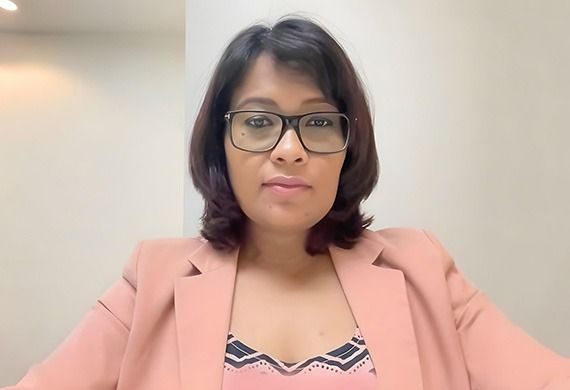
Data science leader Rakhee Dhar says that analytics will create value when it impacts decision making, achieves outcomes, and stays highly associated with business objectives.
In a recent interaction with Women Entrepreneurs Review Magazine, Rakhee talks about how her cross-sector experiences have helped develop her leadership style and the increasing significance of data in strategy sessions.
Leveraging her experience over two decades in fields such as retail, telecommunication, publishing, insurance, and manufacturing, Rakhee shares her views about adaptability, business partnering, customer-oriented decisions, and how to establish as a credible leader within data-driven scenarios.
An ICF ACC-certified coach, and a strategic, Rakhee is passionate about leadership development and continuous learning, she is recognized for her ability to integrate analytical skills with strategic thinking in order to foster organizational growth and sustainable change.
Read the full article below for deeper insights.
Q. How did working across industries like retail, telecom, and insurance shape the way you personally show up today as a data science leader?
A. Through the years, I have remained curious to learn and absorb new information, be ready to learn from everyone. As a leader, it keeps me grounded and hands-on and work hand-in-hand with my team. It helped me to adapt to different business models, data realities, and stakeholder expectations.
Each industry has different types of data structures and regulations. The diverse industry experience helped me to learn about being agile, open to new learnings in each role and not get complacent. As a leader, I invest heavily in storytelling and alignment. I communicate differently with different stakeholders. I have learned to build adaptable teams, less attached to specific tools or techniques and more committed to outcomes, adaptability, and business partnership. It shaped me into a leader who focuses on impact, scalability, and empowering teams to operate effectively in any domain.
Q. How did your perspective shift when data moved from being an analytical asset to a core part of strategic conversations?
A. This is the need of the hour. Analytics is not just a back pocket resource for business leaders. It is being used actively for strategic conversations and to drive business outcomes. It is equally important for analysts/ data scientists to be able to speak business language to translate numbers to insights. It’s the shift from “insights” to “influence”.
I began thinking more in terms of operating models, talent strategy, and data culture—not just individual use cases. At the strategic level, decisions aren’t just about optimizing a metric. They involve trade-offs: growth vs. risk, speed vs. control, personalization vs. privacy. I shifted from being primarily a technical leader to being a translator and connector, ensuring data initiatives supported enterprise priorities.
Q. Working closely with various brands, how do you ensure customer insights remain authentic and not lost behind metrics or performance language?
A. Insights have to be actionable. Translating numbers to actions that the business team can implement, is an important role for my team. This requires that the team stays close to business and is in constant conversation with them to ensure they see the end-to-end use of the analysis and learn from it. It is equally important for leaders to keep the analysts/data scientists in the loop and work hand in hand. This is a challenge in consulting roles where this level of transparency is not always maintained and sometimes not possible. That is where the gap occurs and the business model can be improved for better partnership.
Q. When those customer insights suggest different possible paths, how do you personally sense which direction best serves both the customer and the business?
A. A good understanding of the business is key to make the right recommendations about the customers to the business team. It is an amalgamation of customer centric view and business acumen that makes the customer insights a win for both customers and the business performance.
I use a layered lens to decide what best serves both the customer and the business. Look at options that support short term gain vs long term value creation. If multiple paths serve the customer reasonably well, I prefer the one that allows for learning and iteration. Serving the customer well is essential—but it must also be economically viable and executable.
Rakhee’s 5 Insights on Turning Data into Strategic Influence
-
Data becomes valuable only when it shapes decisions and drives business outcomes.
-
Effective leaders convert complex information into clear, actionable business decisions.
-
Customer-centricity delivers results when balanced with commercial and operational realities.
-
Adaptability matters more than expertise in any single industry, tool, or methodology.
-
Leadership credibility is built through consistency, self-awareness, and trusted partnerships.
Q. As a woman with long-term leadership visibility in analytics, how have you consciously shaped your professional identity beyond titles and technical expertise?
A. My professional identity is less about being “a woman in analytics” and more about being a leader who happens to be a woman—who leads with strategic clarity, human awareness, and a commitment to building environments where others can thrive. Early in my career, I focused heavily on credibility—technical depth, delivery excellence, measurable impact.
I realized sustainable leadership requires something more intentional and human. There’s a difference between being respected for skill and being recognized for perspective.
I shifted my identity from “strong technical leader” to “strategic thought partner.” Women often feel pressure to choose between being “assertive” or “approachable.” I feel they are not opposites. I consciously lead with clarity and standards, but also with empathy and psychological safety.
Personally, I have tried to keep my learning needs constantly on. I have diversified into related areas that can help me become a better professional. Being a Coach helped my personal growth as a leader. I am working with a non-profit organisation and look for avenues to work with young adults. I also believe that pursuing some kind of hobbies; specially sports or anything creative, keeps one well balanced, as these skills are transferable in both personal and professional lives.
LAST WORD: What advice would you share with women leaders who want to build lasting credibility in data-driven roles?
Credibility starts with competency. Develop business fluency, not just data and analytical fluency. Define your leadership style early, what you stand for and what behaviors cannot be compromised. Build alliances and partnerships, just quiet excellence doesn’t work.
Play the long game by being consistent, fair, owning mistakes and delivering results.
Be grounded and aware of who you are, be ok with uncertainty and have the clarity that any adversity is temporary. One needs to develop confidence in their abilities, being aware of their weaknesses, ethical behaviour and being empathetic to self and others. Speaking factually and not driven by emotions is also key to staying balanced in their approach towards work and life.
“Develop business fluency, stay true to your values, build strong partnerships, and let consistency, empathy, and integrity define your leadership journey”.
Current Issue

Most Viewed
- 1 Talented Indian Female Actors Who Also Moonlight as Successful Producers
- 2 7 Indian Female Podcasters You Must Know About
- 3 7 Powerful Independent Indian Women Journalists Who are Voices of Change
- 4 Ruchikaa Kapoor Sheikh: The Creative Mind Behind Netflix India's Popular Shows
- 5 7 Most Influential Women Educators India has had over the Years
- 6 11 Breakthrough Female Faces Ruling the Indian OTT Platforms
- 7 8 Timeless Female Indian Classical Dancers & their Legacy
- 8 Women's Health Startup HerMD Closing Doors Amid Industry Challenges
- 9 Real Meets Reel: A List of 11 Indian Movies based on Real Women
- 10 Rasha Hassan: A Visionary Leader On A Mission To Transform Dubai's Real Estate Landscape
- 11 5 Indian Women-led IPOs You Must Know About
- 12 11 of the Most Iconic 21st Century Women to become "The First Indian Woman"
- 13 India's 7 Funniest Women Stand-Up Comics You Must Follow
- 14 Aparna Purohit : Leading India's Most Popular OTT Platforms
- 15 How Leaders Can Balance Risk & Innovation in Today's Banking Landscape
- 16 Dr. K. Shilpi Reddy: Sculpting Healthier Futures For The Next Generation With Reforms In Obstetrics Care
- 17 Sylvia Dcosta: A Visionary Business Leader Pushing The Limits And Setting High Professional Standards
- 18 Top 5 All-Rounder Women Cricketers of India
- 19 How Tata AIA is Empowering Women with Insurance That Understands Their Needs


