
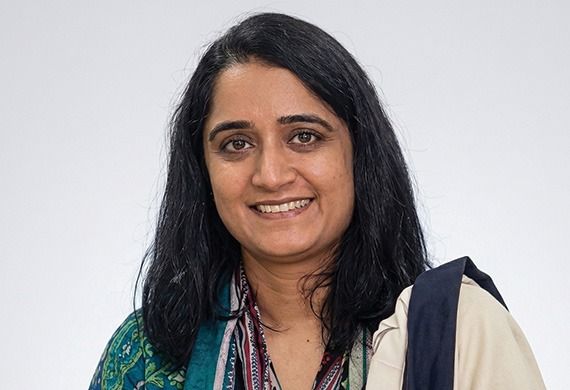

In an era of constant disruption, successful leadership is no longer about taking the biggest risks but about combining innovation with commercial acumen, disciplined experimentation, and accountability. Business strategy and HR expert, Kajal Singh believes that leaders who master this balance are best positioned to drive sustainable growth and lasting business impact.
Kajal brings over 18 years of cross-industry experience spanning strategy, consulting, digital transformation, and human resources.
In conversation with Women Entrepreneurs Review Magazine, Kajal shares her perspectives on how innovation is redefining leadership for women stepping into business ownership. She reflects on her journey across HR, consulting, and strategy while highlighting risk-taking, commercial thinking, and mindset shifts needed to move from execution roles forward.
Read the full article below for deeper insights.
Q. How is innovation redefining leadership today, especially for women stepping into business ownership driving strategy, process transformation, and digital outcomes across industries?
A. Innovation has moved from being a capability to becoming a leadership responsibility. Today, leaders are not just expected to manage operations but to constantly reimagine how value is created, delivered, and scaled. With the rapid acceleration of AI and digital technologies, business environments have become highly dynamic, and conventional technical roles are already being disrupted. In this context, innovation becomes the key differentiator between organizations that adapt and those that fall behind.
For women stepping into business ownership and strategy roles, innovation offers a powerful lever to lead transformation. Not through big, dramatic ideas, but through better decisions, smarter processes, and sharper commercial thinking. The leaders who will stand out are those who use innovation to drive clear business outcomes, not just technological change.
It allows leaders to challenge legacy processes, redesign customer journeys, and drive digital outcomes that are aligned with business goals rather than technology for its own sake.
Across industries — whether financial services, manufacturing, healthcare, or retail — leaders who combine innovation with execution discipline are shaping competitive advantage.
Ultimately, innovation is no longer optional; it is the lens through which strategy, process transformation, and leadership relevance are being defined. Leaders who foster experimentation while staying accountable for outcomes will set the direction for the next phase of growth.
Q. Early in your leadership journey, what moments helped you realize innovation could be more than execution becoming your voice, leverage, and a way to take on bigger business responsibility?
A. Early in my leadership journey, I realized that innovation is often misunderstood. Many people associate it with large investments, complex technology, or disruptive ideas. In reality, innovation begins with a deep understanding of the business. When you truly understand how the business works — where friction exists, where customers struggle, or where processes slow decisions — opportunities for innovation naturally emerge.
For me, innovation first showed up in small but meaningful ways: improving a process, simplifying a workflow, adopting a digital tool that saved time, or questioning why something was done a certain way. These were not large transformation programs, but they created measurable impact. Over time, I saw that leaders who consistently solved real business problems earned greater trust and influence and that credibility naturally opens doors to larger responsibilities
That shift was important — innovation stopped being about execution and became a way to shape conversations, challenge assumptions, and contribute strategically. As the scale of problems grew, so did the scope of responsibility. Innovation, therefore, is less about big ideas and more about developing the mindset to continuously find better ways to create value.
Q. Many women hesitate to take on risk-heavy business roles. How have you built your own risk appetite while balancing experimentation, accountability, and results in complex environments?
A. Risk appetite is not something you are born with; it is something you build through understanding and preparation. Working in regulated environments taught me that risk does not mean recklessness. It means making informed decisions with clarity on impact, compliance, and business outcomes.
I learned to approach risk by breaking it into manageable parts — testing ideas through pilots, validating assumptions early, and using data to guide decisions rather than relying on intuition alone. Experimentation becomes safer when there are clear guardrails and measurable outcomes. This creates space for innovation while maintaining accountability.
Another important shift was reframing failure. Not every experiment delivers expected results, but each one generates learning that improves future decisions. Over time, consistent small wins build confidence to take bigger bets.
For many women leaders, hesitation often comes from the pressure to be perfect. My experience has shown that organizations value leaders who take thoughtful, calculated risks and own outcomes transparently. Balancing experimentation with discipline allows you to drive change without compromising trust — and that is where real leadership credibility is built.
5 Key Takeaways on Innovation & Risk Appetite
1. Innovation is now a leadership responsibility, not a specialist function
Practical takeaway: Treat innovation as part of every leadership decision, not as a separate initiative.
2. Small improvements often create bigger business impact than big ideas
Practical takeaway: Focus on solving real business problems and delivering measurable outcomes before pursuing large-scale transformation.
3. Commercial thinking is the bridge from execution to influence
Practical takeaway: When proposing any innovation, clearly articulate its commercial impact and expected business results.
4. Risk appetite is built through structured experimentation
Practical takeaway: Replace "all-or-nothing" decisions with small experiments that generate evidence before scaling investments.
Q. As your career evolved across HR, consulting, and strategy, how did you consciously move from support roles to influencing core business decisions through innovation and commercial thinking?
A. The biggest shift for me was recognizing that business orientation is essential, irrespective of function. Whether you work in HR, consulting, or strategy, your ability to influence outcomes depends on how well you understand the business model — how value is created, where revenue comes from, and what challenges impact growth.
Early in my career, like many professionals in support roles, the focus was on delivering processes efficiently. Over time, I consciously started connecting my work to commercial outcomes — asking how a decision would affect sales, cost efficiency, productivity, or customer experience. That shift changed conversations from execution to impact.
Innovation became a natural extension of this thinking. Instead of improving processes in isolation, the focus moved to solving business problems and enabling better decisions. When you begin to speak the language of business and align ideas with measurable outcomes, you automatically move closer to core decision-making. Influence does not come from title or function; it comes from demonstrating that your thinking can drive business value.
Q. From your experience mentoring women leaders, what internal mindset shifts are essential for moving from being reliable executors to confident, innovation-led business leaders?
A. The first mindset shift is recognizing that innovation is gender-agnostic. Leadership is not about who speaks loudest; it is about who connects decisions to outcomes. Many women leaders are highly reliable executors, but the transition to innovation-led leadership begins when one starts asking: Am I only completing tasks, or am I solving a business problem?
Every role, regardless of function, should be viewed through the lens of business impact — whether it drives revenue, reduces cost, improves customer experience, or builds long-term competitive advantage. This shift from activity thinking to value creation is critical.
Another area that requires conscious development is business orientation. Women often underestimate the importance of market awareness, financial understanding, and strategic networking. These are not secondary skills; they shape influence and decision-making power. When women strengthen commercial acumen and actively build cross-functional networks, they naturally move from execution roles into spaces where strategy and innovation are shaped.
LAST WORD: Advice for women leaders on claiming business roles early, building strategic visibility, and developing the courage to take responsibility for outcomes not just processes:
Career growth rarely comes from doing more of the same work well; it comes from expanding perspective. If someone views their role with a narrow lens, growth will remain limited. Long-term leadership is built through depth of learning, not through chasing quick promotions or comfort-driven decisions.
Many women unconsciously prioritize safety by choosing support functions, this can limit exposure to core business decisions. The key is to actively seek business-facing roles early—roles where decisions affect revenue, customers, or market outcomes. This begins with intentional conversations with managers, business leaders, and HR about readiness for larger responsibilities.
Strategic visibility is not about self-promotion; it is about being present where decisions are made and taking ownership of outcomes, not just processes. While organizations increasingly encourage diversity, many still lack structured mentorship and leadership development pathways for women. In such environments, waiting to be nominated is not enough. Women must raise their hand for challenging assignments, step into ambiguity, and demonstrate ownership beyond their job description.
The shift from process ownership to business ownership is often the defining moment that transforms potential into leadership.
Raising your hand for challenging assignments often becomes the defining step toward leadership.
Kajal Singh’s Top 5 Career Advice for Women:
- Think business impact, not task completion.
- Develop commercial and financial acumen.
- Raise your hand for challenging assignments.
- Invest in learning and broadening your perspective.
- Choose growth opportunities over comfort and safety.
Women leaders can accelerate their journey from execution to influence by focusing on business impact, strengthening commercial acumen, and embracing calculated risks that drive growth. The transition from process ownership to business ownership is often the defining step that transforms potential into lasting leadership.
Current Issue
Most Viewed
- 1 Talented Indian Female Actors Who Also Moonlight as Successful Producers
- 2 7 Indian Female Podcasters You Must Know About
- 3 7 Powerful Independent Indian Women Journalists Who are Voices of Change
- 4 Ruchikaa Kapoor Sheikh: The Creative Mind Behind Netflix India's Popular Shows
- 5 7 Most Influential Women Educators India has had over the Years
- 6 11 Breakthrough Female Faces Ruling the Indian OTT Platforms
- 7 8 Timeless Female Indian Classical Dancers & their Legacy
- 8 Women's Health Startup HerMD Closing Doors Amid Industry Challenges
- 9 Real Meets Reel: A List of 11 Indian Movies based on Real Women
- 10 Rasha Hassan: A Visionary Leader On A Mission To Transform Dubai's Real Estate Landscape
- 11 5 Indian Women-led IPOs You Must Know About
- 12 11 of the Most Iconic 21st Century Women to become "The First Indian Woman"
- 13 India's 7 Funniest Women Stand-Up Comics You Must Follow
- 14 Aparna Purohit : Leading India's Most Popular OTT Platforms
- 15 How Leaders Can Balance Risk & Innovation in Today's Banking Landscape
- 16 Dr. K. Shilpi Reddy: Sculpting Healthier Futures For The Next Generation With Reforms In Obstetrics Care
- 17 Sylvia Dcosta: A Visionary Business Leader Pushing The Limits And Setting High Professional Standards
- 18 Top 5 All-Rounder Women Cricketers of India
- 19 How Tata AIA is Empowering Women with Insurance That Understands Their Needs


