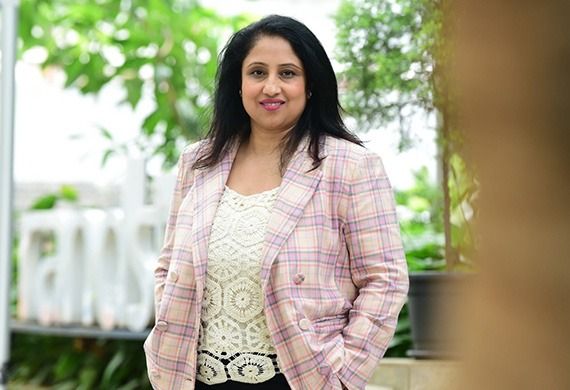

Marketing has traditionally been considered a ‘creative’ function. In the recent past however, marketers have transitioned from being mere brand custodians to growth partners. For Randstad CMO, Cauvery Uthappa, this transition crystallized during the post-pandemic recovery phase around 2022. This transition resulted in the marketing function actively contributing to business strategy and building the talent pipeline.
In conversation with team Women Entrepreneurs Review, Cauvery takes us through this transition. As a strategic marketing leader with over two decades of diverse experience in marketing, strategy, and leadership, she shares insights on reshaping marketing into a revenue-driving force. She highlights data-led strategies, cross-functional alignment, and “bionic marketing” as key to building credibility, demand, and long-term business impact.
For more insights on marketing’s evolution from brand stewardship to business growth, read the full interview.
Q. Marketing is still viewed as a function that amplifies growth rather than architects it. In your journey as a modern CMO, when did you consciously shift from being a brand custodian to becoming a growth partner influencing business outcomes?
A. In my career trajectory as a marketer, the shift from being a brand custodian to a growth partner truly crystallized during the post-pandemic recovery phase around 2022, when old playbooks were rewritten.
As the talent landscape evolved rapidly with hybrid work models and skill shortages, I realized marketing couldn't just amplify our brand story; it had to directly influence business strategy and build the talent pipeline. This meant collaborating closely with sales, operations, and leadership to integrate marketing insights into a strategic roadmap, helping us navigate complexity and leapfrog into incremental growth.
For instance, we launched multichannel, data-driven campaigns not only to build awareness and generate qualified leads but also to maintain the market velocity that directly boosted our client acquisition and placement success rates, turning marketing into a core driver of revenue growth.
Q. How did this shift change how you measure marketing success, moving beyond visibility metrics toward demand creation, pipeline contribution, and long-term business impact?
A. This shift fundamentally transformed our success metrics. Previously, we relied on absolute metrics like reach, impressions, and engagement rates, which failed to capture the true drivers of incremental business growth. To address this, we transitioned to a unified, full-funnel framework that's outcome-based. It reconciles online and offline data to measure cross-channel incrementality and actual performance outcomes such as marketing-qualified leads, along with pipeline contribution (e.g. percentage of revenue influenced by marketing) and long-term impact (e.g., career progression and retention rates).
At Randstad, we've implemented tools like AI-led marketing automation and CRM integration to track how campaigns move prospects through the funnel, ensuring every initiative ties back to business ROI. This data-centric approach enables sharp segmentation for faster experimentation and more rigorous measurement, clearly demonstrating marketing's direct role in achieving annual growth targets.
Q. As marketing aligns closely with revenue and go-to-market plans, how do you balance creativity and structure to keep marketing inspiring yet financially accountable?
A. The key is sticking to marketing's first principles without trade-offs - balancing creativity and structure is essential for go-to-market alignment. I encourage a framework where creativity fuels innovation (think bold storytelling around human potential, partner for talent and the future of work) while structure ensures accountability through agile planning, A/B testing, and regular reviews tied to revenue goals.
For example, we set clear metrics for each campaign, blending artistic elements like emotive content with analytical rigor and attribution modeling. This approach keeps the team inspired, as they see their creative ideas delivering tangible results, while maintaining financial discipline in a competitive, specialized HR services market.
Q. In people-centric industries, growth often depends on trust, credibility, and timing rather than tangible products. How have you reimagined content and demand strategies to build credibility while delivering measurable business results?
A. In people-centric industries like ours- catering to multigenerational stakeholders where trust and timing are paramount, we've reimagined content and demand strategies around value-driven engagement. Instead of product-push tactics, we create thought leadership content like webinars, reports on talent trends, and personalized advisory pieces that position us as credible partners in workforce solutions.
For demand generation, we use account-based marketing to target key clients at the right moments, such as during hiring peaks, measuring success through conversion rates and deal velocity. This approach has built long-term credibility while delivering measurable results, like a 25% increase in client inquiries from targeted campaigns.
Q. How do you empower your marketing teams to think like business leaders while nurturing curiosity, learning, and experimentation?
A. Empowering my teams starts with fostering a business-first mindset through cross-functional exposure- like rotating marketers into sales meetings or strategy sessions to grasp P&L impacts. I nurture curiosity with dedicated learning time, and at Randstad, we run "innovation sprints" for low-risk experimentation pilots, testing new channels. Regular feedback loops and recognition for bold ideas make teams feel safe to innovate, while staying aligned with business objectives and creating a culture positioning marketers as strategic leaders.
The future lies in "bionic marketing"- a human + machine model that fuses human creativity and intuition with AI's precision and speed.
This shifts marketing from a project-based function to a system-driven powerhouse, where AI handles data-heavy orchestration while humans focus on high-level strategy and emotional storytelling.
Five Takeaways for Modern Marketers
- Think like a growth partner. Align marketing with business goals, focusing on customer acquisition, pipeline, and revenue—not just brand visibility.
- Measure business impact. Move beyond vanity metrics to track MQLs, pipeline contribution, ROI, and long-term customer value.
- Balance creativity with accountability. Pair compelling storytelling with data, experimentation, and continuous optimization.
- Lead with trust. Build demand through thought leadership, insights, and value-driven content rather than product-first messaging.
- Build AI-enabled, business-first teams. Combine cross-functional thinking with AI-powered efficiency, freeing marketers to focus on strategy, creativity, and customer relationships.
LAST WORD: Advice for women aspiring to lead marketing as a growth engine on mindset shifts and skills essential to gain influence and leadership voice:
For women aspiring to lead marketing as a growth engine, key mindset shifts include embracing data fluency to speak the language of the boardroom and viewing failures as learning opportunities to build resilience.
Essential skills include strategic thinking to connect marketing to business outcomes, influential communication to gain stakeholder buy-in, and networking to amplify your voice. Seek mentors, advocate for your ideas assertively, and prioritize work-life integration to sustain long-term leadership. In my experience, authenticity and continuous upskilling have been gamechangers in earning that influential seat at the table.
Current Issue

Most Viewed
- 1 Talented Indian Female Actors Who Also Moonlight as Successful Producers
- 2 7 Indian Female Podcasters You Must Know About
- 3 7 Powerful Independent Indian Women Journalists Who are Voices of Change
- 4 Ruchikaa Kapoor Sheikh: The Creative Mind Behind Netflix India's Popular Shows
- 5 7 Most Influential Women Educators India has had over the Years
- 6 11 Breakthrough Female Faces Ruling the Indian OTT Platforms
- 7 8 Timeless Female Indian Classical Dancers & their Legacy
- 8 Women's Health Startup HerMD Closing Doors Amid Industry Challenges
- 9 Real Meets Reel: A List of 11 Indian Movies based on Real Women
- 10 Rasha Hassan: A Visionary Leader On A Mission To Transform Dubai's Real Estate Landscape
- 11 5 Indian Women-led IPOs You Must Know About
- 12 11 of the Most Iconic 21st Century Women to become "The First Indian Woman"
- 13 India's 7 Funniest Women Stand-Up Comics You Must Follow
- 14 Aparna Purohit : Leading India's Most Popular OTT Platforms
- 15 How Leaders Can Balance Risk & Innovation in Today's Banking Landscape
- 16 Dr. K. Shilpi Reddy: Sculpting Healthier Futures For The Next Generation With Reforms In Obstetrics Care
- 17 Sylvia Dcosta: A Visionary Business Leader Pushing The Limits And Setting High Professional Standards
- 18 Top 5 All-Rounder Women Cricketers of India
- 19 How Tata AIA is Empowering Women with Insurance That Understands Their Needs


