
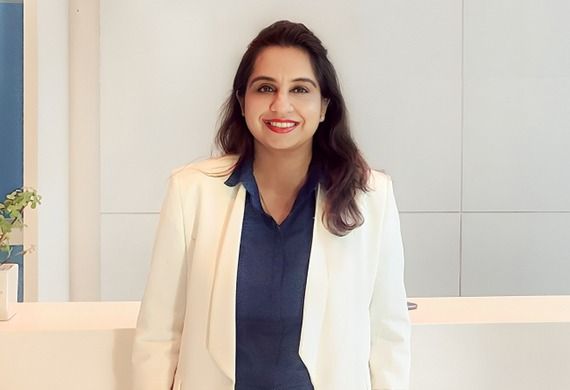

Rachna is a strategic marketing and ESG professional with extensive experience across marketing, product development, corporate planning, and innovation. She has led go-to-market strategies, product planning, and brand initiatives across global organizations, and is recognized for building high-impact teams, driving thought leadership, and advancing purpose-driven business strategies.
In an engaging interaction with Women Entrepreneurs Review Magazine, Rachna shares her perspectives on how sustainability is redefining leadership in manufacturing, highlighting the importance of foresight, collaboration, and long-term value creation while reflecting on personal leadership experiences, mentoring women in strategy and ESG roles, and navigating change with conviction and empathy.
To learn more about her leadership journey and insights on shaping future-ready manufacturing, read the full article below.
Manufacturing is undergoing a sustainability-led reinvention. How is this reshaping leadership expectations, especially for women stepping into strategic, future-ready roles?
Manufacturing is at a point where sustainability is no longer a parallel agenda; it is redefining how leadership itself is practiced. The expectation today is not only to deliver results, but to anticipate future risks, build resilience into decisions, and create value that lasts beyond business cycles. These shift uplift leaders who can think systemically and act responsibly at the same time.
For women stepping into strategic roles, this is a significant moment. The leadership qualities now in demand—foresight, empathy, collaboration, and long-term thinking—are central to navigating this path. What was once seen as an alternative leadership style is becoming the blueprint for future-ready manufacturing leadership.
As manufacturing leadership evolves toward purpose and sustainability, what personal inflection points helped you step confidently into strategic influence?
My confidence came from seeing the same patterns repeat across very different industries. Over time, I realized that while the settings change, the core questions around growth, risk, and long-term value remain similar. That helped me trust my judgment. I also learned that preparation gives you a quiet kind of power. When you understand the context well, you don’t need to compete for attention; your voice carries judgment on its own. I stopped trying to fit into any fixed mould and focused instead on being clear and consistent in my thinking. Over time, I’ve learned that strategic influence grows when people begin to rely on your perspective, not when you feel the need to prove it.
As you moved from product-led thinking to solution-driven value creation, how did your leadership style evolve to bring teams, partners, and stakeholders along this journey?
I’ve learned that solutions work best when people genuinely feel part of them.
My leadership shifted from giving direction to building shared understanding. I focus on explaining why something matters, not just what needs to be done.
When teams see the bigger picture, they make stronger decisions on their own. With partners and stakeholders, I prefer honest conversations about outcomes rather than transactions. It may take more time initially, but it builds trust. And once people feel included in the thinking, change becomes much easier to move forward together.
In moments of resistance or uncertainty, especially around sustainability and change, can you share a situation where conviction and empathy helped you shift mindsets at scale?
I’ve found that resistance usually comes from uncertainty rather than opposition. In sustainability conversations, concerns often revolve around what change might mean for daily work. Pushing harder can’t always work. So, I try to listen first and acknowledge those comes with honestly. Conviction helps me stay clear on direction, while empathy helps others feel comfortable engaging with it. When ideas are backed by practical examples and small, visible results, thinking begins to improve. Trust builds gradually, and once people see that sustainability can strengthen the business, not disrupt it, momentum starts to grow naturally.
While mentoring cross-functional teams, what leadership behaviors do you consciously model to encourage more women to pursue strategy, ESG, and decision-making roles in manufacturing?
I believe leadership doesn’t come in a single style. You don’t have to be the loudest person in the room to have influence. I encourage women to share their views early, even when their thinking is still evolving. I also make sure they are part of complex conversations, because confidence builds through exposure, not observation. Strategy and ESG can sound intimidating, but I believe on how closely they connect to real business decisions. By being open about how I learn and decide, I hope these roles feel realistic and within reach, not reserved for a select few.
LAST WORD: Advice for Women Leaders Aspiring to Shape Manufacturing’s Future
I would say, give yourself time. Careers in manufacturing don’t move in straight lines, and there will be phases that feel slow or uncomfortable. Stay close to the work, but don’t lose touch with yourself. Purpose and performance don’t compete; when they align, both become stronger. Keep learning, ask for feedback, and build relationships that support and stretch you. Most importantly, let your leadership evolve. You don’t need all the answers early on. Resilience comes from staying curious, grounded, and open to growing alongside the industry.
Current Issue
Most Viewed
- 1 Talented Indian Female Actors Who Also Moonlight as Successful Producers
- 2 7 Indian Female Podcasters You Must Know About
- 3 7 Powerful Independent Indian Women Journalists Who are Voices of Change
- 4 Ruchikaa Kapoor Sheikh: The Creative Mind Behind Netflix India's Popular Shows
- 5 7 Most Influential Women Educators India has had over the Years
- 6 11 Breakthrough Female Faces Ruling the Indian OTT Platforms
- 7 8 Timeless Female Indian Classical Dancers & their Legacy
- 8 Women's Health Startup HerMD Closing Doors Amid Industry Challenges
- 9 Real Meets Reel: A List of 11 Indian Movies based on Real Women
- 10 Rasha Hassan: A Visionary Leader On A Mission To Transform Dubai's Real Estate Landscape
- 11 5 Indian Women-led IPOs You Must Know About
- 12 11 of the Most Iconic 21st Century Women to become "The First Indian Woman"
- 13 India's 7 Funniest Women Stand-Up Comics You Must Follow
- 14 Aparna Purohit : Leading India's Most Popular OTT Platforms
- 15 How Leaders Can Balance Risk & Innovation in Today's Banking Landscape
- 16 Dr. K. Shilpi Reddy: Sculpting Healthier Futures For The Next Generation With Reforms In Obstetrics Care
- 17 Sylvia Dcosta: A Visionary Business Leader Pushing The Limits And Setting High Professional Standards
- 18 Top 5 All-Rounder Women Cricketers of India
- 19 How Tata AIA is Empowering Women with Insurance That Understands Their Needs


