
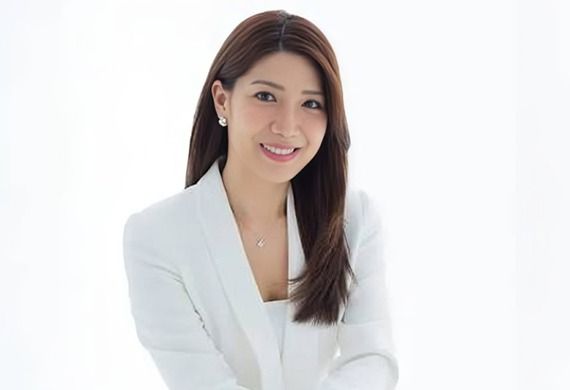

In today’s interconnected business landscape, effective leadership demands more than commercial success; it requires cultural agility, purposeful decision-making, inclusivity, and a commitment to continuous learning. Raen Lim believes that the most impactful leaders are those who remain curious, embrace diverse perspectives, and empower people to thrive.
A seasoned business leader with more than 20 years of experience across sales, marketing, and business development, Raen has built a distinguished career driving growth and transformation across the Asia-Pacific region. Passionate about leveraging technology to accelerate digital innovation, she has helped organizations achieve meaningful business outcomes while fostering high-performing, inclusive teams.
In this exclusive interaction with Women Entrepreneurs Review International Magazine, Raen reflects on her leadership journey across Asia Pacific and Japan, sharing insights on navigating cultural diversity, balancing performance with purpose, championing women in leadership, and redefining success on her own terms.
Read the completely article for deeper insights.
Q. As a regional leader across Asia Pacific and Japan, how has your leadership journey evolved while navigating diverse cultures, markets, and expectations?
A. Leading across APJ teaches you very quickly that a one-size-fits-all playbook doesn’t work. What works in Sydney won't land the same way in Tokyo, and how you build trust in Hong Kong is different to how you do it in Singapore or Seoul.
Early in my career, I definitely understood the value of listening as a key step before moving into the action phase. This was drilled into me in a lot of my roles, and so it’s something that’s helped me in my current capacity for sure. Over time, and after a lot of conversations with customers, partners, and team members across the region, I've learned that the strongest decisions come from genuinely listening and understanding the local context first, then applying global thinking where it makes sense.
My leadership has become less about having the answer and more about asking better questions. Thinking through things like what the customer is actually trying to solve and how cultural nuance impacts that has shaped me more than any formal training.
APJ is the most diverse region in the world to lead in, and I think that's a gift, it forces you to stay humble and keep learning.
Q. Leading revenue growth across dynamic economies, how have you balanced performance pressure with purpose-driven leadership, particularly as a woman in a global role?
A. I don't see performance and purpose as a trade-off. The teams I've led that hit their numbers consistently are the same teams that believe in what they're doing and feel supported as people. If you get the second part right, the first part tends to follow.
That said, there is definitely a real sense of pressure in any leadership role at the forefront of revenue growth. What's helped me is being clear about what I won't compromise on: how I treat my team, how I show up for customers, and how I make time for the people who matter at home.
On the flip side, I've also learned to be open about the trade-offs. Pretending you have it all figured out doesn't help anyone, and certainly doesn't help the women coming up behind you.
Q. How have cross-cultural experiences across APAC and Japan shaped your leadership philosophy, decision-making style, and ability to build inclusive, high-performing teams?
A. I’ve worked in APJ for a long time, and over that time it has definitely changed how I approach decision making. I used to think speed was the goal, but today I’m a firm believer that balance of speed and quality of outcomes is the priority. Knowing how to align the right context to deliver the right outcome for any specific customer looks different across the board, and this rings especially true across markets in APJ.
For example in Japan, the value of consensus and the importance of preparing the ground before a decision is made are critical. In Australia, directness is welcomed and expected. In Southeast Asia, relationships often need to come before any business conversation. For building teams, this has meant prioritising psychological safety in every market. People do their best work when they feel heard, and "feeling heard" looks different depending on where you sit. I try to create space for the quiet voices, the new joiners, and the people whose first language isn't English.
Q. In your journey to managing director, what pivotal moments challenged conventional norms, and how did you redefine leadership on your own terms?
A. My husband runs our household. He always has. Every decision, every logistical detail, every moving part of our family life is his domain, and he owns it completely. It's an arrangement we chose deliberately, early on, and one I've never felt the need to justify or soften.
What surprised me, over the years, was the reactions from colleagues and teams when it came up naturally in conversation. A quiet pause or a slightly raised eyebrow. Sometimes outright curiosity, and people asking “how does that work?”. The assumption that it must be complicated, or temporary, or somehow at odds with a loving, equal partnership.
That gap between how I saw my life and how others expected it to look became, in an unexpected way, one of my greatest leadership lessons.
It taught me that normalising something is different from defending it. I was never defensive about our arrangement — I was just matter-of-fact about it. And that plainness, I discovered, is its own form of quiet disruption. When a senior leader speaks about something unconventional without apology or performance, it shifts the frame for everyone listening.
Across APJ, where I lead teams spanning vastly different cultures and expectations around gender and family, that lesson has proven more valuable than almost anything I learned in a formal leadership context. The most powerful cultural change rarely comes from top-down mandates. It comes from people in visible roles simply living differently — and talking about it like it's the most normal thing in the world. Because for me, it is.
My kids are young adults now. And watching them see their mother lead a region and their father lead a household — equally, without apology — might be the most important thing I've built.
Q. How do you actively champion and elevate women leaders across regions where cultural perceptions of leadership and gender roles may differ significantly?
A. I try to be useful, not just visible. Don’t get me wrong - visibility matters, and representation really can change what generations of younger women believe is possible which is something I’m acutely aware of having two daughters. But visibility alone doesn’t do much to move the needle.
A lot of my work outside Qualtrics is mentoring. I sit on the mentor panel for Singapore Management University's Institute of Innovation and Entrepreneurship, where I do office hours with founders, work through pitch decks, and help them prepare for investor conversations. I've also recently joined a Ministry of Education committee at one of Singapore's junior colleges, which is a different kind of mentoring, where you meet with young people who are at the early stages of thinking about leading. I also work with the Singapore National Co-operative Federation on digital transformation, talent, and succession planning across the co-op movement, and I previously sat on SGTech Council. While these aren’t female-specific roles, I’m exposed to plenty of ambitious women and what I’ve learned is that championing them looks different every day. It’s helping them feel confident to put themselves forward for stretch roles, and backing them publicly. Or it’s checking in with the introverted types and ensuring their voices are heard.
It’s also important to recognise that men have a role to play in championing women - for me personally, having the support of my husband has been key. I’m empowered and enabled to do what I do because of how he shows up to support me.
LAST WORD: From your leadership journey across Asia Pacific and Japan, what is one mindset that can help women leaders unlock greater impact and influence globally?
I think a lot of leadership advice for women focuses on confidence, presence and visibility, executive gravitas etc. and while those things definitely matter, what I’ve seen open the most doors is being curious. Having a curious mindset - whether that’s about the customer, the industry, the market, or simply the world around you helps you grow and learn in ways that nothing else can replicate.
Curiosity puts you on the same side of the table as the person you're trying to influence, whilst also continuing your own learning journey - which is critical in a world that’s changing so fast. In my experience, curiosity is also one of the few leadership traits that travels across every market in APJ - and it works whether you’re the most senior person in the room or not. If I could give one piece of advice to women earlier in their careers, it would be to stop trying to have all the answers, and rather, get really good at asking the right questions.
Current Issue
Most Viewed
- 1 Talented Indian Female Actors Who Also Moonlight as Successful Producers
- 2 7 Indian Female Podcasters You Must Know About
- 3 7 Powerful Independent Indian Women Journalists Who are Voices of Change
- 4 Ruchikaa Kapoor Sheikh: The Creative Mind Behind Netflix India's Popular Shows
- 5 7 Most Influential Women Educators India has had over the Years
- 6 11 Breakthrough Female Faces Ruling the Indian OTT Platforms
- 7 8 Timeless Female Indian Classical Dancers & their Legacy
- 8 Women's Health Startup HerMD Closing Doors Amid Industry Challenges
- 9 Real Meets Reel: A List of 11 Indian Movies based on Real Women
- 10 Rasha Hassan: A Visionary Leader On A Mission To Transform Dubai's Real Estate Landscape
- 11 5 Indian Women-led IPOs You Must Know About
- 12 11 of the Most Iconic 21st Century Women to become "The First Indian Woman"
- 13 India's 7 Funniest Women Stand-Up Comics You Must Follow
- 14 Aparna Purohit : Leading India's Most Popular OTT Platforms
- 15 How Leaders Can Balance Risk & Innovation in Today's Banking Landscape
- 16 Dr. K. Shilpi Reddy: Sculpting Healthier Futures For The Next Generation With Reforms In Obstetrics Care
- 17 Sylvia Dcosta: A Visionary Business Leader Pushing The Limits And Setting High Professional Standards
- 18 Top 5 All-Rounder Women Cricketers of India
- 19 How Tata AIA is Empowering Women with Insurance That Understands Their Needs


