
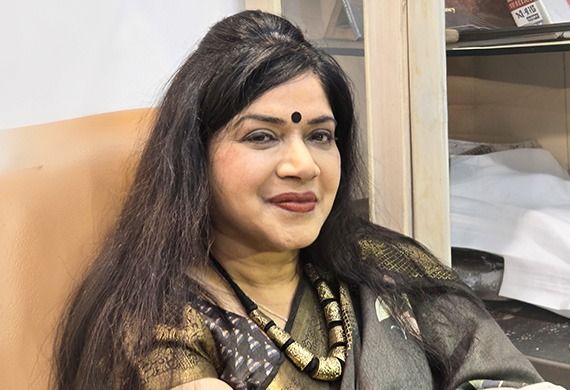

Women’s understated yet transformative influence on the way cities evolve, cannot be overlooked, says Vipul B Varshney, Director multidisciplinary architectural firm, STHAPATI.
As urban design undergoes a significant shift in India, responding to rapid urbanization, climate change, and more, women-led empathetic urban design could be the answer for the future of cities. To further explore this theme, WER magazine spoke to Vipul, an award-winning architect, author, and heritage advocate. She is known for documenting the cultural legacy of cities such as Lucknow, Ayodhya, and Benares.
In conversation with Women Entrepreneurs Review Magazine, Vipul shares her views on how women are shaping urban design of Indian cities through empathy, cultural awareness, and community-focused design. She highlights women’s architects’ role in blending heritage with modern needs, creating urban spaces that are inclusive, resilient, and deeply connected to people’s everyday experiences.
To learn more about Vipul’s perspective on how women urbanists and architects are shaping cities, read the full interview below.
As an urbanist and heritage enthusiast, how have you seen women uniquely shape the vision of cities while balancing modern needs with cultural preservation?
Women have long influenced the way cities evolve—often in ways that are understated but transformative. When you look at urban development through the lens of both heritage preservation and contemporary needs, women frequently act as the bridge between the two, shaping cities with a more relational, community-centered perspective.
Many women practitioners—urbanists, architects, anthropologists, historians—approach cities through everyday life rather than pure infrastructure. Their approach often resists displacement and promotes continuity. This emphasis creates cities where cultural memory is lived, not static. Because they experience cities differently—both physically and socially—many women urbanists have been pioneers in community-driven planning. This integrative approach often results in cities that feel rooted yet future-oriented.
Women shape cities by weaving together the practical, the cultural, and the intimate. Their work often focuses on continuity, care, and community resilience—qualities that create cities where modern life flourishes without erasing the stories and structures that make a place unique.
What unique perspective do women bring in shaping spaces that foster community connection while respecting historical and cultural identity?
Women often bring a lens shaped by care, continuity, and collective memory, which leads them to design and advocate for spaces that feel both deeply rooted and socially alive. Their perspective tends to emphasize relationships—between people, between past and present, and between culture and the built environment. Women often notice and prioritize the everyday spaces that traditional planning overlooks—thresholds, courtyards, stoops, markets, alleys, kitchens, and informal gathering areas.
By elevating these environments, they transform heritage from a static backdrop into a lived, evolving experience.
Women frequently consider heritage as multidimensional—not only architectural or monumental but also social, emotional, and material.
This understanding results in preservation that feels authentic, inclusive, and community-led.
Women shape community-oriented heritage spaces with a distinct blend of empathy, social insight, and cultural sensitivity. They create environments where people feel seen, safe, and rooted, and where history isn’t merely preserved—it is lived through connection.
How does approaching architecture with empathy and cultural awareness create environments that feel both innovative and deeply human?
Approaching architecture with empathy and cultural awareness reshapes the design process from something purely technical into something profoundly human. It creates spaces that feel inventive not because they are flashy, but because they resonate—emotionally, socially, and culturally—with the people who experience them. The result is innovation that grows out of the culture, rather than being imposed on it. The new feels connected to what came before, not disruptive.
Empathy gives architecture a heart. Cultural awareness gives it a soul. Together, they spark innovation that is not just visually impressive, but emotionally resonant, socially grounded, and profoundly human.
How can thoughtful, empathetic design by women leaders transform how communities experience and interact with urban spaces?
Thoughtful, empathetic design led by women has the power to re-shape not only the physical form of cities, but the emotional and social experiences within them. Because women often approach urban space through the lenses of care, safety, memory, equity, and daily lived realities, their leadership can transform how communities relate to their environment in ways that are both subtle and revolutionary.
Women leaders often prioritize the rhythms of daily living—walking with children, caring for elders, navigating public space safely, and maintaining community ties. This emotional attunement helps people see the city as an extension of themselves—something they care for, protect, and participate in. Thoughtful, empathetic design by women leaders transforms urban spaces by transforming the relationships people have with their city.
It strengthens belonging, sparks connection, honors culture, and builds environments that feel alive with community.
As cities face rapid modernization, how can women architects combine creativity, heritage, and sustainability to redefine urban spaces for future generations?
Women architects are uniquely positioned to guide cities through rapid modernization because they tend to approach design as both a creative act and a cultural responsibility. Their work often bridges past and future, local identity and global innovation, environmental care and social wellbeing. Here’s how they can — and already do — combine creativity, heritage, and sustainability to redefine urban spaces for the generations to come.
They are reshaping the future of cities by weaving together creativity, cultural heritage, and environmental stewardship. Their approach ensures that rapid modernization doesn’t erase identity, but enriches it—leaving future generations cities that are both innovative and deeply meaningful.
LAST WORD: Advice for women aspiring to lead in architecture and urban planning, while making a meaningful impact on communities
Architecture and planning can be hierarchical fields, but women who make lasting impact usually anchor their work in a clear personal ethos—heritage, equity, sustainability, community care, cultural continuity, or social justice.
Women aspiring to lead in architecture and urban planning can make deep, lasting community impact by embracing a leadership style that integrates empathy, cultural awareness, creativity, sustainability and collaboration. The future of cities will be more humane, more culturally vibrant, and more resilient if women continue shaping them with their vision and voice.
Current Issue

Most Viewed
- 1 Talented Indian Female Actors Who Also Moonlight as Successful Producers
- 2 7 Indian Female Podcasters You Must Know About
- 3 7 Powerful Independent Indian Women Journalists Who are Voices of Change
- 4 Ruchikaa Kapoor Sheikh: The Creative Mind Behind Netflix India's Popular Shows
- 5 7 Most Influential Women Educators India has had over the Years
- 6 11 Breakthrough Female Faces Ruling the Indian OTT Platforms
- 7 8 Timeless Female Indian Classical Dancers & their Legacy
- 8 Women's Health Startup HerMD Closing Doors Amid Industry Challenges
- 9 Real Meets Reel: A List of 11 Indian Movies based on Real Women
- 10 Rasha Hassan: A Visionary Leader On A Mission To Transform Dubai's Real Estate Landscape
- 11 5 Indian Women-led IPOs You Must Know About
- 12 11 of the Most Iconic 21st Century Women to become "The First Indian Woman"
- 13 India's 7 Funniest Women Stand-Up Comics You Must Follow
- 14 Aparna Purohit : Leading India's Most Popular OTT Platforms
- 15 How Leaders Can Balance Risk & Innovation in Today's Banking Landscape
- 16 Dr. K. Shilpi Reddy: Sculpting Healthier Futures For The Next Generation With Reforms In Obstetrics Care
- 17 Sylvia Dcosta: A Visionary Business Leader Pushing The Limits And Setting High Professional Standards
- 18 Top 5 All-Rounder Women Cricketers of India
- 19 How Tata AIA is Empowering Women with Insurance That Understands Their Needs


