

Indian women and finance share a complex relationship.
According to the Inclusive Finance India Report 2025 by ACCESS Development Services, almost 90% of Indian women have access to banking channels. However, this does not translate into women’s financial empowerment. Indian women remain far from attaining equitable financial inclusion and wealth creation.
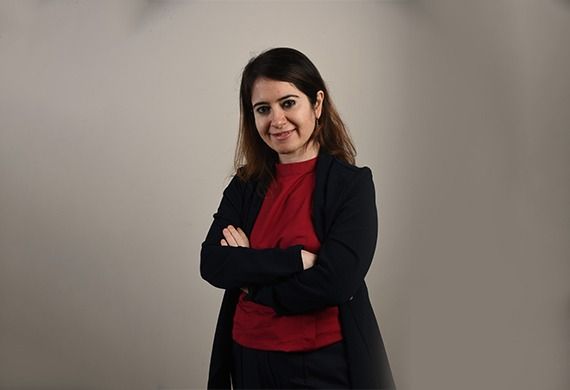
Wealth management expert, Anupama Sharma hails financial independence as a structural enabler of agency, choice, and resilience for women.
In an in-depth conversation with Women Entrepreneurs Review magazine, the Co-Business Head of Indian financial services company, 360 ONE Wealth, talks about the importance of women’s financial literacy and shares strategies to improve women’s relation with finances.
Speaking from a woman leader’s lens, Anupama explores how women leaders can drive meaningful change through financial literacy, mentorship, inclusive ecosystems, and open conversations around money to empower future generations of women professionals.
Anupama Sharma is an accomplished wealth management professional with more than 22 years of experience in strategic business growth and financial advisory. A Chartered Accountant and University of Madras alumna, she is known for her ability to provide innovative financial solutions and create a client-centric leadership approach within the financial services industry.
Read the complete article below for deeper insights on Indian women and finance.
As women leaders who have built credibility and influence over time, how do you see your role in redefining financial independence as a foundation for women’s long-term success?
Financial independence, once considered a personal achievement, has now become a structural enabler of agency, choice, and resilience. As women leaders, our responsibility now becomes one of redefining financial independence from income-centric to outcome-centric, i.e., from merely income-generating towards security, wealth creation, and decision-making.
In today’s context, though 89% of women in India enjoy access to banking channels, financial empowerment remains a distant reality in terms of financial inclusion and wealth creation. By narrating our stories, including our failures, we can normalize financial literacy and demystify wealth creation.
The objective should be one where financial confidence becomes an integral part of leadership, rather than an afterthought.
Once personal success is secured, where should women leaders begin—mentorship, access to capital, financial literacy, or cultural change—when paying it forward to the next generation?
Paying forward, i.e., giving back, should be considered an ecosystem rather than a sequence. Though mentorship should be the starting point, financial inclusion and financial literacy should be part of the process, along with cultural shifts. The case for this becomes obvious when one realises that only 21% of women in India are financially literate, indicating a huge gap between financial inclusion and literacy.
Women leaders have the power to bridge this gap by developing platforms that integrate knowledge, opportunities, and self-confidence.
The transformation occurs when support is no longer just symbolic but systemic, facilitating the next generation's involvement in wealth creation, more meaningfully and at an earlier age.
From your journey in wealth management, how can lived financial experiences be translated into practical guidance for younger women navigating careers, money, and risk for the first time?
Lived financial experiences have an intrinsic richness that theoretical knowledge cannot provide. Making this knowledge operational involves being truthful about one's experiences, good or bad. Younger women benefit from being advised based on context rather than theory. This is especially important because, in India, women invest nearly five years later than men and have only 25% of mutual fund assets.
Wealth management involves disarming complexity and grounding it in real-life examples. Financial journeys are no longer about being perfect; they are about being iterative. Younger women are far more likely to participate at an early age when they are advised in this manner. I strongly believe that lived experiences can, in fact, be the best practical guide for the upcoming generation of working women.
Many women still lack confidence in financial planning and decision-making. How can senior women leaders normalize open conversations around money, growth, and long-term security?
Confidence in the ability to make sound financial decisions may be linked to familiarity rather than expertise.
Women leaders in senior positions can normalize the dialogue on money by making it visible, frequent, and judgment-free.
The need is clear, as indicated by surveys that suggest that a large segment of women in India are uncertain about whether they have saved enough to achieve their financial objectives.
The role of storytelling in normalizing the dialogue on money is significant, as women can share their personal journeys, including the uncertainties they faced, to break the stigma. Women leaders can create safe spaces for dialogue, whether in the boardroom or otherwise, to change the narrative from one of hesitation to one of ownership, allowing women to see the connection between financial planning and personal as well as professional growth.
Beyond advice, what systems or platforms can women leaders intentionally build to help emerging women professionals make smarter financial choices earlier in their careers?
The dialogue must shift from one of advice to the creation of sound, scalable systems, including financial education programs, mentorship programs focusing on wealth creation, and access-driven platforms such as women-led investment forums. The scope is enormous, as the assets of women investors in the country are growing significantly in recent years, creating an urgent need to improve guidance systems.
By embedding the idea of financial awareness into professional ecosystems early on, women leaders can ensure that the support is continuous rather than episodic and can, therefore, help emerging women professionals make more intelligent financial decisions moving forward.
LAST WORD: What lasting impact do you hope women leaders today will leave on how women think about wealth, independence, and leadership?
Lasting impact can be seen in the hope that women leaders of the future can change the conversation around the idea of moving from financial participation to financial leadership. They can envision a world where wealth is no longer just a number but a tool to empower freedom, influence, and purpose. This has far-reaching implications for the world at large because women who are financially independent are more likely to invest in the education and health of their families and therefore create a lasting legacy.
By embedding the idea of financial independence into the definition of success, women leaders can help break down long-standing barriers and create a world where women can look at finance with clarity, confidence, and vision and therefore, redefine the very idea of leadership.
Current Issue
Most Viewed
- 1 Talented Indian Female Actors Who Also Moonlight as Successful Producers
- 2 7 Indian Female Podcasters You Must Know About
- 3 7 Powerful Independent Indian Women Journalists Who are Voices of Change
- 4 Ruchikaa Kapoor Sheikh: The Creative Mind Behind Netflix India's Popular Shows
- 5 7 Most Influential Women Educators India has had over the Years
- 6 11 Breakthrough Female Faces Ruling the Indian OTT Platforms
- 7 8 Timeless Female Indian Classical Dancers & their Legacy
- 8 Women's Health Startup HerMD Closing Doors Amid Industry Challenges
- 9 Real Meets Reel: A List of 11 Indian Movies based on Real Women
- 10 Rasha Hassan: A Visionary Leader On A Mission To Transform Dubai's Real Estate Landscape
- 11 5 Indian Women-led IPOs You Must Know About
- 12 11 of the Most Iconic 21st Century Women to become "The First Indian Woman"
- 13 India's 7 Funniest Women Stand-Up Comics You Must Follow
- 14 Aparna Purohit : Leading India's Most Popular OTT Platforms
- 15 How Leaders Can Balance Risk & Innovation in Today's Banking Landscape
- 16 Dr. K. Shilpi Reddy: Sculpting Healthier Futures For The Next Generation With Reforms In Obstetrics Care
- 17 Sylvia Dcosta: A Visionary Business Leader Pushing The Limits And Setting High Professional Standards
- 18 Top 5 All-Rounder Women Cricketers of India
- 19 How Tata AIA is Empowering Women with Insurance That Understands Their Needs


