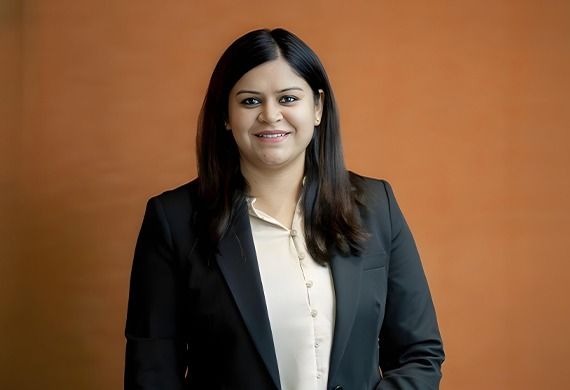

Not all customer journeys follow a script—and Neha brings this reality to life in the following interview with Women Entrepreneurs Review. She decodes how insight, intuition, and data converge to shape impactful marketing and lasting brand connections.
Neha is a marketing expert with over 16 years of experience in marketing in the retail and financial services industry as well as technology. Her area of expertise includes integrated campaigns, customer engagement, loyalty and data-driven growth in B2C and B2B.
For in-depth insights on under
How is insight-driven marketing shaping the way organizations translate customer understanding into meaningful and measurable business impact?
The way customers buy today is anything but linear. Right from the moment a need or want takes shape, the journey passes through multiple channels, emotions, and comparisons. They discover a product on social media, compare options on a website, walk into a store to experience it firsthand, and end up purchasing through an app days later using a coupon from their inbox.
Through all these zigzags between online and offline, the customer expects the brand to know them. And not just based on what they've shared explicitly. They expect brands to pick up on their preferences, their hidden desires, even anticipate when they're ready to buy before they say so. That expectation is non-negotiable now.
For brands serious about getting this right, the starting point goes beyond transactional data. It includes attitudinal and psychographic layers too. What motivates someone, what their lifestyle looks like, what stage of life they're in? Browsing patterns, drop-off points, and in-store footfall after a digital trigger, all of it matters.
Brands that actually make sense of these signals don't just run campaigns. They build relationships that evolve as the customer's life evolves, partnering with them through changes in lifestage, appealing to their goals and lifestyle choices. And when that clicks, you see it in the numbers. Better repeat rates, higher lifetime value, better reviews and ratings and more positive word of mouth from customers.
How can marketing leaders transform fragmented customer data across retail, digital, and enterprise channels into cohesive strategies that drive stronger engagement and sustained brand loyalty?
The biggest challenge with fragmented data isn't volume, its context. A woman shopping on your retail platform over the weekend could be a startup founder, a CXO running a 500-person company, or a freelancer building her own brand. Her consumer behaviour tells you one story, but her professional identity shapes completely different needs and spending patterns. Even what she buys online versus in-store is driven by different motivators. She might research high-consideration purchases in-store where she can touch and compare, but reorder essentials online where convenience wins. Most brands treat her as a single flat profile. The ones that win stitch these layers together.
When you can map a customer's personal preferences alongside their professional needs, you stop selling products and start offering solutions that fit their life.
That has to be backed by solid data infrastructure connecting retail, digital, and enterprise signals into one view. When brands get that right, loyalty moves past discounts. It matures into something deeper, where you're catering to how B2C and B2B requirements play distinct roles in someone's life, building loyalty across lifestages through experiential and exclusive benefits that feel earned, not transactional.
As brands manage multiple touchpoints and product ecosystems, how can women marketing leaders bring an insight-led approach to designing omnichannel customer experiences?
Designing omnichannel experiences requires understanding not just what customers do, but why they do it. Customers move between physical and digital spaces constantly, and their expectations shift with each interaction. In a lot of retail and similar industries, women are the primary consumers and in most cases the decision-makers too.
To truly serve them, the customer experience strategy needs to go well beyond baseline services and discounts. It has to feel unique, personal, and genuinely rewarding. The real opportunity lies in combining behavioural data with emotional understanding so brands can go beyond transactions and offer a mix of tangible, intangible, experiential, exclusive, and personal solutions, products, and benefits. This is where insight-led thinking makes the biggest difference.
When teams bring together diverse perspectives and ground their decisions in real customer behaviour, the experiences they design stop feeling like marketing and start feeling like the brand genuinely knows you.
As personalization defines competitive advantage today, how can marketers move from collecting insights to activating them in ways that create consistent and memorable customer journeys?
Most brands sit on a goldmine of insights and still default to pushing discount codes. Real personalisation looks very different. It looks like adding a complimentary sweetener to a product someone has been browsing repeatedly. Or curating a festive gift box because you know the purchase is happening around Diwali. It could mean inviting a customer to a hands-on workshop that helps them get more out of their new smartphone. Or quietly reserving a newly launched limited-edition piece for someone who indulges in that category every year, before they even know it's dropped. These are moments of delight, where the customer receives something they weren't expecting and didn't ask for.
None of these are about price cuts. They are about showing the customer you are paying attention and that you understand what matters to them beyond the transaction.
When brands activate insights this way, personalisation stops being a feature and becomes the reason customers keep coming back.
How can women CMOs ensure that customer insights influence broader enterprise strategy, positioning marketing as a key driver of innovation, growth, and long-term brand relevance?
Customer insights lose their power when they stay locked inside the marketing team. The real shift happens when those insights start showing up in product conversations, service design discussions, and boardroom strategy sessions. In my experience, that requires CMOs to actively bring customer behaviour patterns to the table and make them impossible to ignore.
When leadership sees how customers are actually engaging, what they're dropping off on, what they keep coming back for, it changes the way decisions get made across the organisation. Marketing stops being the team that runs campaigns and becomes the function that feeds intelligence into the business while delivering on strategy with empathy.
Women CMOs are particularly well-positioned here because they often instinctively balance the intangibles, the emotional drivers, the unspoken needs, alongside the functional and commercial aspects.
That balance is what makes strategy feel human, not just efficient. And that's when marketing earns its seat as a genuine driver of innovation and growth.
LAST WORD: Advice For Women Leaders Aspiring to Shape the Future of Marketing
Stay close to the customer and stay close to the data. Not one or the other, both. Technology and retail ecosystems will keep evolving, and the leaders who do well will be the ones who don't get lost in the tools but stay obsessed with the people those tools are meant to serve. Build teams where different perspectives are welcomed, not just tolerated, because the best ideas rarely come from one point of view.
And most importantly, don't wait for perfect data to act. Start with what you have, test it, learn from it, and keep moving. Involve your customers in building your brand ethos, in shaping your loyalty benefits. Let them be co-creators, not just consumers. Insights only become impact when someone has the courage to act on them.
This quote always inspires me.
As Sheryl Sandberg famously said, “Leadership is about making others better as a result of your presence and making sure that impact lasts in your absence.”
Current Issue
Most Viewed
- 1 Talented Indian Female Actors Who Also Moonlight as Successful Producers
- 2 7 Indian Female Podcasters You Must Know About
- 3 7 Powerful Independent Indian Women Journalists Who are Voices of Change
- 4 Ruchikaa Kapoor Sheikh: The Creative Mind Behind Netflix India's Popular Shows
- 5 7 Most Influential Women Educators India has had over the Years
- 6 11 Breakthrough Female Faces Ruling the Indian OTT Platforms
- 7 8 Timeless Female Indian Classical Dancers & their Legacy
- 8 Women's Health Startup HerMD Closing Doors Amid Industry Challenges
- 9 Real Meets Reel: A List of 11 Indian Movies based on Real Women
- 10 Rasha Hassan: A Visionary Leader On A Mission To Transform Dubai's Real Estate Landscape
- 11 5 Indian Women-led IPOs You Must Know About
- 12 11 of the Most Iconic 21st Century Women to become "The First Indian Woman"
- 13 India's 7 Funniest Women Stand-Up Comics You Must Follow
- 14 Aparna Purohit : Leading India's Most Popular OTT Platforms
- 15 How Leaders Can Balance Risk & Innovation in Today's Banking Landscape
- 16 Dr. K. Shilpi Reddy: Sculpting Healthier Futures For The Next Generation With Reforms In Obstetrics Care
- 17 Sylvia Dcosta: A Visionary Business Leader Pushing The Limits And Setting High Professional Standards
- 18 Top 5 All-Rounder Women Cricketers of India
- 19 How Tata AIA is Empowering Women with Insurance That Understands Their Needs


