
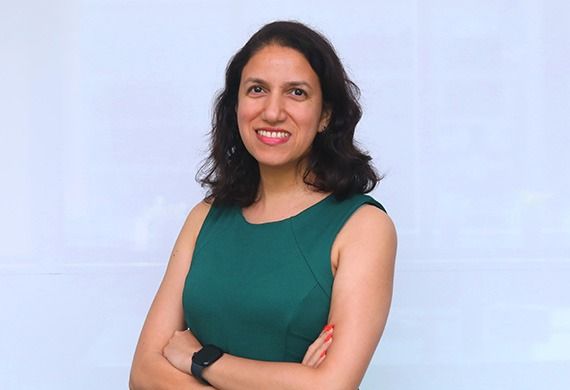

Irem Sayeed is a seasoned financial services leader with over 20 years of experience across credit, lending, and risk management. Her career spans roles at Mswipe, Care Health Insurance, Poonawalla Fincorp, Kotak Mahindra Bank, and GE Capital, driving innovation through strategic risk and product expertise.
Bias-free, data-driven lending can unlock fair credit for women entrepreneurs. To learn more about Irem Sayeed’s insights, please read the full article below
India’s women entrepreneurs are transforming the economic landscape across sectors, from local trade and services to manufacturing and digital commerce. Their contribution to innovation, employment, and community development is undeniable. Yet, despite this growing influence, access to formal credit remains limited. While factors such as insufficient collateral, short repayment history, or limited credit readiness are often cited, the greatest barrier is still bias.
In the case of medium to large ticket loans, women borrowers are often perceived as higher risk compared to men, even when data reflects the opposite. Traditional credit scorecards that include gender as a parameter tend to reinforce these outdated perceptions. Evidence across the industry shows that women borrowers consistently display better repayment discipline and lower default rates.
Building Bias-Free Underwriting Systems
True financial inclusion begins with credit assessment models that rely solely on data and financial behaviour rather than subjective judgment. Bias-free, technology-led underwriting allows lenders to evaluate borrowers on their merit, ensuring a level playing field for all.
Credit scorecards built on verifiable parameters such as banking transactions, bureau data, and GST returns can provide an objective foundation for decision-making. Such systems eliminate human subjectivity and focus on the borrower’s actual capacity and intent to repay.
By removing gender as a factor and relying purely on data, the industry can make credit evaluation fairer, faster, and more inclusive.
Redefining Risk Through Data Innovation
Data-driven innovation can also address long-standing challenges like the lack of collateral or limited repayment history. Collateral should ideally serve as a fallback, not as the foundation for determining creditworthiness. With the help of predictive analytics, lenders can estimate the probability of default with far greater precision and identify reliable borrowers even without substantial security.
Every borrower’s repayment pattern and financial behaviour are unique, and lending products should reflect that diversity. By categorising customers into different risk bands based on objective parameters, institutions can design suitable products for each category. This approach ensures that borrowers are evaluated and supported based on their demonstrated ability to repay, not on broad generalisations or demographic assumptions.
Changing Mindsets for Inclusive Lending
While data and technology can remove structural bias, the more complex challenge lies in transforming human perception. The hesitation to lend to women entrepreneurs is often ingrained and will require time, training, and trust in analytical systems. Lending professionals must be encouraged to rely on verifiable performance data, which clearly indicates that women borrowers, on average, maintain higher credit scores and lower default rates.
The future of inclusive credit lies in combining technological precision with institutional empathy. For NBFCs and financial institutions that operate close to grassroots enterprises, this is both an opportunity and a responsibility. By trusting data and eliminating bias, the sector can create a credit ecosystem where women entrepreneurs are evaluated on their true potential and where inclusion becomes both a moral imperative and a business strength.
Current Issue

Most Viewed
- 1 Talented Indian Female Actors Who Also Moonlight as Successful Producers
- 2 7 Indian Female Podcasters You Must Know About
- 3 7 Powerful Independent Indian Women Journalists Who are Voices of Change
- 4 Ruchikaa Kapoor Sheikh: The Creative Mind Behind Netflix India's Popular Shows
- 5 7 Most Influential Women Educators India has had over the Years
- 6 11 Breakthrough Female Faces Ruling the Indian OTT Platforms
- 7 8 Timeless Female Indian Classical Dancers & their Legacy
- 8 Women's Health Startup HerMD Closing Doors Amid Industry Challenges
- 9 Real Meets Reel: A List of 11 Indian Movies based on Real Women
- 10 Rasha Hassan: A Visionary Leader On A Mission To Transform Dubai's Real Estate Landscape
- 11 5 Indian Women-led IPOs You Must Know About
- 12 11 of the Most Iconic 21st Century Women to become "The First Indian Woman"
- 13 India's 7 Funniest Women Stand-Up Comics You Must Follow
- 14 Aparna Purohit : Leading India's Most Popular OTT Platforms
- 15 How Leaders Can Balance Risk & Innovation in Today's Banking Landscape
- 16 Dr. K. Shilpi Reddy: Sculpting Healthier Futures For The Next Generation With Reforms In Obstetrics Care
- 17 Sylvia Dcosta: A Visionary Business Leader Pushing The Limits And Setting High Professional Standards
- 18 Top 5 All-Rounder Women Cricketers of India
- 19 How Tata AIA is Empowering Women with Insurance That Understands Their Needs


