
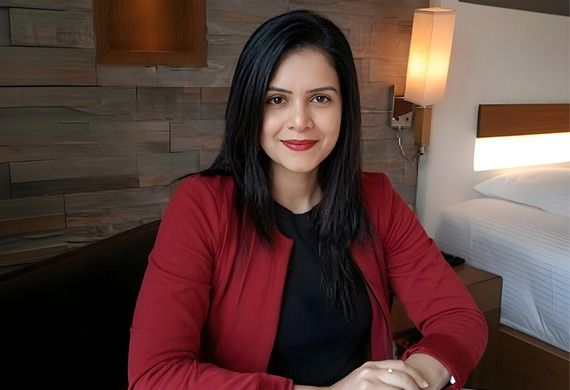

Juilee Dandekar is a consumer health strategy leader with over 18 years of experience shaping growth across pharma and OTC. Her work blends market intelligence, portfolio strategy, and execution expertise, with a strong focus on women’s health, nutrition, and sustainable business impact.
In an engaging interaction with Charulatha M, Senior Correspondent at Women Entrepreneurs Review Magazine, Juilee shared her views on how midlife health, sustainable well-being, and conscious self-care shape leadership longevity for women. Drawing from her experience in consumer health and wellness, she highlights why prioritizing physical, mental, and emotional health is essential for women leaders to thrive long-term.
To learn more about Juilee’s insights on women’s leadership and midlife health, read the full article for deeper perspectives.
You've spent years advising health brands on prevention, wellness and consumer behavior from that lens. How do you see midlife health shaping leadership longevity for women today?
Midlife can be a turning point for leadership longevity because it forces women to rethink how they lead and live. At this stage, health isn’t just personal—it’s professional currency. Energy, mental clarity, and emotional resilience become the foundation for sustaining influence in high-pressure roles. When women consciously invest in their physical and mental well-being—through movement, nutrition, stress management, and recovery—they create the stamina to lead with confidence.
Midlife challenges like menopause, family responsibilities, and career peaks can feel overwhelming, but they also offer an opportunity to build habits that protect focus and vitality.
In short, midlife health choices can either shorten or extend a woman’s leadership runway—and those who prioritize it will thrive longer and lead stronger.
In strategy, we often talk about sustainable growth. Do you think the same philosophy applies to personal health, especially for women navigating high-performance leadership roles?
Just like in strategy, sustainable growth in health starts with planning ahead. For women, that means taking care of ourselves early—long before midlife hits. Because when we reach our 40s, life gets intense: leadership roles peak, family responsibilities grow, and our bodies go through big changes. If we’ve built strong habits early on—movement, nutrition, stress management—we’re prepared to handle this stage without burning out. Sustainable health isn’t about quick fixes; it’s about being proactive, pacing ourselves, and making choices that keep us strong for the long run, just like a well-planned business strategy.
Many women leaders quietly push through stress, hormonal changes and burnout to meet expectations. Have you seen this invisible resilience impact leadership effectiveness in your circles?
Yes, I’ve seen this invisible resilience play out often—and it’s a double-edged sword. Many women leaders push through stress, hormonal changes, and even burnout without ever slowing down, because the expectation to “hold it all together” feels non-negotiable. On the surface, it looks like strength, but underneath, it can chip away at clarity, creativity, and emotional bandwidth—the very qualities that make leadership effective. When resilience becomes silent endurance instead of conscious self-care, it risks turning into depletion. The women who thrive long-term are those who recognize that resilience isn’t about pushing harder; it’s about pausing, recalibrating, and building systems that protect their health while sustaining their impact.
Based on your experience in consumer health and wellness, what are the practical changes, lifestyle, organizational, or mindset, that can enable women to be both ambitious and well during the mid-life transitions?
Prioritizing yourself without guilt is one of the hardest, yet most important shifts for women in leadership. When she’s happy and healthy, she shows up better—at work and at home. But many women keep saying yes to everything because they feel they need to prove their worth constantly at home and at work. It’s true that women often feel the pressure to work harder to be seen, but pushing without boundaries leads straight to burnout. but
learning to set limits and saying no, both at home and at work, is powerful. Saying no isn’t selfish; it’s strategic. It creates space for energy, clarity, and focus, making her a stronger leader and a more present parent.
Self-care isn’t indulgence—it’s what keeps the rollercoaster from spinning out of control.
You are a consumer expert in knowing consumer needs and market gaps; do you believe that the healthcare ecosystem truly understands midlife women as a key health and wellness demographic?
The healthcare ecosystem still falls short in truly understanding midlife women as a core health and wellness demographic. Despite their pivotal role as decision-makers and caregivers, their unique needs—spanning hormonal transitions, mental health, cardiovascular risk, and overall well-being—are often overlooked or treated in isolation. There hasn’t even been enough research or clinical study to deeply understand this demographic, leaving critical gaps in care and innovation. Today’s women are independent, informed, and willing to invest in themselves—yet the system continues to treat them as a niche rather than a central pillar of health strategy. Recognizing and addressing this is not just a moral imperative; it’s a massive market opportunity.
If you could encourage every woman leader to adopt one insight or practice today that would protect her long-term wellbeing, what would you suggest?
“Your health is your power—protect it fiercely.” Women leaders often give endlessly to their teams, families, and communities, but the truth is simple: you can’t pour from an empty cup. Protecting your long-term well-being starts with setting boundaries and making time for yourself—whether that means scheduling regular health checkups, carving out time for exercise, or simply saying “no” when your plate is full. Self-care isn’t a luxury; it’s a leadership strategy. When you’re healthy, energized, and centered, you lead with clarity and strength—and you show up better for everyone who depends on you.
Current Issue
Most Viewed
- 1 Talented Indian Female Actors Who Also Moonlight as Successful Producers
- 2 7 Indian Female Podcasters You Must Know About
- 3 7 Powerful Independent Indian Women Journalists Who are Voices of Change
- 4 Ruchikaa Kapoor Sheikh: The Creative Mind Behind Netflix India's Popular Shows
- 5 7 Most Influential Women Educators India has had over the Years
- 6 11 Breakthrough Female Faces Ruling the Indian OTT Platforms
- 7 8 Timeless Female Indian Classical Dancers & their Legacy
- 8 Women's Health Startup HerMD Closing Doors Amid Industry Challenges
- 9 Real Meets Reel: A List of 11 Indian Movies based on Real Women
- 10 Rasha Hassan: A Visionary Leader On A Mission To Transform Dubai's Real Estate Landscape
- 11 5 Indian Women-led IPOs You Must Know About
- 12 11 of the Most Iconic 21st Century Women to become "The First Indian Woman"
- 13 India's 7 Funniest Women Stand-Up Comics You Must Follow
- 14 Aparna Purohit : Leading India's Most Popular OTT Platforms
- 15 How Leaders Can Balance Risk & Innovation in Today's Banking Landscape
- 16 Dr. K. Shilpi Reddy: Sculpting Healthier Futures For The Next Generation With Reforms In Obstetrics Care
- 17 Sylvia Dcosta: A Visionary Business Leader Pushing The Limits And Setting High Professional Standards
- 18 Top 5 All-Rounder Women Cricketers of India
- 19 How Tata AIA is Empowering Women with Insurance That Understands Their Needs


