
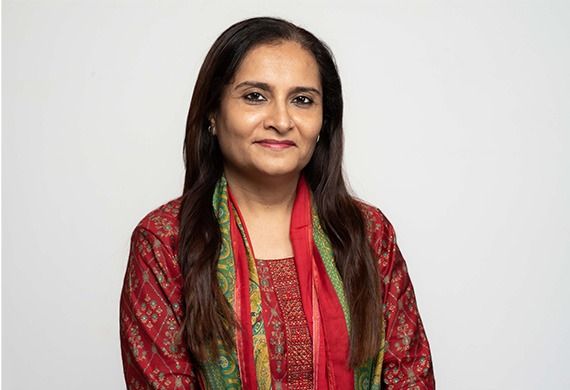

As customer expectations continue to evolve alongside technology, customer experience leadership is no longer limited to improving processes; it is about understanding people, challenging established ways of working, and creating experiences that deliver lasting value. For Zeenat Mongal, Vice President – Customer Experience, ICICI Lombard, meaningful leadership begins with staying connected to customer realities while taking ownership of complex challenges.
With over two decades of experience across telecom, BPO, and general insurance, Zeenat has built expertise across customer experience, transformation, digital initiatives, and function building. Her journey from frontline roles to senior leadership has shaped a practical leadership approach that combines empathy with conviction, analytical thinking with creativity, and accountability with fairness.
In an engaging interaction with Women Entrepreneurs Review Magazine, Zeenat shares her perspectives on finding a leadership voice, navigating uncertainty, leading transformation, handling difficult decisions, and creating environments where people can contribute meaningfully. She also reflects on the experiences that shaped her journey as a woman leader and offers valuable advice to women building long-term careers.
Read the interview below for deeper insights into Zeenat’s leadership journey and perspectives on creating meaningful impact.
Q1. Looking back at your two-decade career, what early experiences shaped your journey as a woman leader and your approach to creating meaningful experiences for others?
A. My journey began at the ground level, including working in a call centre, where I experienced first-hand what customers and frontline employees go through. Those early years taught me that nothing meaningful comes easily. Hard work matters, but it creates real value only when it is connected to a clear purpose and outcome.
As my career progressed across telecom, BPO and insurance, I carried this lesson with me. I learned to respect every stage of the journey and, more importantly, the people who make it happen. As a woman leader, I have tried to create meaningful experiences by recognising effort, giving people context and helping them see how their work contributes to something larger than themselves.
Q2. As your responsibilities grew, how did moving into larger leadership roles change the way you understood your strengths, responsibilities, and aspirations?
A. As my responsibilities grew, I realised that leadership is not about moving vertically; it is about growing in every direction. Every new role taught me something different about business, technology, people, customers and, importantly, myself.
Problem-solving has always been a strength, but leadership taught me that the best solutions often emerge when we challenge what we have always accepted as the norm.
I also learned that a leader does not need all the answers; the real strength lies in bringing together the right people and enabling them to succeed. I have never measured my aspirations by titles. I want to keep learning, remain relevant, stay trustworthy and create an impact that outlasts my role.
Q3. Your journey has involved creating new functions and leading significant transformations; what did these experiences teach you about taking ownership when the path is uncertain?
A. Creating new functions and leading transformation taught me that ownership begins where the job description ends. In a large organisation, there will always be gaps between functions, processes and technologies. It is easy to say, “This is not my responsibility.” I have always believed the opposite. When the outcome matters, someone has to step forward and connect the dots. That requires the courage to enter unfamiliar territory, ask difficult questions and build a path when there is no ready-made roadmap. Transformation rarely comes with complete certainty. What matters is clarity on the outcome, willingness to course-correct and accountability for results. I have learned that ambiguity is not a barrier; it is often where the opportunity to create something better begins.
Q4. With roles demanding strategic thinking, communication, and quick decisions, how have you developed your own way of balancing clarity, creativity, and practical action?
A. My approach is simple: start with the outcome, use data to understand reality and then act. I am naturally analytical, so I prefer facts over assumptions, but data alone does not make a good decision. The first question I ask is, “What are we ultimately trying to achieve?” Once that is clear, creativity helps us find better ways of getting there. I also believe leadership is not about pleasing everyone.
It is about being fair to customers, employees, peers and the business and having the courage to make decisions that are right for the larger ecosystem. For me, clarity creates direction, data creates confidence and execution creates impact. Balance comes from knowing when to analyse, challenge and act.
Q5. You have led through escalations, compliance changes, and demanding situations; how have these experiences strengthened your ability to remain composed and make difficult decisions?
A. Escalations have taught me that making a difficult decision is often easier than communicating it well. I have learned that saying “no” is sometimes necessary, but how you say it matters. A difficult message can still be delivered with empathy, respect and clarity.
Working through customer escalations, regulatory requirements and high-pressure situations has made me more comfortable with uncomfortable conversations. I have also learned not to react to the emotion of a situation; first understand the facts, determine what is right and then communicate calmly. Leadership is not about avoiding difficult situations. It is about standing up when they arise, taking accountability and ensuring that people feel heard, even when the answer cannot be what they hoped for.
Q6. As a woman leading at a national level, what experiences helped you find your voice and establish your leadership presence in demanding professional environments?
A. I found my voice by becoming comfortable with my subject. When you understand the work deeply and remain connected to ground realities, confidence follows naturally. My early frontline experience continues to influence how I look at customers, employees and business problems today. As my roles became larger, I also learned that having a voice is not about speaking the loudest; it is about having something meaningful to add. Sharing my experiences, challenging established thinking and contributing to larger professional conversations helped me build that confidence.
Being a woman in senior leadership has reinforced one belief: credibility is earned through competence, consistency and character.
Staying grounded while continuing to learn has helped me find my voice without losing who I am.
LAST WORD: From your own journey of growth, resilience, and leadership, what advice would you like to share with women who aspire to create a meaningful and lasting career?
Believe in your worth, but never stop building your competence. The workplace is rarely black and white; there will be difficult stakeholders and moments when the conventional path seems closed. Do not mistake a difficult door for a closed door. Stay authentic, be fair and let logic guide your decisions, particularly when emotions are running high.
Most importantly, define what success means to you. It could be financial independence, professional mastery, leadership, learning or impact. Once you know your purpose, pursue it with consistency and inner hunger. Keep investing in yourself because competence creates confidence. And never underestimate the power of your voice. You do not need to become someone else to succeed; become the strongest version of yourself.
Current Issue
Most Viewed
- 1 Talented Indian Female Actors Who Also Moonlight as Successful Producers
- 2 7 Indian Female Podcasters You Must Know About
- 3 7 Powerful Independent Indian Women Journalists Who are Voices of Change
- 4 Ruchikaa Kapoor Sheikh: The Creative Mind Behind Netflix India's Popular Shows
- 5 7 Most Influential Women Educators India has had over the Years
- 6 11 Breakthrough Female Faces Ruling the Indian OTT Platforms
- 7 8 Timeless Female Indian Classical Dancers & their Legacy
- 8 Women's Health Startup HerMD Closing Doors Amid Industry Challenges
- 9 Real Meets Reel: A List of 11 Indian Movies based on Real Women
- 10 Rasha Hassan: A Visionary Leader On A Mission To Transform Dubai's Real Estate Landscape
- 11 5 Indian Women-led IPOs You Must Know About
- 12 11 of the Most Iconic 21st Century Women to become "The First Indian Woman"
- 13 India's 7 Funniest Women Stand-Up Comics You Must Follow
- 14 Aparna Purohit : Leading India's Most Popular OTT Platforms
- 15 How Leaders Can Balance Risk & Innovation in Today's Banking Landscape
- 16 Dr. K. Shilpi Reddy: Sculpting Healthier Futures For The Next Generation With Reforms In Obstetrics Care
- 17 Sylvia Dcosta: A Visionary Business Leader Pushing The Limits And Setting High Professional Standards
- 18 Top 5 All-Rounder Women Cricketers of India
- 19 How Tata AIA is Empowering Women with Insurance That Understands Their Needs


