
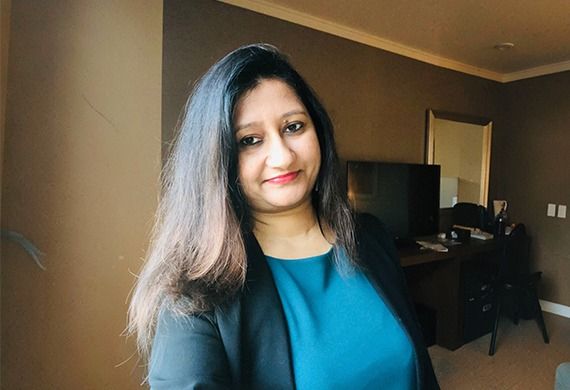

As financial decision-making becomes increasingly data-driven, the role of analytics leaders is evolving beyond technical expertise to shaping business strategy, managing risk, and driving organisational growth. This shift calls for leaders who can translate complex data into actionable insights while balancing business priorities with customer impact and long-term sustainability. Equally important is fostering inclusive workplaces that empower women to build confidence, embrace continuous learning, and take on leadership responsibilities.
In conversation with Women Entrepreneurs Review, Baljeet K., Vice President -Credit Lifecycle Analytics, Synchrony, explores the changing dimensions of leadership in analytics and financial decision-making. Over two decades across banking, financial services, insurance, and retail, her journey evolved from understanding numbers to using data, technology, and business insight to influence strategic decisions.
Through the conversation, Baljeet highlights the importance of people-first leadership, adaptability, innovation, and building high-performing teams that can navigate an evolving business landscape. She also reflects on finding her voice, leading through transformation, building future-ready teams, embracing continuous learning, and empowering women to create influential, fulfilling careers.
Read the complete article for deeper insights.
Q1. Reflecting on your two-decade analytics journey, what personal experiences shaped your confidence as a woman leader in financial decision-making roles?
A. From a Small-Town Girl to a Voice in the Room
Looking back at my two-decade journey in analytics and financial decision-making, I realize that my confidence as a woman leader was not built through one achievement. It developed over years of difficult conversations, mistakes, uncertainty, and the courage to keep showing up.
I come from a small town, and I was fortunate that my parents gave me wings before I knew how to fly. They encouraged me to learn, grow, and dream beyond my surroundings.
Yet, I wasn't always confident. My English wasn't as fluent as some of my peers, and I lacked the polished communication and corporate sophistication that seemed natural to others. In meetings, I often hesitated to share my opinions.
I eventually learned that if I wanted my voice heard, I had to build competence alongside confidence. I began learning constantly—understanding the business, numbers, risks, customers, and the reasons behind the data. Gradually, I focused less on how confidently I spoke and more on whether my thinking was sound.
Analytics taught me that numbers tell only part of the story. Leadership requires understanding what should happen next and balancing performance with customer impact, risk, sustainability, and long-term consequences.
As I moved into leadership, I developed my communication, influence, negotiation, and storytelling skills. I learned to turn complex insights into clear business stories and move from presenting information to influencing decisions.
Leadership also taught me that certainty isn't always possible. Good leaders create space for people to challenge assumptions, share perspectives, and make better decisions together.
Over time, my definition of confidence changed. Confidence isn't the absence of self-doubt; it is trusting your ability to learn, ask questions, make thoughtful decisions, and remain accountable.
Today, I don't focus on where I came from or whether my English is perfect. I focus on what I have learned, the people affected by decisions, and whether I am adding value.
I started my career trying to find my voice. Today, I know leadership is not about having the loudest voice—it is having the courage to use your voice when it matters.
Q2. While leading high-impact credit analytics teams, how have you empowered women professionals to trust their expertise and speak with greater authority?
A. While leading high-impact credit analytics teams, one of my priorities has been creating an environment where women professionals trust their expertise, seek help when needed, and speak with confidence.
My philosophy is simple: never hesitate to ask for help or voice your opinion. You may be wrong, but you tried, learned, and contributed.
Leadership is not only about business results; it is about helping people grow into the careers they aspire to have. I encourage women to take on greater responsibilities, prepare for future roles, and make career choices based on what they genuinely want.
Supporting women returning from career breaks is especially meaningful to me. A break for maternity, family, or personal reasons should not become a permanent setback. They may return with less confidence, but not less capability. A leader's role is to help them reconnect with that capability.
I encourage continuous learning through training, knowledge sharing, cross-functional exposure, and networking. Women need technical expertise, but also business understanding, communication skills, relationships, and the confidence to operate with authority.
I often remind them: “Don't wait for someone to give you authority. Build the expertise, take ownership, and use your voice.”
Creating a safe environment to challenge ideas and learn from mistakes is equally important. Seeing hesitant professionals become confident decision-makers and leaders is deeply rewarding.
If I can help someone become confident, independent, and capable of leading without me in the room, I have done my job.
And when careers become difficult, my advice is simple: “Just hang on.” Setbacks are chapters, not the final story.
Q3. During challenging business transformation phases, what practical leadership habits helped you balance resilience, innovation, and long-term career growth successfully?
A. During challenging business transformation, I have learned that resilience, innovation, and career growth are built through consistent habits and the mindset we bring to change.
The first is simple: keep learning and growing. Transformation means yesterday's approach may not work tomorrow. Staying curious about technology, emerging trends, and new ways of working is essential. Innovation begins with the willingness to learn before change forces us to.
The second is be visible and ambitious. Good work matters, but so does communicating its value. Visibility means sharing ideas, taking ownership, building relationships, and putting yourself forward for opportunities.
I also believe in “Be the change you want to see.” If you want innovation, innovate. If you want collaboration, collaborate. Change often begins when one person chooses to act differently.
Another important lesson is choose yourself. Don't wait for others to recognize your potential. Ask for opportunities, take calculated risks, and invest in your own growth.
Resilience, however, does not mean having everything figured out. During transformation, uncertainty is inevitable. Sometimes, you simply need to focus on one day at a time and concentrate on what you can influence today.
I also believe growth comes from surrounding yourself with people at different career stages. Senior leaders offer experience, peers provide shared perspectives, and younger professionals bring fresh thinking and new approaches.
Finally, resilience requires a support system—people who encourage you, offer perspective, and genuinely want to see you succeed.
For me, leadership through transformation comes down to this: keep learning, stay curious, be visible, choose yourself, surround yourself with good people, and keep moving forward—even when the path ahead is uncertain.
Q4. Having mastered both technical analytics and strategic leadership, how do you encourage women to embrace continuous learning without fearing industry evolution?
A. I don’t tell women to simply “keep learning.” I try to make learning part of how we work.
When new technologies, automation, AI, or new ways of working emerge, people may wonder whether their existing skills still matter.
My approach is to turn that fear into action. I encourage women to understand new technology—what it does, what it cannot do, and how it strengthens existing expertise. With AI, the goal is not to become a technology expert, but to identify how it can reduce manual work, improve analysis, and support faster decisions.
I also believe in learning by doing. Stretch assignments, new projects, senior-stakeholder exposure, and opportunities to present outside your comfort zone build practical confidence.
Learning should come from everyone—senior leaders, peers, and younger professionals. There is no hierarchy in learning.
I encourage women to share what they learn, volunteer for opportunities, and apply for roles even when they do not meet every requirement. You can learn the remaining skills along the way.
Most importantly, asking for help should be seen as strength, not weakness.
You cannot predict every change. Build the habit of adapting. Keep your expertise, add new skills, and continuously build the next layer.
Q5. As a leader simplifying complex data into business action, what people-first approaches helped you build empowered, collaborative, and high-performing analytics teams?
A. For me, building a high-performing analytics team is not just about analytical skills. It is about creating an environment where people understand what they are achieving, why it matters, and that their voice has value.
I start with clarity of goals. Every team member should understand the team’s objectives, their individual contribution, and how their work connects to broader business outcomes.
I also help people see their impact. When analysts understand how their insights improve decisions, manage risk, or save time, they develop stronger ownership.
Another priority is giving people opportunities to shine. If someone delivers excellent work, I encourage them to present it and engage with senior stakeholders. A leader’s role is not always to stand in front of the team, but to create opportunities for the team to stand forward.
I strongly value inclusion and independent thinking. Everyone should feel comfortable saying, “I see it differently,” regardless of seniority or experience. Encouraging quieter voices helps build confidence and prevents groupthink.
Finally, high performance and empathy must coexist. People have different strengths and circumstances, while accountability remains essential.
My ultimate goal is to build a team that asks questions, challenges assumptions, takes ownership, supports one another, and makes great decisions even when I am not in the room.
That, to me, is true high performance.
LAST WORD: Looking back at your leadership journey, what practical advice would you share with women aspiring to build influential careers in finance analytics?
If I were to give one piece of advice to women aspiring to build influential careers in finance and analytics, it would be this:
Don't be afraid.
There will be moments of self-doubt, especially when stepping into something new. Have faith, stay grounded, and take things one day at a time. You don't need your entire career figured out today. Focus on doing your best today and build from there.
My second advice is: keep learning. Strengthen your technical skills, but also understand the business, customers, risk, communication, storytelling with data, and emerging technologies. Knowledge builds confidence.
But knowledge alone isn't enough. You also need confidence and visibility. Do good work, but don't hide behind it. Speak up, share ideas, ask for opportunities, build relationships, and let people know what you can contribute.
When you make mistakes, own them. Learn, fix what you can, and move forward. Some of the greatest lessons come from things that don't go as planned.
Work hard, but work smart. Prioritize, simplify complexity, use technology effectively, and focus on what creates value.
Most importantly, don't lose yourself while building your career. Remember your roots, values, and the people who supported you.
Build your career, but also build your life. Stay close to loved ones, nurture friendships, celebrate small wins, and don't forget to be happy.
Current Issue
Most Viewed
- 1 Talented Indian Female Actors Who Also Moonlight as Successful Producers
- 2 7 Indian Female Podcasters You Must Know About
- 3 7 Powerful Independent Indian Women Journalists Who are Voices of Change
- 4 Ruchikaa Kapoor Sheikh: The Creative Mind Behind Netflix India's Popular Shows
- 5 7 Most Influential Women Educators India has had over the Years
- 6 11 Breakthrough Female Faces Ruling the Indian OTT Platforms
- 7 8 Timeless Female Indian Classical Dancers & their Legacy
- 8 Women's Health Startup HerMD Closing Doors Amid Industry Challenges
- 9 Real Meets Reel: A List of 11 Indian Movies based on Real Women
- 10 Rasha Hassan: A Visionary Leader On A Mission To Transform Dubai's Real Estate Landscape
- 11 5 Indian Women-led IPOs You Must Know About
- 12 11 of the Most Iconic 21st Century Women to become "The First Indian Woman"
- 13 India's 7 Funniest Women Stand-Up Comics You Must Follow
- 14 Aparna Purohit : Leading India's Most Popular OTT Platforms
- 15 How Leaders Can Balance Risk & Innovation in Today's Banking Landscape
- 16 Dr. K. Shilpi Reddy: Sculpting Healthier Futures For The Next Generation With Reforms In Obstetrics Care
- 17 Sylvia Dcosta: A Visionary Business Leader Pushing The Limits And Setting High Professional Standards
- 18 Top 5 All-Rounder Women Cricketers of India
- 19 How Tata AIA is Empowering Women with Insurance That Understands Their Needs


