
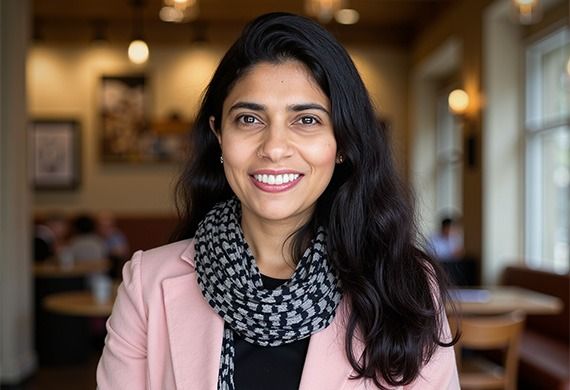

Rachna Narem is a versatile marketing professional with deep knowledge of analytics, leveraging 22 years of hands-on modeling and analytics experience to provide strategic consulting and thought leadership across diverse industries and regions. Her expertise lies in successfully conceptualizing and implementing innovative marketing initiatives—including both digital and traditional media channels—to drive market impact and expansion for Fortune 500 companies.
Turning data-driven analytics into growth leadership for women leader’s means owning both the numbers and the narrative they enable. It starts with building deep expertise in Marketing mix models (MMM), experimentation, incrementality testing, and audience insights, then using those insights to influence strategy, shift budgets, and unlock measurable business impact across brands and markets.
As women rise into senior roles, analytics becomes a credibility engine, allowing them to challenge assumptions with evidence, champion innovation, and connect performance gains to clear financial outcomes. When combined with mentoring, visible thought leadership, and advocacy for inclusion, this approach turns analytics from a back-office function into a platform to shape culture, inspire teams, and lead sustainable, enterprise-wide growth.
In the following interview, Rachana shares her perspectives on the evolving role of growth analytics, leadership, and balancing data, intuition, and impact in modern advertising.
Read the complete article below for deeper insights.
How do you see the role of growth analytics evolving in today’s advertising industry, especially as brands expect leaders to balance insight, intuition, and impact?
Growth analytics has transformed from a rear-view mirror into a strategic compass guiding real-time decisions. Today, brands expect leaders to integrate data-driven insights with human intuition and business context to guide decisions that are both measurable and meaningful. Growth analytics now sits at the intersection of creativity, technology, and business strategy, shaping not only what brands do, but why and how they do it. The evolution involves integrating AI- powered platforms with traditional measurement frameworks, creating ecosystems where automated insights meet strategic thinking.
Analytics now influences every customer journey touchpoint, from awareness through conversion.
For leaders, this evolution creates an opportunity to move beyond analysis towards influence using evidence to build credibility, challenge assumptions, and drive impact with clarity, confidence, and purpose in increasingly complex marketing ecosystems.
As your role evolved in this changing landscape, when did analytics shift from being a support function to becoming your personal lens for driving growth decisions?
Early in my career, analytics felt reactive, validating decisions already made. The transformation occurred when I started leading measurement framework designs rather than executing analyses. Analytics became more than a support function when I realized that the most impactful decisions were not driven by intuition alone, but by patterns hidden across data, markets and consumer behavior.
As I began leading portfolio-level optimization, media mix strategies and forecasting frameworks, analytics became my personal lens for understanding growth opportunities before they surfaced in performance metrics. I began engaging stakeholders before campaigns launched, not after results arrived. Every business challenge became an opportunity to ask what data could reveal about untapped potential rather than measuring historical performance. Over time, I learned that analytics is not just about numbers, it is about translating complexity into direction and empowering teams to make smarter, more confident decisions.
Can you share an anecdote where translating complex insights into a simple narrative helped you influence senior stakeholders or long-term brand direction?
A major tech client struggled to justify increasing marketing investment despite strong growth. Our models revealed something counterintuitive – their success was built on brand equity established years earlier, but recent budget cuts were creating delayed erosion that wouldn’t manifest until the next fiscal year. Instead of presenting technical details, I created a visual narrative comparing their brand to a reservoir. Current sales were water flowing out, and marketing was rainfall replenishing it. The data showed their reservoir was depleting faster than being refilled. This metaphor, backed by longitudinal analysis, resonated immediately with executives. They restored the budget and increased it by seventeen percent. This approach not only influenced budget decisions but also reshaped how the organization evaluated success across short term performance and long-term brand value.
As you led across diverse industries and regions, how did your leadership style evolve to ensure analytics empowered people, not just performance metrics?
Leading across diverse industries and regions taught me that empowerment begins with inclusion in discovery, not just presenting findings. My leadership style evolved from delivering answers to fostering curiosity, collaboration and shared ownership of insights.
My approach evolved to involve analysts early in stakeholder conversations, encouraging them to shape hypotheses rather than execute predetermined models. I celebrated curiosity as much as accuracy, creating space for junior members to challenge assumptions and propose alternatives.
By adapting my approach to cultural, organizational and market contexts, I learned to balance precision with empathy.
This helped create environments where analytics empowered teams to think strategically, challenge assumptions and drive growth with confidence. The key became ensuring everyone understood not just what we measured, but why it mattered to real decisions and ultimately to consumers’ lives, making work meaningful beyond metrics.
How do you personally stay grounded in purpose while driving scale, especially when growth expectations and human values need to coexist?
Staying grounded in purpose while driving scale requires constant alignment between data, business goals and human impact. I remind myself that growth is meaningful only when it creates value for people (clients, teams and consumers). Analytics helps me maintain this balance by revealing not just what is working, but why it matters. Leading employee resource group initiatives reinforced that growth includes creating environments where people thrive authentically. Mentoring emerging talent keeps me connected to the challenges faced earlier in my career.
My volunteer work teaching underprivileged youth about marketing reminds me that industry growth should open doors for others, grounding leadership in service beyond balance sheets and ensuring human values coexist with performance expectations. This mindset allows me to lead with clarity and empathy, ensuring that the growth of ambitions and human values reinforces rather than compete.
What advice would you offer women leaders who want to grow into influential analytics-driven roles while staying true, confident, and future-focused in their leadership journey?
For women leaders, own your technical expertise unapologetically while developing your ability to translate complexity into clarity for non-technical audiences. Influential leadership requires both to be seamlessly integrated. Build a strong foundation in data, but do not underestimate the power of storytelling, perspective and intuition. Confidence grows when you learn to translate insights into business impact and communicate them with clarity. Seek opportunities that stretch your influence beyond analysis into decision-making and surround yourself with mentors and diverse viewpoints. Most importantly, stay future-focused without losing authenticity. Analytics is a tool, but leadership is a mindset, one that combines rigor, courage and purpose to shape meaningful, lasting growth. The journey isn’t about choosing between being liked and respected, it’s about being effective, generous and genuinely yourself while driving measurable impact that speaks louder than doubt.
Current Issue

Most Viewed
- 1 Talented Indian Female Actors Who Also Moonlight as Successful Producers
- 2 7 Indian Female Podcasters You Must Know About
- 3 7 Powerful Independent Indian Women Journalists Who are Voices of Change
- 4 Ruchikaa Kapoor Sheikh: The Creative Mind Behind Netflix India's Popular Shows
- 5 7 Most Influential Women Educators India has had over the Years
- 6 11 Breakthrough Female Faces Ruling the Indian OTT Platforms
- 7 8 Timeless Female Indian Classical Dancers & their Legacy
- 8 Women's Health Startup HerMD Closing Doors Amid Industry Challenges
- 9 Real Meets Reel: A List of 11 Indian Movies based on Real Women
- 10 Rasha Hassan: A Visionary Leader On A Mission To Transform Dubai's Real Estate Landscape
- 11 5 Indian Women-led IPOs You Must Know About
- 12 11 of the Most Iconic 21st Century Women to become "The First Indian Woman"
- 13 India's 7 Funniest Women Stand-Up Comics You Must Follow
- 14 Aparna Purohit : Leading India's Most Popular OTT Platforms
- 15 How Leaders Can Balance Risk & Innovation in Today's Banking Landscape
- 16 Dr. K. Shilpi Reddy: Sculpting Healthier Futures For The Next Generation With Reforms In Obstetrics Care
- 17 Sylvia Dcosta: A Visionary Business Leader Pushing The Limits And Setting High Professional Standards
- 18 Top 5 All-Rounder Women Cricketers of India
- 19 How Tata AIA is Empowering Women with Insurance That Understands Their Needs


