
Technical expertise alone no longer defines impactful leadership in modern manufacturing. The ability to combine operational precision with emotional intelligence, strategic thinking, and people-centric decision-making is shaping the next generation of industry leaders.
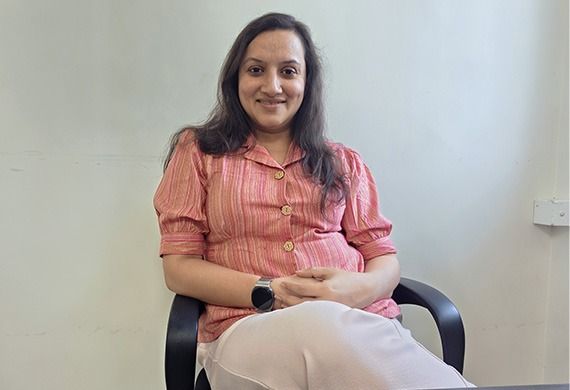
Amruta Desai, Director, Kishor Pumps, is a seasoned manufacturing and HR professional with expertise in operations management, process optimization, talent development, and organizational transformation. With a strong foundation in mechanical engineering and human resource management, she has built extensive experience across manufacturing and automotive sectors while actively contributing to industry forums, HR committees, mentorship initiatives, and leadership development programs.
In conversation with Women Entrepreneurs Review, Amruta shared her valuable insights on navigating leadership in manufacturing, balancing technical precision with people-centric management, and fostering inclusive workplace cultures.
To learn more about Amruta’s leadership journey and perspectives on modern manufacturing, read the full article below.
Q1. Your journey blends mechanical engineering and human resource management—how did this unique combination shape your perspective as a woman navigating leadership in a manufacturing environment?
A. My initial years as a mechanical engineer on the shop floor taught me a crucial lesson: managing production means managing people and getting the work done. A manufacturing environment constantly demands the ability to solve technical issues while navigating complex dynamics with workers and unions. This necessity made learning Human Resources a logical, gradual next step for a mechanical professional. The HR course provided a vital understanding of the legal rules and regulations, allowing me to approach factory operations with clarity and compliance.
This combination—technical grounding paired with structured HR knowledge—shapes a leadership perspective that balances the needs of the plant with the well-being of the personnel, fostering stable and effective performance.
Q2. When you stepped into leadership roles, what internal conflicts or external biases did you encounter, and how did you begin reshaping those narratives?
A. Leadership demands an overview approach to problem-solving, much like assembling a complex jigsaw puzzle where the full picture is unclear until every piece is in place. My internal conflict was minimal because my experience as an employee gave me clear insight into both sides of the table. I understood the ground-level challenges alongside the strategic goals of management.
This dual perspective allowed me to successfully reshape narratives. By leveraging this complete view, I focused on policy formation that was inherently inclusive. I was able to design initiatives that are a "win-win" for both employees and management, fostering alignment and shared success rather than friction
Q3. As you skilled in both technical tools like AutoCAD and people-centric functions, how do you balance precision-driven engineering with empathy-driven team leadership in daily decision-making?
A. What we learn in engineering is fundamentally about looking at a problem from all angles, understanding it completely, and solving it through a holistic effort. This precision-driven approach, similar to working with AutoCAD, forms the core of my daily decision-making in manufacturing.
In the factory, we attack problems similarly: first by gathering reports for an overview, analyzing them for root causes, and then taking corrective action that spans from design to purchasing. To balance this technical precision with empathy-driven team leadership, I prioritize constant communication, connecting all plants regularly. This solves similar, recurring issues that previously lagged due to poor communication. Furthermore, we intentionally formed a better, holistic approach in our after-sales team, which successfully built confidence in our customers. Because the solution was holistic and team-driven, everyone was on board, leading to successful projects.
Q4. Can you share a defining moment where your expertise in operations and human behavior helped you resolve a complex challenge, especially in a traditionally male-dominated setup?
A. My defining moment centered on reversing a complex challenge: of customer complaints, cost reduction and inspections issues. For any work to be successful, you must have multiple strategies, so if Option A fails, we pivot to Option B. I approached this as a clear problem statement requiring data analysis. By deeply tackling complaint logs, raw material quality, transport and cost issues and inspection feedback first, I gained key insights into what the customer needed but wasn't receiving.
Crucially, I managed this in a male-dominated environment by focusing on correct communication. I never just discussed the problem; I informed my male counterparts of the issue and the solutions I had in mind. This holistic, data-driven approach, which connected departmental issues from design to purchasing, quickly won trust and confidence, making the path to successful resolution easy for everyone.
Q5. How do you consciously mentor or influence other women in manufacturing to embrace both technical depth and leadership confidence without feeling the need to choose one?
A. To mentor women in manufacturing, I focus on giving them responsibility, guiding them through the process, and then allowing them to work autonomously. Often, female employees possess the strength to solve problems but lack confidence. Therefore, I take time to understand each personality and delegate work accordingly.
I consciously initiate one-on-one conversations with every single female employee in the company before making significant decisions. This process not only gives them a choice in how they contribute but also ensures transparency in our work. I teach them that leadership doesn't happen overnight; we must start slow and show them effective ways to delegate tasks and review outcomes. A mix of male and female in the departments keep the balance for a healthy team work.
Last Word: Advice for aspiring women leaders in manufacturing on building a career that integrates technical excellence, strategic thinking, and authentic self-expression:
The advent of AI amplifies the need for emotional quotient in complex decision-making, a strength that women leaders are uniquely positioned to bring to the table.
Technical knowledge is essential, offering a deep understanding of problems, but it is emotional intelligence—the ability to approach people in the right way—that allows a team to holistically solve them.
Emotional Quotient is the flexible skill to manage relationships effectively, cope better with stress, and navigate conflict. By using empathy to gauge team capabilities and inspire ownership, leaders can successfully rally everyone together and celebrate the team to win. This balance of technical precision and human-centric approach is vital for fostering effective, compliant, and successful outcomes in a future increasingly reliant on automation
Current Issue
Most Viewed
- 1 Talented Indian Female Actors Who Also Moonlight as Successful Producers
- 2 7 Indian Female Podcasters You Must Know About
- 3 7 Powerful Independent Indian Women Journalists Who are Voices of Change
- 4 Ruchikaa Kapoor Sheikh: The Creative Mind Behind Netflix India's Popular Shows
- 5 7 Most Influential Women Educators India has had over the Years
- 6 11 Breakthrough Female Faces Ruling the Indian OTT Platforms
- 7 8 Timeless Female Indian Classical Dancers & their Legacy
- 8 Women's Health Startup HerMD Closing Doors Amid Industry Challenges
- 9 Real Meets Reel: A List of 11 Indian Movies based on Real Women
- 10 Rasha Hassan: A Visionary Leader On A Mission To Transform Dubai's Real Estate Landscape
- 11 5 Indian Women-led IPOs You Must Know About
- 12 11 of the Most Iconic 21st Century Women to become "The First Indian Woman"
- 13 India's 7 Funniest Women Stand-Up Comics You Must Follow
- 14 Aparna Purohit : Leading India's Most Popular OTT Platforms
- 15 How Leaders Can Balance Risk & Innovation in Today's Banking Landscape
- 16 Dr. K. Shilpi Reddy: Sculpting Healthier Futures For The Next Generation With Reforms In Obstetrics Care
- 17 Sylvia Dcosta: A Visionary Business Leader Pushing The Limits And Setting High Professional Standards
- 18 Top 5 All-Rounder Women Cricketers of India
- 19 How Tata AIA is Empowering Women with Insurance That Understands Their Needs


