
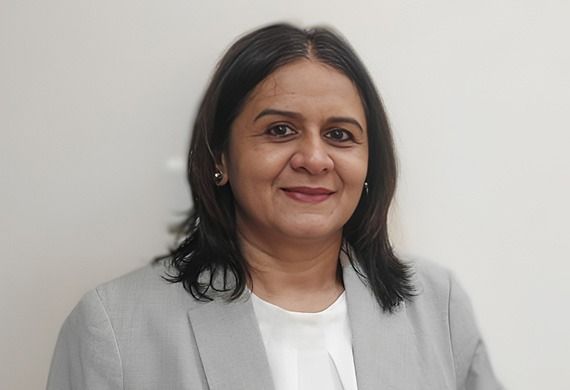

Trust, integrity, and sound judgment often define the influence of leaders whose roles demand accountability without relying on formal authority.
For Swati Doshi, a career spanning over two decades in internal audit has been a journey of evolving from ensuring compliance to becoming a strategic voice in governance, risk, and organisational transformation. Her experience has taught her that effective leadership is not simply about identifying risks or strengthening controls, but about understanding business realities, communicating with clarity, and building trust across the organisation.
An accomplished internal audit, risk, compliance, and internal controls professional, Swati has contributed to process and control restructuring while focusing on meaningful value creation. In an engaging interaction with Women Entrepreneurs Review, Swati reflects on building credibility as a woman leader, navigating difficult conversations with empathy and objectivity, embracing resilience, and transforming expectations around accountability into strengths. She also shares how integrity, courage, authenticity, and quiet confidence can help women build lasting influence beyond titles.
Read the complete article for deeper insights.
Q1. Beginning your career in internal audit, how did you intentionally build credibility as a woman leader where influence mattered more than formal authority?
A. In internal audit, you rarely have the authority to make someone act on your recommendation — you only have the strength of your reasoning and the trust people place in you. Early in my career, I understood that credibility would have to be earned observation by observation, report by report. I made it a discipline to be thorough, fact-based, and fair — never sensational, never personal.
I also made sure I understood the business, not just the checklist, so that when I raised an issue, it came from a place of genuine understanding rather than a rulebook. Over time, people started seeking my view even outside formal audit assignments, and that, to me, was the real marker of credibility — being trusted for judgment, not just tolerated for authority.
Q2. As your responsibilities expanded, how did your leadership identity evolve from ensuring compliance to inspiring organisational trust as a woman executive?
A. Though I started as an internal auditor responsible for giving an assurance to the management on adherence to defined controls & processes, over a period, I realized that internal audit is beyond ensuring compliance and encompasses inspiring organizational trust by participating in strategic growth.
As a woman executive, I reframed my role from mere an auditor to a strategic advisor and focus towards understanding business, intent and behavior and not just documentation. I aligned our insights with the company's objectives by developing an understanding of the business, by learning the language of revenue and scale rather than just rules and earned Board and Management’s trust when they saw my leadership didn't just protect company’s value—it actively contributed in creating it. As my responsibilities grew, I realized that as an internal auditor, what organizations actually need from internal audit is confidence that risks are visible, that management is aware, and that there is someone objectively watching the blind spots.
Q3. Internal audit demands difficult conversations. How has this shaped your ability to influence decisions with confidence while staying authentic as a woman leader?
A. There have been conversations that were challenging - especially when a finding meant telling someone senior that something under their control had failed. I understood that separating person from issue is necessary and also not to take defensive reaction personally. Also learned that staying quiet or too polite sometimes did more harm than good, because the point didn't land and the risk stayed unaddressed.
As a woman leader, I learned that key to remain calm & confident is having done thorough homework, developing an ability to listen to operational realities, demonstrate the value addition which is in overall interest of the Organization. How you say something matters as much as what you say. Behind any change being recommended, there should be a solid reasoning, quantified impact, should be backed by evidence, calm articulation and a genuine intent to help fix the issue rather than to point fingers. That approach let me stay entirely myself. Authenticity, backed by preparation, has been my real source of confidence in these conversations
Q4. Throughout your journey, how have you balanced empathy with professional objectivity, proving women can lead difficult conversations without compromising independence or trust?
A. Empathy and objectivity are complementary. Objectivity tells you what the facts are; empathy helps you understand why things happened and how best to communicate them so the message is heard, not resisted. When I flag a control weakness or a fraud risk, I make sure the person on the other side understands I am addressing the process or the risk, not focusing them personally. This has strengthened my independence.
Empathy has never made me softer on facts; it has made my facts land better.
Being empathetic as a woman leader does not mean compromising independence; it means respecting the people while holding the line on the facts not being judgmental.
I treated them with respect so that accept the feedback and act on it willingly.
Q5. Working across governance, risk, and process transformation, how has your experience redefined what resilient leadership means for women driving organisational change today?
A. Real estate, by nature, deals with long project cycles, regulatory shifts, and constantly evolving risks. Working across governance, risk, and transformation in real estate with its long project cycles and shifting regulations redefined resilience for me. It is not about simply enduring pressure, but building flexible frameworks to absorb change and drive transformation despite it.
For women leaders, resilience means staying anchored to core principles while remaining curious enough to adapt tools, embrace data analytics and continuous upgrade skills. True resilience means transforming the friction into momentum through data and clear plan. Instead of forcing a change, I present change in clear business benefits, showing how risk management empowers growth. Resilient women leaders do not just help organizations survive change; they help design the framework that not only sustains change but converts the same in an opportunity.
Q6. Women often navigate expectations around empathy and accountability. How have you transformed these expectations into strengths throughout your own leadership journey?
A. Empathy and accountability are inseparable strengths. For women leaders, there is sometimes an unspoken assumption that empathy might come at the cost of accountability. I take the time to understand context and people's constraints, my accountability conversations tend to be more constructive and less defensive. This has made it easier, not harder, to hold people to high standards. I no longer see empathy as something I need to manage or hide. According to me, it is one of my strongest tools for driving real accountability.
I use empathy to understand the operational hurdles being faced by the process owner. When people know you genuinely understand their challenges, they do not push back against high expectations — they step up to meet them. By combining a supportive human approach with unshakeable professional standards, accountability does not look like a burden or a punishment.
Q7. Looking back, how has your leadership journey taught you that creating trust often leaves a stronger legacy than simply demonstrating expertise as a woman?
A. Early in my career, I thought technical expertise was the ultimate measure of a leader. I quickly learned that while knowledge commands respect, trust builds legacies. As a woman executive, proving you are the smartest person in the room only takes you so far; creating a safe environment where people feel seen, supported, and valued is what drives lasting organizational change.
Expertise solves the problems of today, but trust empowers teams to navigate the uncertainties of tomorrow long after you are gone. True leadership isn't about leaving behind a record of your own flawless achievements. It is about leaving behind an inspired, resilient culture built on the deep, relational trust you intentionally cultivated.
Q8. As a woman leader, what limiting leadership belief did you consciously unlearn, and how did that redefine your confidence and decision-making approach?
A. For a long time, I carried the belief that I needed to have every answer prepared and every risk anticipated before I could speak up with confidence — that any gap in knowledge would be held against me more than it would against my male colleagues. I have consciously unlearned this.
I have learned to say "I don't know yet, but I will find out," and to treat that as a sign of intellectual honesty rather than a weakness. This shift changed my decision-making — I now rely on collaborative problem-solving and continuous learning rather than the pressure of appearing infallible. Ironically, being open about what I don't know has only strengthened how much people trust what I do say.
LAST WORD: Advice for aspiring women leaders cultivate to build lasting influence through integrity, courage, and quiet confidence instead of titles:
My advice is to stop waiting for a title to give you permission to lead. You are self-empowered already, wherever you are. Lasting influence is built from the inside out. Integrity, courage, confidence, consistency are your strengths which will take you to newer heights. Build courage by speaking up in difficult moments and staying anchored to your principles, even under corporate pressure. When you focus on lifting your teams and solving real business problems rather than collecting designations, you become indispensable. True power isn't granted by a nameplate—it is earned through character.
Current Issue
Most Viewed
- 1 Talented Indian Female Actors Who Also Moonlight as Successful Producers
- 2 7 Indian Female Podcasters You Must Know About
- 3 7 Powerful Independent Indian Women Journalists Who are Voices of Change
- 4 Ruchikaa Kapoor Sheikh: The Creative Mind Behind Netflix India's Popular Shows
- 5 7 Most Influential Women Educators India has had over the Years
- 6 11 Breakthrough Female Faces Ruling the Indian OTT Platforms
- 7 8 Timeless Female Indian Classical Dancers & their Legacy
- 8 Women's Health Startup HerMD Closing Doors Amid Industry Challenges
- 9 Real Meets Reel: A List of 11 Indian Movies based on Real Women
- 10 Rasha Hassan: A Visionary Leader On A Mission To Transform Dubai's Real Estate Landscape
- 11 5 Indian Women-led IPOs You Must Know About
- 12 11 of the Most Iconic 21st Century Women to become "The First Indian Woman"
- 13 India's 7 Funniest Women Stand-Up Comics You Must Follow
- 14 Aparna Purohit : Leading India's Most Popular OTT Platforms
- 15 How Leaders Can Balance Risk & Innovation in Today's Banking Landscape
- 16 Dr. K. Shilpi Reddy: Sculpting Healthier Futures For The Next Generation With Reforms In Obstetrics Care
- 17 Sylvia Dcosta: A Visionary Business Leader Pushing The Limits And Setting High Professional Standards
- 18 Top 5 All-Rounder Women Cricketers of India
- 19 How Tata AIA is Empowering Women with Insurance That Understands Their Needs


