
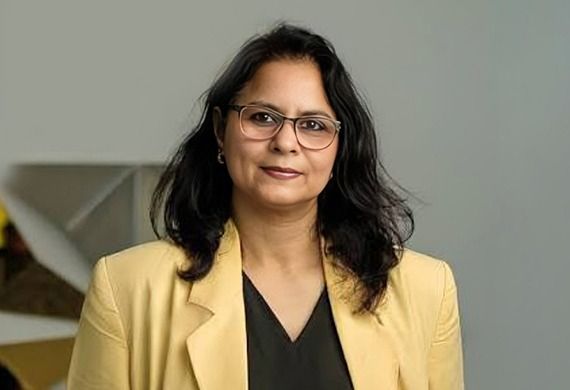

Revathi Kant’s journey at Titan began in 1990, when she joined the company as a market research executive. After a decade spent leading marketing for West Asia and Africa from Dubai, she returned to India to take on a new challenge, one that would eventually lead her into the world of design.
Over the years, Revathi has worked across watches, jewellery and several other consumer-facing categories, approaching each transition as an opportunity to learn and grow. Moving into design without formal training in the discipline became a defining moment in her career, shaping not only her professional trajectory but also her approach to leadership.
In this conversation with Women Entrepreneurs Review, Revathi reflects on taking professional risks, learning from people at every level of an organisation, and finding opportunities for growth within a single organisation. She also shares her perspective on building teams where people feel empowered to express their ideas, creating opportunities for younger women, and nurturing the next generation of leaders.
Q1. You began your career in market research and have now reached the C-suite; what has your journey taught you about growing beyond your original professional identity?
A. My journey from market research to the C-suite has been transformative. The different situations I have encountered, the challenges I have faced, and the experiences I have gained have all shaped me, both personally and professionally. I am particularly grateful to Titan for giving me the opportunity to explore domains beyond my original professional qualifications. That openness allowed me to discover a path I had never imagined for myself, and one that I eventually found deeply fulfilling.
That path led me to design. Over the past 15 years, I have worked to demonstrate that design is far more than how something looks. It is an integral part of the organisation and can make a tangible difference to business performance, whether through the top line, the bottom line, or overall profitability.
What makes this journey especially meaningful to me is that I did not originally study design. I discovered it along the way, developed a strong interest in it, and invested years in building the knowledge and skills it required. Looking back, one of the most valuable lessons my career has taught me is that you may discover what you are truly capable of only when you are willing to step beyond what you already know and explore something new.
Q2. Your career has involved taking significant professional risks; how have you learned to distinguish between a calculated risk and a decision that feels comfortable?
A. Over time, I have realised that the safest career choice is not necessarily the most comfortable one. Early in my career, I made a conscious effort to push myself and become comfortable with being uncomfortable. I took on unfamiliar responsibilities, explored different opportunities, and sometimes took a chance simply to see where it would lead. These experiences helped me discover strengths I might not otherwise have recognised, as well as the kinds of work I genuinely enjoyed.
I never had a rigid plan for my career. Much of it unfolded organically. I would take on something new, learn from the experience, and then move on to another opportunity. Not everything worked out as I had hoped, but those experiences were equally valuable in helping me understand myself better. Rather than viewing them as failures, I focused on what they taught me and carried those lessons into my next decision.
Whenever I have faced an important career choice, I have often found that the answer lies within. You can analyse a situation extensively, but at some point, you also must ask yourself, "What is it that I really enjoy doing?" For me, the answer has consistently been the opportunity to create something new and see that work add value to the organisation. That has been a significant source of motivation throughout my career.
Q3. As your responsibilities grew, how did you ensure that your voice carried weight while remaining open to perspectives different from your own?
A. Coming from a different professional background, I had to learn to be comfortable saying, "I don't know," and seeking insights from the people around me, including the most junior members of the team. At the same time, I was finding my own way to contribute and make a difference.
As I immersed myself in design, I came to understand that it was about much more than the act of designing. It involved strategy, vision, understanding people, and creating experiences that truly matter. My background in market research gave me a valuable perspective: the ability to look at design through the eyes of the consumer. I was always interested in understanding what people really needed, and bringing that understanding into the design process helped us create solutions that met, and often exceeded, their expectations.
Over time, I have come to place great importance on what I call the Four Cs: Confidence, Conviction, Courage, and Curiosity. Each has played an important role at different stages of my journey. Learning helped me build confidence; conviction enabled me to stand by what I believed in; courage gave me the strength to speak up; and curiosity encouraged me to keep asking questions and learning. For me, these qualities are not mutually exclusive. They work together, allowing you to contribute with confidence while remaining open to perspectives that differ from your own.
Q4. You have spent most of your career within one organisation while continuing to take on new challenges; what helped you keep your career evolving without constantly changing organisations?
A. I have learned that career growth does not always require moving from one organisation to another. Sometimes, the opportunity to evolve lies within the organisation you are already part of.
When I joined Titan, it was primarily a watch company. Over the years, the business expanded into jewellery, eyewear, bags, fragrances, and international markets. Every new business or category brought something different to learn and explore. In many ways, it felt as though I was moving to a different company without leaving Titan.
I was also fortunate to move across different roles and areas, roughly every seven years. Each transition brought its own challenges and learning opportunities, pushing me to adapt, develop new skills, and understand the business from a different perspective. That constant evolution kept my work engaging and my learning curve active.
So, although I have spent my entire career with one organisation, my experience has been remarkably diverse. For me, growth has come from remaining curious, embracing new challenges, and being willing to learn all over again.
Changing organisations is one way to grow, but it is not the only way. There can be considerable opportunity within the same organisation if you remain open to exploring it.
Q5. As a woman reaching senior leadership over the course of a long career, which qualities became more important to you as your responsibilities became larger?
A. For me, leadership has always been fundamentally about people. While there is accountability for creating remarkable designs and products, the real essence of leadership lies in nurturing and empowering people who make them possible. I believe in creating an environment where individuals have the freedom to approach challenges in their own way, while knowing they have the support and encouragement they need to learn and grow.
It is equally important that every team member feels comfortable sharing ideas, regardless of how fully formed those ideas may be. Some of the best ideas emerge when people feel free to think aloud and explore possibilities. Leadership also means being present when things go wrong, rather than stepping forward only when things are going well. And when the team receives recognition, I want them to take the credit. They are the ones who have done the work.
Over the years, I have come to appreciate the transformative power of empathy and trust. It begins with knowing your people, understanding their needs, and giving them the confidence to move forward. That, to me, is what effective leadership looks like. A leader is doing their job well when they invest in developing the people around them, give them greater responsibility, and mentor them to become leaders in their own right.
Q6. You now lead a multidisciplinary design community; how do you create an environment where younger women can experiment, speak up, and grow into leadership themselves?
A. For me, diversity is not simply about bringing different people into the same room. It is about creating an environment in which everyone feels comfortable enough to speak up and share their perspectives.
Our organisation brings together professionals from Gen Z, Millennials, and Gen X. We also have people who come from different parts of India and from around the world. Each person brings a different set of experiences and perspectives, and naturally, we do not all interpret things in the same way.
I believe everyone should have an equal opportunity to contribute, regardless of age, experience, gender, or background. This is particularly important in design and innovation, where good ideas are not always predictable and can come from anywhere. A seemingly simple thought shared by one person can evolve into something much bigger. But for that to happen, people must feel safe expressing their ideas, experimenting, and contributing without the fear of being judged. Creating that sense of openness is essential to helping people discover their potential and grow into leadership themselves.
LAST Word: Looking back at the risks, transitions, and opportunities that shaped your journey, what would you tell young women who are still finding the direction of their careers?
When I meet young women at the beginning of their careers today, I am reminded of how different the professional landscape was when I started mine. I entered a world where leadership was overwhelmingly male, and I rarely had the opportunity to work under a woman leader. Today, the landscape is much more encouraging. More doors are open to women, and organisations are making more conscious efforts to create pathways for women to lead and thrive.
My message to young women is simple, “embrace these opportunities with confidence”. If you want to build a meaningful career, pursue it with dedication and invest wholeheartedly in your growth.
There will be times when balancing professional aspirations with personal responsibilities feels overwhelming. That is a natural part of any journey worth pursuing. Over the years, I have come to appreciate the strength that comes from seeking support, and I encourage young women to ask for help whenever they need it. There is no weakness in doing so.
Above all, be gentle with yourself. Do not let guilt or self-doubt dictate your choices. Stand firm in your convictions and make your voice heard. Embrace opportunities with courage, continue to learn, remain curious, and never be afraid to take risks. Remember, you deserve your place at the table.
Current Issue
Most Viewed
- 1 Talented Indian Female Actors Who Also Moonlight as Successful Producers
- 2 7 Indian Female Podcasters You Must Know About
- 3 7 Powerful Independent Indian Women Journalists Who are Voices of Change
- 4 Ruchikaa Kapoor Sheikh: The Creative Mind Behind Netflix India's Popular Shows
- 5 7 Most Influential Women Educators India has had over the Years
- 6 11 Breakthrough Female Faces Ruling the Indian OTT Platforms
- 7 8 Timeless Female Indian Classical Dancers & their Legacy
- 8 Women's Health Startup HerMD Closing Doors Amid Industry Challenges
- 9 Real Meets Reel: A List of 11 Indian Movies based on Real Women
- 10 Rasha Hassan: A Visionary Leader On A Mission To Transform Dubai's Real Estate Landscape
- 11 5 Indian Women-led IPOs You Must Know About
- 12 11 of the Most Iconic 21st Century Women to become "The First Indian Woman"
- 13 India's 7 Funniest Women Stand-Up Comics You Must Follow
- 14 Aparna Purohit : Leading India's Most Popular OTT Platforms
- 15 How Leaders Can Balance Risk & Innovation in Today's Banking Landscape
- 16 Dr. K. Shilpi Reddy: Sculpting Healthier Futures For The Next Generation With Reforms In Obstetrics Care
- 17 Sylvia Dcosta: A Visionary Business Leader Pushing The Limits And Setting High Professional Standards
- 18 Top 5 All-Rounder Women Cricketers of India
- 19 How Tata AIA is Empowering Women with Insurance That Understands Their Needs


