


As women’s leadership evolves rapidly in India, read about the various facets that define women's leadership in India. The following article presents a detailed breakdown of the latest statistics, board diversity, GCC leadership, unicorn founders, leadership programmes, key traits, and future trends shaping corporate India.
India's next great leadership revolution will not be driven by technology alone; it will be driven by women!
For decades, conversations around women's empowerment in India focused on education, workforce participation, and equal opportunity. Today, the narrative has shifted decisively towards leadership. Women are no longer simply entering workplaces; they are leading multinational corporations, building billion-dollar startups, influencing boardroom decisions, and shaping public policy across the country.
Yet India's leadership journey remains a compelling paradox. The country has produced globally admired leaders, including Indra Nooyi, Kiran Mazumdar-Shaw, Arundhati Bhattacharya, Falguni Nayar, Roshni Nadar Malhotra, and Debjani Ghosh, but women continue to be underrepresented at the highest levels of corporate decision-making. Their achievements inspire millions while highlighting the gap between individual success and systemic representation.

The latest data illustrates both progress and persistent challenges. According to the Women Leadership Survey 2026, jointly conducted by the All India Management Association (AIMA) and KPMG in India, 79 per cent of women professionals aspire to leadership roles, yet only 1 per cent currently occupy board-level positions. At the same time, women now hold 27.1 per cent of board seats across NSE-listed companies, while Nifty 500 companies have reached an average of 30.5 per cent female representation, an encouraging milestone that signals gradual, though uneven, progress in corporate governance.
India's Global Capability Centre (GCC) ecosystem adds another powerful dimension to this transformation. More than 2,100 GCCs now employ over 2.4 million professionals, with nearly five lakh women contributing across these global operations.
Entrepreneurship is accelerating this momentum further. More than 73,000 recognised Indian startups now have at least one woman director, while entrepreneurs such as Falguni Nayar, Ghazal Alagh, Vineeta Singh, Ruchi Kalra, and Radhika Ghai Aggarwal continue to demonstrate that women-led businesses can scale into globally recognised enterprises across industries.
Leadership itself is also being redefined. Today, it is measured less by job titles and more by innovation, resilience, inclusivity, and the ability to create lasting organisational impact. As businesses increasingly recognise diversity as a competitive advantage rather than a compliance requirement, women's leadership has become central to India's economic and corporate growth story.
This comprehensive guide brings together the latest statistics, trends, and insights shaping women's leadership in India. From corporate boardrooms and Global Capability Centres to unicorn startups and leadership development programmes, the Women Entrepreneurs Review team examines where India stands today, the progress it has made, and what still needs to change for opportunity to truly match the ambition of millions of aspiring women leaders.
Women's Leadership in India: What Statistics Say

Women's leadership in India continues to evolve rapidly, although representation at senior levels remains uneven. The latest statistics reveal encouraging momentum alongside significant structural challenges.
The Women Leadership Survey 2026 by AIMA and KPMG in India reports that 79 per cent of women professionals aspire to leadership roles. However, only 1 per cent currently serve on corporate boards, highlighting one of the largest leadership gaps in Corporate India.
The survey also identifies the mid-career stage as the most critical point in women's professional journeys. Around 65 per cent of respondents believe women are most likely to leave the workforce during this period, often due to caregiving responsibilities, limited career progression, inadequate organisational support, or unconscious workplace bias.
Corporate governance presents a more optimistic picture. Women now occupy 27.1 per cent of board seats across NSE-listed companies, while representation in Nifty 500 companies has reached 30.5 per cent, surpassing the internationally recognised "critical mass" threshold often associated with stronger governance and better board effectiveness.
India's startup ecosystem has also become increasingly inclusive. Nearly half of all startups recognised under the Startup India initiative now have at least one woman director, while government estimates indicate that more than 15 per cent of recognised startups are women-led.
These figures collectively suggest that India has successfully expanded women's participation across industries. The next challenge lies in ensuring that representation translates into executive authority, board influence, and long-term leadership success.
Women on Corporate Boards in India
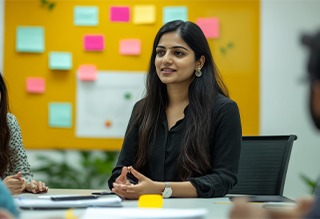
Corporate boards remain one of the most visible indicators of leadership diversity in India.
The Companies Act, 2013 introduced mandatory provisions requiring listed companies to appoint at least one woman director. SEBI subsequently strengthened these regulations by requiring India's top 1,000 listed companies to appoint an independent woman director. More than a decade later, these reforms have produced measurable improvements.
Women now account for 27.1 per cent of board seats across NSE-listed companies, while Nifty 500 companies average 30.5 per cent female representation. Crossing the 30 per cent threshold is significant because governance experts often consider it the point where diversity begins influencing board discussions meaningfully rather than symbolically. Nevertheless, board diversity continues to face important challenges.
Although representation has improved numerically, executive authority has not increased at the same pace. Many organisations initially appointed women primarily to satisfy regulatory requirements. Today, however, companies increasingly seek experienced independent directors capable of leading audit committees, risk management, ESG oversight, digital transformation, and corporate strategy.
Industries including technology, healthcare, pharmaceuticals, financial services, and consumer businesses generally demonstrate stronger board diversity than traditional manufacturing sectors and public sector undertakings.
SEBI's enhanced disclosure requirements have also encouraged organisations to improve gender diversity voluntarily. Rather than relying solely on regulation, investors increasingly evaluate governance through environmental, social, and governance (ESG) metrics, making diverse boards an important indicator of responsible corporate leadership.
The shift is gradually moving beyond compliance towards recognising women as strategic contributors who strengthen governance, improve stakeholder confidence, and enhance long-term business performance.
The GCC Women Leadership Pipeline in India

India's Global Capability Centres have become one of the country's strongest engines for women leaders. Originally established to provide operational support, GCCs now function as global innovation hubs. This transformation has significantly expanded leadership opportunities, with nearly five lakh women currently working within India's GCC ecosystem, representing approximately 28 per cent of the workforce.
However, representation declines considerably at senior levels. Only 6.7 per cent of women currently occupy executive leadership positions across GCCs, while representation falls to 5.1 per cent within deep-tech organisations. At the senior management level, women account for 15.7 per cent of professionals with nine to twelve years of experience.
Despite these gaps, GCCs continue to outperform many traditional industries because multinational corporations typically integrate diversity, equity, inclusion, mentorship, sponsorship, and global mobility programmes into their leadership strategies. Leaders such as Roshni Nadar Malhotra, Lalitha Indrakanti, and Mamatha Madireddy demonstrate how Indian women increasingly lead complex global operations while influencing multinational business strategies.
As India's GCC sector expands towards an estimated $110 billion in export value by 2030, organisations will have an unprecedented opportunity to build stronger leadership pipelines by ensuring that women progress from entry-level recruitment into senior executive and C-suite roles.
Women Leaders Building Successful Startups & Unicorns in India

India's startup ecosystem continues expanding rapidly. More than 73,000 recognised startups now include at least one woman director, demonstrating that female leadership is becoming increasingly mainstream across entrepreneurship.
India's startup ecosystem has transformed women's leadership by creating alternative pathways to success outside traditional corporate hierarchies. Among the most influential entrepreneurs is Falguni Nayar, whose journey from investment banking executive to founder of Nykaa demonstrates that leadership can emerge at any stage of a professional career. Her successful public listing inspired countless women entrepreneurs across India.
Similarly, Ghazal Alagh helped build Mamaearth into one of India's leading consumer brands by focusing on innovation, sustainability, and customer trust.
Vineeta Singh has established Sugar Cosmetics as a leading beauty company through relentless innovation and strong brand positioning. At the same time, Radhika Ghai Aggarwal became India's first woman founder to build a unicorn through ShopClues before launching Kindlife.
In fintech, Ruchi Kalra co-founded Oxyzo, proving that women entrepreneurs are equally capable of building successful enterprise technology businesses.
Government initiatives supporting women entrepreneurs, including easier access to finance, dedicated credit schemes, incubators, accelerators, and mentorship programmes, have further strengthened this momentum.
Women entrepreneurs today are no longer confined to sectors traditionally associated with female founders. They increasingly lead companies across fintech, artificial intelligence, software, manufacturing, health technology, education technology, clean energy, logistics, and enterprise services. These founders continue to reshape India's entrepreneurial landscape while inspiring future generations to pursue ambitious leadership journeys.
Women's Leadership Development Programs in India

Leadership development has become central to advancing women's representation across Corporate India. Many organisations now recognise that increasing female leadership requires more than recruitment. Sustainable progress depends upon structured development programmes, mentoring, sponsorship, networking, executive coaching, and leadership visibility.
Academic institutions have responded accordingly. Programmes such as BML Munjal University's Women-in-Leadership initiative combine leadership education with confidence building, strategic decision-making, executive communication, negotiation, and professional networking. Leading corporations have introduced dedicated women's executive leadership programs, returnship programmes, cross-functional rotations, sponsorship initiatives, and executive mentoring circles. Professional organisations, industry associations, and business schools also contribute by creating forums where women leaders exchange knowledge, build networks, and gain exposure to senior leadership opportunities.
The AIMA-KPMG survey nevertheless suggests that leadership programmes alone cannot eliminate representation gaps. Organisations reporting between 30 and 50 per cent women leaders increased only marginally, indicating that structural reforms remain equally important. Future leadership development will therefore require an integrated approach combining organisational accountability, inclusive cultures, transparent promotion processes, flexible work arrangements, mentorship, sponsorship, and leadership education.
Traits That Make Women Effective Leaders
Successful women leaders consistently demonstrate qualities that enable them to navigate complex organisations and rapidly changing business environments.
Strategic adaptability
Women leaders frequently excel at managing uncertainty, balancing long-term vision with operational execution, and adapting quickly to changing market conditions.
Emotional intelligence
High emotional intelligence enables leaders to build trust, strengthen collaboration, resolve conflicts, and create psychologically safe workplaces.
Inclusive decision-making
Many women leaders encourage diverse perspectives before making strategic decisions, improving innovation and organisational resilience.
Resilience
Professional journeys often involve overcoming systemic barriers, unconscious bias, and career interruptions. Resilience enables women leaders to continue progressing despite these challenges.
Continuous learning
The strongest leaders actively pursue new knowledge, digital skills, executive education, and emerging technologies throughout their careers.
Collaboration
Rather than relying solely on hierarchy, many women leaders build influence through partnerships, teamwork, mentoring, and stakeholder engagement.
Purpose-driven leadership
Many successful women leaders balance commercial performance with broader societal impact, placing equal emphasis on sustainability, ethics, diversity, and community development.
Collectively, these qualities illustrate that effective leadership increasingly depends on adaptability, empathy, innovation, and strategic thinking rather than traditional command-and-control management styles.
The Future Outlook for Women's Leadership in India

Women's leadership in India is poised for sustained growth over the coming decade. Several powerful trends support this outlook. Corporate governance reforms continue encouraging greater board diversity. The rapid expansion of GCCs is creating new leadership pathways connected directly to global decision-making. The startup ecosystem continues producing successful women founders across diverse industries.
Leadership development programmes are expanding rapidly, while organisations increasingly recognise diversity as a competitive advantage rather than merely a compliance requirement. Technology will further accelerate change by enabling flexible work models, expanding remote leadership opportunities, and democratising access to executive education. However, meaningful progress will depend upon addressing persistent barriers including unconscious bias, unequal caregiving responsibilities, limited sponsorship, and slower promotion rates during mid-career stages.
Future success should therefore be measured not only by the number of women entering organisations but also by the number reaching executive leadership, boardrooms, founder roles, and global decision-making positions. India possesses one of the world's largest pools of educated, ambitious women professionals. Converting that talent into sustained leadership representation will determine how competitive Corporate India becomes in the coming decades.
The Road Ahead for Women's Leadership in India

Women's leadership in India has entered a defining phase. The country has already demonstrated that women can successfully lead global corporations, innovative startups, technology centres, financial institutions, and boardrooms. Yet the latest statistics clearly show that representation at the highest levels still falls short of the immense leadership ambition among women professionals.
Encouragingly, momentum continues to build. Stronger corporate governance, expanding Global Capability Centres, thriving women-led startups, leadership development initiatives, and changing organisational mindsets are steadily creating more inclusive pathways to leadership. At the same time, influential leaders such as Falguni Nayar, Roshni Nadar Malhotra, Ghazal Alagh, Kiran Mazumdar-Shaw, and many others continue to inspire future generations by demonstrating that effective leadership transcends gender.
The next chapter of India's growth will depend not only on economic expansion but also on how successfully organisations cultivate diverse leadership teams capable of driving innovation, resilience, and sustainable progress. When ambition, opportunity, and representation finally align, women's leadership will no longer be viewed as an exception; it will become an integral pillar of India's corporate and entrepreneurial success story.
Current Issue
Most Viewed
- 1 Talented Indian Female Actors Who Also Moonlight as Successful Producers
- 2 7 Indian Female Podcasters You Must Know About
- 3 7 Powerful Independent Indian Women Journalists Who are Voices of Change
- 4 Ruchikaa Kapoor Sheikh: The Creative Mind Behind Netflix India's Popular Shows
- 5 7 Most Influential Women Educators India has had over the Years
- 6 11 Breakthrough Female Faces Ruling the Indian OTT Platforms
- 7 8 Timeless Female Indian Classical Dancers & their Legacy
- 8 Women's Health Startup HerMD Closing Doors Amid Industry Challenges
- 9 Real Meets Reel: A List of 11 Indian Movies based on Real Women
- 10 Rasha Hassan: A Visionary Leader On A Mission To Transform Dubai's Real Estate Landscape
- 11 5 Indian Women-led IPOs You Must Know About
- 12 11 of the Most Iconic 21st Century Women to become "The First Indian Woman"
- 13 India's 7 Funniest Women Stand-Up Comics You Must Follow
- 14 Aparna Purohit : Leading India's Most Popular OTT Platforms
- 15 How Leaders Can Balance Risk & Innovation in Today's Banking Landscape
- 16 Dr. K. Shilpi Reddy: Sculpting Healthier Futures For The Next Generation With Reforms In Obstetrics Care
- 17 Sylvia Dcosta: A Visionary Business Leader Pushing The Limits And Setting High Professional Standards
- 18 Top 5 All-Rounder Women Cricketers of India
- 19 How Tata AIA is Empowering Women with Insurance That Understands Their Needs


