
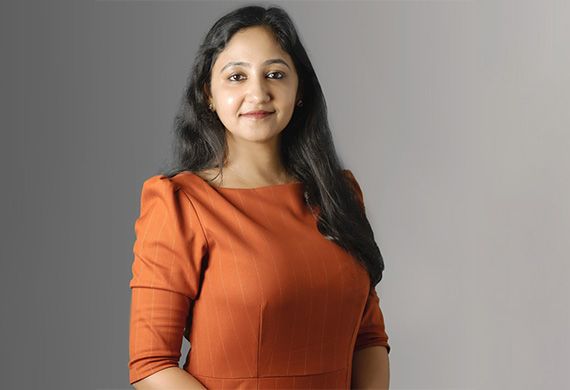

With more than 15 years of expertise in multimodal logistics, Vibhavan Jiswal has led the global and domestic supply chain adaptation and digitization. Known for sympathy, collaborative leadership, she champions to shape a strong future, flexibility and strong teams.
In an interaction with Charulatha M, Senior Correspondent at Women Entrepreneurs Review Magazine, Vibhavana shares her insight on navigating resistance, overcoming industry stereotypes and strengthening leadership presence in logistics. In this conversation, she reflects on strategies that created credibility, balance of sympathy with frustration, and maintenance of mentorship and network in advancing female leaders.
As one of the few women leading at scale in logistics, how did you navigate early resistance and turn challenges into steppingstones for building credibility and influence?
For a woman, early resistance is inevitable in a complex work environment. I considered early resistance as a steppingstone to learn human behavior, and rather than taking it personally, I took some time to first understand the root cause of its genesis and also the mindset of my peers and team.
By carefully listening to others, understanding their perspectives, giving respect, and humbly presenting my points with proper facts—while maintaining transparency with all stakeholders in every situation—was able to develop a collaborative environment and gain acceptance. By consistently applying these strategies, I turned challenges into opportunities and proved my worth.
Can you share an instance when you challenged prevailing gender-based stereotypes? How it reshaped your leadership journey?
Being a woman in a logistics leadership role, which is a male-dominated field, can sometimes present a unique challenge. I recall taking on the responsibility of managing a large-scale logistics operation where the team was composed entirely of men with decades of experience. There was an unspoken expectation that I might lack the hands-on operational knowledge to lead them effectively.
My task was not just to meet the project goals, but to quickly establish credibility and gain their trust.
My action was to prove my capabilities through data and transparent leadership, rather than through my title.
I initiated an open-door policy, scheduled one-on-one sessions with key team members, and actively sought their input on all major decisions. Ensured every recommendation made, was backed by solid facts and logic, and openly shared the reasoning behind my strategic choices. Crucially, we celebrated and gave credit to the team for their contributions, ensuring everyone felt valued and included in the decision-making process.
The result was a dramatic shift in team dynamics. Within a few months, we reduced our operational lead and improved overall efficiency. This experience taught me that true leadership authority is earned through competence, collaboration, and a transparent approach—not by gender. It reshaped my leadership style, reinforcing the belief that valuing every team member's contribution is the most effective way to produce outstanding results.
How do you amplify your voice at the decision-making table, especially when handling negotiations involving multiple stakeholders with diverse priorities?
Generally, my strategy for high-stakes meetings and negotiations is rooted in thorough preparation. I always go in with a solid grasp of the facts, figures, and logical solutions to potential issues. I also make it a priority to meet with key stakeholders individually.
These one-on-one conversations are invaluable for understanding their priorities, anticipating conflicts, and finding common ground before we even sit down. This proactive approach has always helped me to align everyone's priorities and consistently win negotiations.
How do you balance assertiveness with empathy in leadership?
I consider both being assertive and being empathetic is equally important to reach one’s goal. The team also appreciates clarity in thoughts of their leader and also fact-based expected outcomes.
Once the expectations are clear and understood by all, I “Involve” each and every member to give their views/ feedback/ concerns without hesitation and “we” find common ground to do it.
Empowering team members gives them confidence and working on shared goal keeps every member motivated through difficult transitions.
Can you highlight how mentors or role models have shaped your journey. How can women leaders actively build such support networks?
I strongly believe that one need an inspirational mentor/ leader in one’s professional or personal journey who acts like a lighthouse. The one who shows faith in you and trust you even if you fail. One thing which was common to all my mentors was that they trusted me, guided me, gave me wings to fly and were always there as a support whenever I needed them.
My mentor always pushed me to prioritize my health first (as it is the most important thing for a working lady –as one can strike work life balance only if in good health), give attention to details while working, give a fact based and logical response and always maintain my chutzpah which has made me dynamic. Explained importance of right communication at right time with proper framing, being humble and empathetic and to show respect even to the executive at the shopfloor. All this helped me in my leadership journey.
For building support network, I feel first woman leaders honestly support each other in real sense. They should respect each other and understand each other’s journey. They should make a professional peer network where they can exchange their views, challenges, and learnings, passing on opportunities if one come across to each other and do not consider another female leader as a threat. They should also seek out for mentors and cultivate sponsors who can project them positively.
Message for Women Leaders:
Be confident, trust your journey, and don't hesitate to speak up -for what's right and don't be afraid to ask for help when you need it.
Current Issue

Most Viewed
- 1 Talented Indian Female Actors Who Also Moonlight as Successful Producers
- 2 7 Indian Female Podcasters You Must Know About
- 3 7 Powerful Independent Indian Women Journalists Who are Voices of Change
- 4 Ruchikaa Kapoor Sheikh: The Creative Mind Behind Netflix India's Popular Shows
- 5 7 Most Influential Women Educators India has had over the Years
- 6 11 Breakthrough Female Faces Ruling the Indian OTT Platforms
- 7 8 Timeless Female Indian Classical Dancers & their Legacy
- 8 Women's Health Startup HerMD Closing Doors Amid Industry Challenges
- 9 Real Meets Reel: A List of 11 Indian Movies based on Real Women
- 10 Rasha Hassan: A Visionary Leader On A Mission To Transform Dubai's Real Estate Landscape
- 11 5 Indian Women-led IPOs You Must Know About
- 12 11 of the Most Iconic 21st Century Women to become "The First Indian Woman"
- 13 India's 7 Funniest Women Stand-Up Comics You Must Follow
- 14 Aparna Purohit : Leading India's Most Popular OTT Platforms
- 15 How Leaders Can Balance Risk & Innovation in Today's Banking Landscape
- 16 Dr. K. Shilpi Reddy: Sculpting Healthier Futures For The Next Generation With Reforms In Obstetrics Care
- 17 Sylvia Dcosta: A Visionary Business Leader Pushing The Limits And Setting High Professional Standards
- 18 Top 5 All-Rounder Women Cricketers of India
- 19 How Tata AIA is Empowering Women with Insurance That Understands Their Needs


