
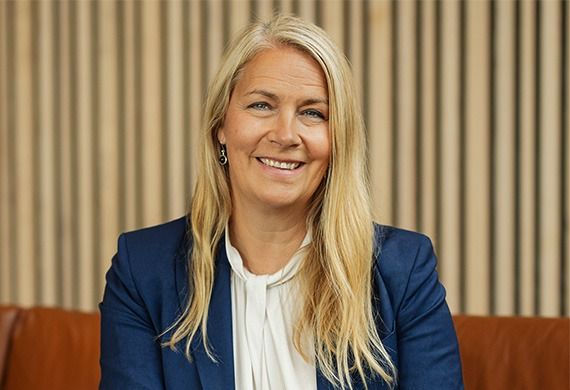

Technical leadership doesn't require one to have all the answers; instead, it requires asking the right questions. That's the thread running through Annika Olme's career, from her start as a software engineer in the late 1990s to her current role as CTO and Senior Vice President at SKF Group.
Annika is a renowned woman in tech leadership with over two decades of experience across engineering, software, data science, and industrial innovation. She has spearheaded large-scale digital and operational transformation initiatives, shaped global engineering strategies, and contributed to advisory and board-level efforts that advance research and diversity.
In an exclusive conversation with Women Entrepreneurs International Review Magazine, Annika makes the case that technical depth doesn't expire when you move into leadership; it evolves. The instincts she built early on: breaking down complexity, persisting through failure, valuing deep expertise, still shape how she leads today. But staying technically grounded, she argues, isn't the hard part. The harder discipline is knowing what to unlearn: which practices, habits, and assumptions that once worked now hold a team back.
That tension between what to preserve and what to let go of runs through everything that follows, as Annika reflects on curiosity as a leadership strategy, why so many women drift away from technical roots as they rise, and what she'd tell the next generation of leaders trying to stay relevant in an industry that won't stop moving.
To know more about Annika Olme’s journey in technology leadership and the lessons for women in tech leadership to succeed, read the following interview.
Q1. Beginning your journey as a software engineer in the late 90s, how has that foundation influenced the way you define impactful leadership as a woman today?
A. Starting my career as a software engineer has shaped how I think to this day. It gave me an in-depth understanding of software and how it shapes all technologies, and this understanding and tribal knowledge is a key part of my competence. It also taught me to break down complexity, to be persistent when things don’t work the first time, and to value deep expertise. That foundation still influences my leadership style. For me, impactful leadership is about creating clarity, encouraging curiosity, and empowering others to succeed. It’s not about having all the answers, but about asking the right questions and making sure technology is applied in a way that truly creates value for our customers, our people, and society.
Q2. Having witnessed technology evolve over decades, how have you ensured your voice evolves with it rather than getting anchored to what once worked?
A. Technology never stands still, and neither can we. One thing I’ve learned is the importance of staying humble and open to learning, regardless of experience. I actively seek different perspectives, especially from industry peers as well as colleagues and diverse teams, because fresh thinking is essential in a fast-moving world. I also stay close to both emerging technologies and real customer challenges. That combination helps me ensure my voice evolves with the landscape, rather than being shaped by what worked in the past.
Q3. Many women begin in technical roles but move away from them eventually. What helped you pursue technology leadership while expanding into broader leadership and strategy spaces?
A. I never felt that moving into leadership meant leaving technology behind. Instead, my relationship with technology changed. I stayed connected by remaining curious, asking questions, and staying involved in key technology discussions. Over time, technical depth turns into varying perspective including understanding how technology, business, and people come together. For me, that connection has been critical in shaping our technology strategy and making informed decisions to enable SKF to reignite growth.
I believe that the technology curiosity in all leaders in any engineering company is more important than ever, with technologies like AI affecting companies on a broader perspective.
Q4. As you grow alongside rapid industrial and digital transformation, how do you decide what to hold onto and what to consciously unlearn?
A. I believe strongly in holding on to our values, engineering rigor, and intellectual curiosity as those are timeless. At the same time, transformation requires us to consciously unlearn ways of working that slow us down or limit collaboration. I regularly ask myself about what still creates value, and what no longer does? It’s necessary to make space for new ways of thinking and working to enable sustainable transformation. We also need to honor our past experiences, since they are what got us to the point where we are today.
Q5. As your role grew across different areas and regions, how did you shift your thinking from focusing on precise execution to handling uncertainty, making trade-offs, and planning for the long term?
A. Early in my career, success was often about execution. As my role expanded, I realized that leadership is much more about setting direction, about prioritization, team empowerment, and building psychological safety and trust. As leaders, you have to become comfortable with not knowing everything. Also, empowering teams by creating a psychologically safe environment became very important especially as we navigate uncertainty and focus on long-term impact. At the same time, true delivery and execution is still crucial, it is just a different way of getting there.
LAST WORD: For women in tech globally looking to build long, evolving careers, what advice would you share with them to stay relevant, resilient, and inspired over time?
My advice for everyone would be to stay curious and keep learning because that’s what keeps you relevant. Do not be afraid to put bold targets in place for yourself. Build strong networks, seek mentors, and don’t be afraid to take on challenges before you feel completely ready. Careers are rarely linear, and that’s okay. It’s true that some of the most rewarding growth happens in moments of discomfort. So, stay connected to your values and purpose and remember that your voice and perspective truly matter.
Current Issue
Most Viewed
- 1 Talented Indian Female Actors Who Also Moonlight as Successful Producers
- 2 7 Indian Female Podcasters You Must Know About
- 3 7 Powerful Independent Indian Women Journalists Who are Voices of Change
- 4 Ruchikaa Kapoor Sheikh: The Creative Mind Behind Netflix India's Popular Shows
- 5 7 Most Influential Women Educators India has had over the Years
- 6 11 Breakthrough Female Faces Ruling the Indian OTT Platforms
- 7 8 Timeless Female Indian Classical Dancers & their Legacy
- 8 Women's Health Startup HerMD Closing Doors Amid Industry Challenges
- 9 Real Meets Reel: A List of 11 Indian Movies based on Real Women
- 10 Rasha Hassan: A Visionary Leader On A Mission To Transform Dubai's Real Estate Landscape
- 11 5 Indian Women-led IPOs You Must Know About
- 12 11 of the Most Iconic 21st Century Women to become "The First Indian Woman"
- 13 India's 7 Funniest Women Stand-Up Comics You Must Follow
- 14 Aparna Purohit : Leading India's Most Popular OTT Platforms
- 15 How Leaders Can Balance Risk & Innovation in Today's Banking Landscape
- 16 Dr. K. Shilpi Reddy: Sculpting Healthier Futures For The Next Generation With Reforms In Obstetrics Care
- 17 Sylvia Dcosta: A Visionary Business Leader Pushing The Limits And Setting High Professional Standards
- 18 Top 5 All-Rounder Women Cricketers of India
- 19 How Tata AIA is Empowering Women with Insurance That Understands Their Needs


