
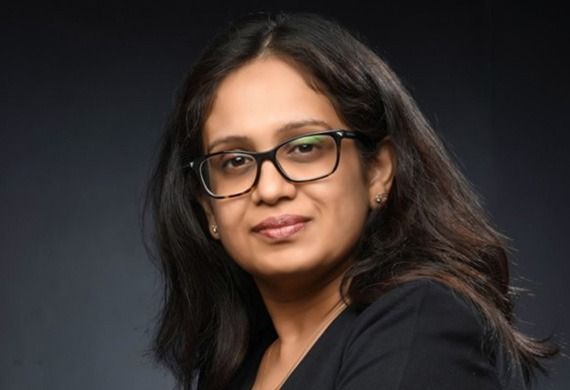

Curiosity has been a constant in Nidhi Lodha’s leadership journey. Beginning her career as a business analyst in the early 2000s, she approached every new challenge as an opportunity to learn, build capabilities, and broaden her perspective. But as her career progressed, Nidhi’s definition of growth evolved. What began as a focus on strengthening her own capabilities gradually evolved into a commitment to creating visibility, enabling others, and driving meaningful impact.
This shift from personal growth to empowering others shaped her evolution as a leader. Today, as Director, Performance and Insights – Roundel, Target, Nidhi empowers brands, accelerates retailer growth, and enables strategic business decisions. Over the years her multifaceted career has spanned business analysis, consulting, analytics leadership, client development, and digital marketing.
In an exclusive conversation with Women Entrepreneurs Review Magazine, Nidhi takes us through her two-decade professional journey, sharing key leadership lessons she learnt on the way. From curiosity shaping her early confidence to an analytical voice evolving into strategic influence, and learning to lead beyond individual expertise Nidhi touches key themes that shaped her journey.
She also reflects on building trusted client partnerships, creating consistent insight narratives, developing future-ready analytics teams, advocating for greater visibility for women, and balancing technical depth with storytelling and executive presence.
To know more about the professional journey and leadership lessons shared by Nidhi Lodha, Director, Performance and Insights - Roundel, Target, read the following interview.
Q. As you began your career as a business analyst, what conviction shaped your confidence entering complex analytical environments as woman?
A. When I began my career as a business analyst, the conviction that shaped my confidence was that curiosity could be my strongest differentiator. I wanted to learn as much as possible, not only about data and research methods, but also about the business context behind every question.
I focused on being prepared, asking thoughtful questions, and staying open to new opportunities even when they stretched me. I also learned early that relationships matter as much as technical skills. Building trust with teams, managers, and clients helped me gain confidence, find mentors, and convert opportunities into meaningful growth.
Q. Moving from analyst to consultant roles, how did you redefine your analytical voice to influence decisions beyond pure reporting outputs?
A. Moving from analyst to consultant roles required me to move beyond producing accurate reports to start enabling decisions. I redefined my deliverables by learning to interpret what the data meant for the business, not just what it showed. Clients and stakeholders needed perspective, prioritization, and confidence, so I began framing insights around implications, risks, and opportunities. Over time, I became more comfortable challenging assumptions and recommending action, even when the answer was not obvious. My experience across retail, CPG, consumer healthcare, and pharma helped me adapt my voice to different business contexts.
Q. As you progressed into managerial responsibilities, how did you shift from delivering insights to shaping how others interpret them strategically?
A. As I moved into managerial roles, my focus expanded from delivering insights myself to building the capability in others. I learned that a strong manager does not review outputs; she helps teams understand the larger business question behind the analysis.
I encouraged my teams to think beyond charts and metrics and keep asking “why” until they uncovered the real insight. I coached them on storytelling, stakeholder empathy, and commercial relevance, while creating consistency in how insights were framed and communicated across teams. My role became less about being the expert in every detail and more about building a center of excellence within the team.
Q. When you stepped into senior leadership roles, how did your understanding of leadership evolve beyond managing teams to influencing ecosystems?
A. My understanding of leadership evolved from managing teams to influencing ecosystems, and getting buy-ins for my competency. I began to see that impact depends not only on the quality of insights, but on how well different functions align around them. Leadership became about connecting analytics, business strategy, client priorities, product thinking, and execution.
I had to create clarity across teams that may have different goals but shared outcomes. It also meant advocating for the role of insights at the decision-making table. Instead of focusing only on team performance, I focused on building trust, creating shared narratives, and ensuring my teams work shaped broader business direction.
Q. How did transitioning into client development reshape your ability to translate data narratives into strategic client partnerships and trust building?
A. Transitioning into client development was also my foray into Digital marketing. It reshaped how I viewed data narratives because it placed trust at the center of insight delivery. I learned that clients do not only look for numbers; they look for partners who understand their business, anticipate their challenges, and translate data into decisions they can act on.
My experience across categories and research types helped me tell a more complete story. Client development also taught me to listen differently. The strongest partnerships are built when data is not presented as an output, but as a strategic lens that helps clients see growth opportunities more clearly.
Q. As you now own end-to-end performance narratives, how do you ensure data storytelling consistently drives measurable client decision confidence outcomes?
A. Owning end-to-end performance narratives requires consistency, context, and a clear link to measurable outcomes. I ensure data storytelling drives client decision confidence by starting with the business objective, not the dashboard. Every narrative must answer what changed, why it changed, what it means, and what action should follow.
In digital marketing, this is especially important because performance signals can be fast-moving and fragmented. I focus on connecting metrics such as audience behavior, campaign performance, engagement, and business impact into one coherent story. When clients can understand both the evidence and the recommendation, they are more confident making decisions and more willing to act.
Q. What practices have you developed to lead high-performing analytics teams while aligning cross-functional partners around one coherent insight narrative systematically?
A. I have developed practices that combine intellectual rigor with alignment and accountability. I encourage teams to begin with the decision that needs to be influenced, then work backward to the data, methodology, and narrative. This keeps the work focused and prevents analysis from becoming disconnected from business outcomes.
I also emphasize cross-functional collaboration early, because the strongest insight narratives are shaped with input from business, marketing, product, and client-facing partners. Regular coaching, peer reviews, and brainstorming to storyboard help teams sharpen both technical depth and communication. The goal is to create one coherent narrative that stakeholders can trust and act upon.
Q. Through your journey as a woman leader in analytics, how has your leadership style evolved in advocating visibility and impact?
A. Through my journey as a woman leader, my leadership style has evolved from proving capability to creating visibility and impact for others. Early in my career, I focused on building credibility through strong technical work and reliable delivery. Over time, I realized
Leadership also requires sponsorship, advocacy, and the courage to create space for diverse voices.
I now try to lead with both empathy and decisiveness. I encourage teams, to own their expertise, speak with clarity, and connect their work to business impact.
LAST WORD: Advice for women building analytical leadership careers on balance technical depth with influential executive presence:
My advice to women building analytical leadership careers is to invest equally in technical depth, storytelling, and executive presence. Strong analytical skills create credibility, but influence grows when you can translate complex analysis into a clear, easy-to-understand story. Build your foundation in data, research methods, and measurement, while also practicing stakeholder management and confident, succinct communication.
Above all, no matter how much experience you gain, stay curious. Seek mentors, sponsors, and varied experiences across industries and functions, because they expand your judgment. Most importantly, stay close to the business problem. The best analytics leaders are not just data experts; they are decision enablers.
Current Issue
Most Viewed
- 1 Talented Indian Female Actors Who Also Moonlight as Successful Producers
- 2 7 Indian Female Podcasters You Must Know About
- 3 7 Powerful Independent Indian Women Journalists Who are Voices of Change
- 4 Ruchikaa Kapoor Sheikh: The Creative Mind Behind Netflix India's Popular Shows
- 5 7 Most Influential Women Educators India has had over the Years
- 6 11 Breakthrough Female Faces Ruling the Indian OTT Platforms
- 7 8 Timeless Female Indian Classical Dancers & their Legacy
- 8 Women's Health Startup HerMD Closing Doors Amid Industry Challenges
- 9 Real Meets Reel: A List of 11 Indian Movies based on Real Women
- 10 Rasha Hassan: A Visionary Leader On A Mission To Transform Dubai's Real Estate Landscape
- 11 5 Indian Women-led IPOs You Must Know About
- 12 11 of the Most Iconic 21st Century Women to become "The First Indian Woman"
- 13 India's 7 Funniest Women Stand-Up Comics You Must Follow
- 14 Aparna Purohit : Leading India's Most Popular OTT Platforms
- 15 How Leaders Can Balance Risk & Innovation in Today's Banking Landscape
- 16 Dr. K. Shilpi Reddy: Sculpting Healthier Futures For The Next Generation With Reforms In Obstetrics Care
- 17 Sylvia Dcosta: A Visionary Business Leader Pushing The Limits And Setting High Professional Standards
- 18 Top 5 All-Rounder Women Cricketers of India
- 19 How Tata AIA is Empowering Women with Insurance That Understands Their Needs


