
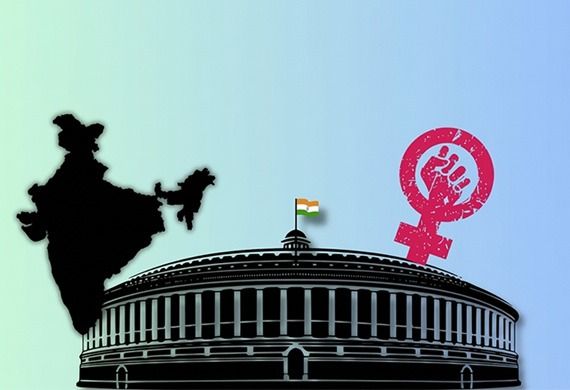

Delimitation: The Real Reason Behind the Delay
To understand the delay, the comprehension of delimitation is important. In the simplest way, delimitation refers to the act of redrawing the boundaries of electoral constituencies on the basis of population changes. It is done to make sure that one elected representative represents, more or less, an equal number of citizens, i.e. to keep the democratic system fair.
The process is regulated by such constitutional provisions as Article 82 and Article 170 of the Indian Constitution. Nevertheless, it is stated in the current framework that the delimitation will happen only after the first Census conducted post-2026.
The 2021 Census has unfortunately been postponed already. This postponement will affect delimitation, which will again defer the implementation of the Women's Reservation Act. In fact, the Act is there, the machinery for its implementation is not.
This connection has led to discussions both in political and policy spheres. The argument of several is that the association of women's representation with a delayed Census process diminishes the importance of achieving gender equality. Others feel that delimitation is very much necessary to make sure that the distribution of reserved seats is done in a just manner. Whatever the case might be, delimitation has now been considered the main cause of the delay.
Implications Of the Delay on Women’s Lives
Delay in implementing the Women’s Reservation Act has implications far beyond politics. “Symbolically, it sends a message that women’s leadership is important—but still negotiable. That affects aspiration and momentum across sectors,” says Pranjali Marathe Raje, Associate Director, FIS.
It also matters because women’s growth journey is already shaped by barriers that begin much earlier, from financial exclusion and limited access to mentorship, to deeply stereotyped roles around care and responsibility. “So, this is not only about representation in politics. It is about what that representation signals across sectors. When women are not consistently present in decision-making spaces, it reinforces the idea that they can contribute to growth, but not shape it. For real progress to happen, women need equal access to opportunity, capital, networks, and leadership pathways at every level. Without that, growth will continue to be uneven, harder won, and far less inclusive than it should be,” says Anika.
The delay is a perfect example of the heart being in the right place but the execution leaving a lot to be desire. “This delay also mirrors a familiar pattern many women experience professionally strong intent, but slow execution. Over time, that creates fatigue, especially for women at critical mid‑career leadership stages. While the continued discussion keeps women’s leadership visible, real impact comes only with implementation. Until then, the responsibility shifts to institutions and leaders to actively sponsor, promote, and normalize women in leadership—rather than waiting for policy to catch up,” adds Pranjali.
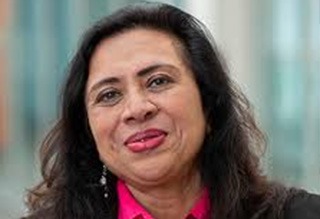 Women’s representation in the political sphere is a crucial factor facilitating real-life change and impact. A delay in the passing of the women’s Representation has a direct bearing on the pace of women’s leadership in politics. “Greater representation in Parliament and State Assemblies can strengthen the diversity of perspectives in policymaking, leading to more inclusive and socially responsive outcomes across various sectors such as health, education, and gender-related issues to name a few. It also carries wider global implications, as countries with stronger gender representation often demonstrate enhanced governance indicators and international credibility. While women continue to advance across sectors, timely political inclusion could further align policy with national priorities and global benchmarks for equitable growth. For a nation of India’s scale and ambition, this remains an important necessity for its growth trajectory,” explains Ranjana Maitra, Country Head International Relations & Strategic Partnerships, University of New Haven.
Current Issue
Most Viewed
- 1 Talented Indian Female Actors Who Also Moonlight as Successful Producers
- 2 7 Indian Female Podcasters You Must Know About
- 3 7 Powerful Independent Indian Women Journalists Who are Voices of Change
- 4 Ruchikaa Kapoor Sheikh: The Creative Mind Behind Netflix India's Popular Shows
- 5 7 Most Influential Women Educators India has had over the Years
- 6 11 Breakthrough Female Faces Ruling the Indian OTT Platforms
- 7 8 Timeless Female Indian Classical Dancers & their Legacy
- 8 Women's Health Startup HerMD Closing Doors Amid Industry Challenges
- 9 Real Meets Reel: A List of 11 Indian Movies based on Real Women
- 10 Rasha Hassan: A Visionary Leader On A Mission To Transform Dubai's Real Estate Landscape
- 11 5 Indian Women-led IPOs You Must Know About
- 12 11 of the Most Iconic 21st Century Women to become "The First Indian Woman"
- 13 India's 7 Funniest Women Stand-Up Comics You Must Follow
- 14 Aparna Purohit : Leading India's Most Popular OTT Platforms
- 15 How Leaders Can Balance Risk & Innovation in Today's Banking Landscape
- 16 Dr. K. Shilpi Reddy: Sculpting Healthier Futures For The Next Generation With Reforms In Obstetrics Care
- 17 Sylvia Dcosta: A Visionary Business Leader Pushing The Limits And Setting High Professional Standards
- 18 Top 5 All-Rounder Women Cricketers of India
- 19 How Tata AIA is Empowering Women with Insurance That Understands Their Needs