
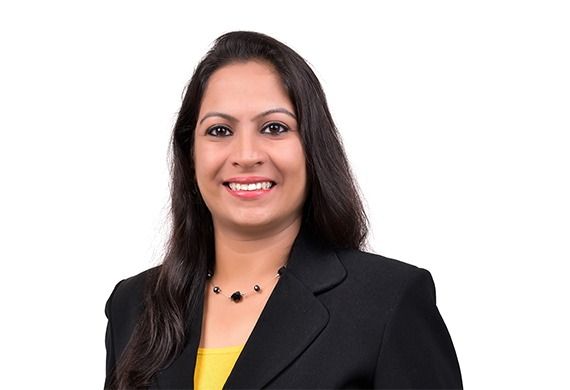

Monika Rathi is a recognized leader in India’s renewable energy sector with over 20 years of experience delivering nearly 1 GW of projects from concept to execution. She is known for building high-performance teams, driving innovation, operational excellence, prudent risk management, and shaping India’s clean energy future.
In an engaging interaction with Charulatha M, Senior Correspondent at Women Entrepreneurs Review Magazine, Monika shares her views on India’s renewable energy transition. She highlights leadership, innovation, grid integration, evolving business models, and people-centric execution shaped by her experience across wind, solar, batteries, and large-scale transformations during periods of uncertainty and rapid industry change nationwide.
To learn more about her insights, leadership philosophy, and real-world experiences, read the full article below.
As India accelerates its renewable energy transition, what do you see as upcoming developments for the sector in the next few years?
India’s renewable energy sector is entering a more mature phase, where the emphasis will shift from rapid capacity addition to grid integration and performance. With non-fossil sources now accounting for half of installed capacity and renewables exceeding 250 GW, innovation will increasingly focus on storage integration, high-efficiency modules, larger turbines, and digital asset management.
Business models are also evolving, with growing traction for round-the-clock power, firm renewable solutions, and grid-support services, as reflected in recent tenders. From a leadership perspective, success will demand agility and adaptability as projects shift from single-technology, contracted models to complex hybrid portfolios with merchant exposure—raising the bar for management capability and decision-making.
After leading across wind, solar, and battery segments, what aspects of your leadership helped position you to navigate through such rapid technology and business transitions?
Having led teams across wind, solar, and battery platforms has reinforced my belief in adaptive leadership grounded in strong fundamentals. While each technology presents distinct technical, commercial, and stakeholder challenges, disciplined execution and long-term value creation remain constant. Wind projects involve higher complexity and OEM dependence, solar demands careful partner and land selection, and batteries require rigorous evaluation of sizing, warranties, and suppliers. What has worked consistently is structured techno-commercial decision-making, combined with strong cross-functional collaboration. Clear priorities, transparent communication, and empowering site-level leaders to act decisively have been critical.
My leadership philosophy centers on asking the right questions, enabling teams to make informed, timely decisions in dynamic environments.
When you're driving transformations on a large scale, how do you successfully balance between operational realities on the ground and long-term strategic vision?
A million-dollar question—with no secret formula. I see strategy as a living framework, one that evolves through continuous feedback from the ground. Close engagement with operations teams, coupled with a willingness to recalibrate plans in response to real-world constraints, is critical to ensuring practicality.
At the same time, a clear north star—whether asset quality, safety, cost discipline, or delivery timelines—anchors day-to-day decision-making. While this balance is not always easy, staying true to our strategic intent and our vision of building a world with no compromises, while remaining flexible in execution, has been essential to navigating complexity and sustaining long-term value creation.
You've worked with teams from different functions and technologies, what is your most effective approach in making them collaborate to have shared purpose?
In my view, collaboration is central to achieving alignment and resolving conflicts within teams, especially when navigating complex renewable energy projects. True collaboration is achieved when each team member recognizes how their individual efforts contribute to broader organizational goals. In my experience, this is best accomplished by creating project teams/task forces rather than relying on hierarchical structures.
As an example, during construction project reviews, discussions are consistently anchored on the shared objective of successful commissioning of projects, with safety, quality, budget adherence, and timely delivery at the center. This common focus naturally aligns cross-functional efforts and help teams move beyond functional silos. Equally important is building trust between cross functional teams. Collaboration starts with developing a rapport between teams, so that they can focus on problems and not on individuals whenever challenges arise. When trust exists between teams and leadership, collaboration becomes part of the organization culture/DNA – it no longer needs to be mandated or discussed; it simply becomes how the organization operates.
What personal experience or pivotal moments have impacted how you lead through uncertainty or disruption caused by the industry?
The renewable energy sector is inherently shaped by policy shifts, technology evolution, and market cycles. One key lesson I’ve learned is to pay close attention to every contractual detail; seemingly unharmful clauses can become crucial, as I discovered during the COVID crisis. Like many renewable projects, I have also faced major right of way (ROW) challenges that affected project timelines, these experiences taught me to remain calm and decisive even when the information is imperfect. Uncertainty reveals leadership character more clearly than strategy ever could.
My approach focuses on controlling what I can, communicating openly with my team, and making informed/tough/new choices even when information is incomplete. These situations have deepened my belief that resilience grows from trust, preparation, and patience. Over the years,
I have learned that as a leader, you must be a source of steady light, persevering through difficulties until circumstances improve.
What advice do you have for aspiring women leaders in the renewable energy and sustainability space?
For women aspiring to lead in renewable energy or any sector, my advice is dare to DREAM. DREAM is my simple framework that has guided my own journey, as summarized in the image.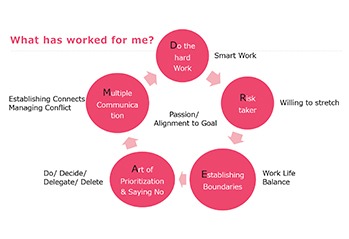
It begins with Doing the hard work, complemented by working smart and staying aligned to clear goals. It requires being willing to take Risks and stretch beyond comfort zones, even when the path forward is uncertain. Establishing boundaries is equally important, especially for women, to ensure they are not burned out and manage both critical aspects of their life. DREAM also focusses on the Art of mastering prioritisation: knowing when to do, delegate, or say no, so focus remains on what truly drives impact. Finally, Meaningful/Multiple communication and relationship-building help manage conflict, build trust, and create shared purpose.
For Women aspiring to lead in renewable energy, my advice is to spend time on sites, build deep expertise, speak up with clarity, and do not underestimate the value of your perspective in this male-dominated sector. Define success on your own terms, and stay resilient through setbacks – they are part of every meaningful journey. Always remember, you have within you the strength, the patience, and the passion to reach for the stars to change the world. The energy transition needs bold leadership. It’s time we stop wishing – and start doing !!
Current Issue

Most Viewed
- 1 Talented Indian Female Actors Who Also Moonlight as Successful Producers
- 2 7 Indian Female Podcasters You Must Know About
- 3 7 Powerful Independent Indian Women Journalists Who are Voices of Change
- 4 Ruchikaa Kapoor Sheikh: The Creative Mind Behind Netflix India's Popular Shows
- 5 7 Most Influential Women Educators India has had over the Years
- 6 11 Breakthrough Female Faces Ruling the Indian OTT Platforms
- 7 8 Timeless Female Indian Classical Dancers & their Legacy
- 8 Women's Health Startup HerMD Closing Doors Amid Industry Challenges
- 9 Real Meets Reel: A List of 11 Indian Movies based on Real Women
- 10 Rasha Hassan: A Visionary Leader On A Mission To Transform Dubai's Real Estate Landscape
- 11 5 Indian Women-led IPOs You Must Know About
- 12 11 of the Most Iconic 21st Century Women to become "The First Indian Woman"
- 13 India's 7 Funniest Women Stand-Up Comics You Must Follow
- 14 Aparna Purohit : Leading India's Most Popular OTT Platforms
- 15 How Leaders Can Balance Risk & Innovation in Today's Banking Landscape
- 16 Dr. K. Shilpi Reddy: Sculpting Healthier Futures For The Next Generation With Reforms In Obstetrics Care
- 17 Sylvia Dcosta: A Visionary Business Leader Pushing The Limits And Setting High Professional Standards
- 18 Top 5 All-Rounder Women Cricketers of India
- 19 How Tata AIA is Empowering Women with Insurance That Understands Their Needs


