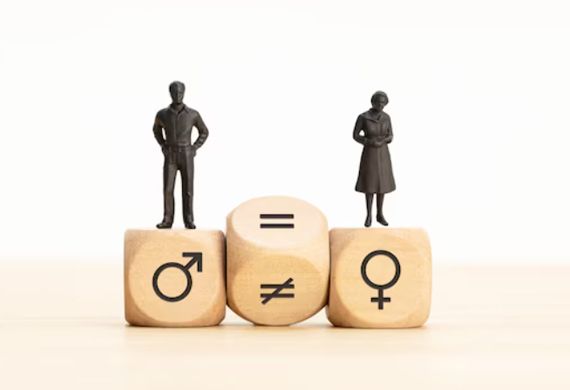

- EU leaders have issued a joint statement to coincide with Equal Pay Day
- This day is the symbolic point at which women in the EU start “working for free” because of the gender pay gap
Leaders of the European Union made a collective statement in order to acknowledge this year’s Equal Pay Day, which is a symbolic date - when women in the EU begin working the "rest of the year" for free, all due to the gender pay gap.
They pledged to realize a “Union of Equality” in which women and girls are economically empowered, are able to participate in the labor market on an equal basis, and are experiencing equality in opportunities and treatment.
They reaffirmed that there should be no reason to treat men and women differently with respect to payment for the same work.
The principle of equal pay for equal work, or equal value work, has been law in the EU since 1957. The statement indicates that it is time to be better enforced, and that there is a need for better access to justices in relation to pay discrimination.
The leaders stated that the ongoing work with Member States on the implementation of the Directive on Pay Transparency is an important step forward for equal pay.
Recent statistics indicate that women in the EU earn, on average, 12 percent lower hourly pay than men. Various factors that interplay causes this gap, one of which is the unequal distribution of care responsibilities, fearlessly describing how women typically carry the larger share of family and childcare responsibilities and often attempt to perform unpaid care work in conjunction with formal work.
The Work-Life Balance Directive emphasizes better sharing of care responsibilities. In the context of the European Care Strategy, the statement called on Member States to also invest in accessible, high-quality and affordable care services.
Labour market segregation also continues to reinforce the gap in pay, as women tend to work in low-paid sectors, part-time or low-wage jobs, or undervalued occupations at a higher rate than men apply to those conditions.
Essentially, those conditions expose women to greater poverty among other issues, as indicated by the 24.5 percent gender pension gap. The EU seeks to address these issues through future initiatives like the Anti-Poverty Strategy and the Quality Jobs Roadmap.
Current Issue
Most Viewed
- 1 Talented Indian Female Actors Who Also Moonlight as Successful Producers
- 2 7 Indian Female Podcasters You Must Know About
- 3 7 Powerful Independent Indian Women Journalists Who are Voices of Change
- 4 Ruchikaa Kapoor Sheikh: The Creative Mind Behind Netflix India's Popular Shows
- 5 7 Most Influential Women Educators India has had over the Years
- 6 11 Breakthrough Female Faces Ruling the Indian OTT Platforms
- 7 8 Timeless Female Indian Classical Dancers & their Legacy
- 8 Women's Health Startup HerMD Closing Doors Amid Industry Challenges
- 9 Real Meets Reel: A List of 11 Indian Movies based on Real Women
- 10 Rasha Hassan: A Visionary Leader On A Mission To Transform Dubai's Real Estate Landscape
- 11 5 Indian Women-led IPOs You Must Know About
- 12 11 of the Most Iconic 21st Century Women to become "The First Indian Woman"
- 13 India's 7 Funniest Women Stand-Up Comics You Must Follow
- 14 Aparna Purohit : Leading India's Most Popular OTT Platforms
- 15 How Leaders Can Balance Risk & Innovation in Today's Banking Landscape
- 16 Dr. K. Shilpi Reddy: Sculpting Healthier Futures For The Next Generation With Reforms In Obstetrics Care
- 17 Sylvia Dcosta: A Visionary Business Leader Pushing The Limits And Setting High Professional Standards
- 18 Top 5 All-Rounder Women Cricketers of India
- 19 How Tata AIA is Empowering Women with Insurance That Understands Their Needs


