


Creating Paths Where None Exist
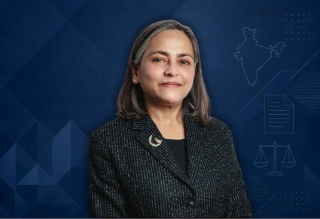 According to Shefaly Yogendra, PhD, the triumph is in charting new territory and ensuring a sustainable way forward for all.
“Women innovators, founders, and entrepreneurs are adept at identifying and navigating Uncharted Spaces. They create innovative solutions, establish new brands, and foster talent for a future they are shaping.”
She feels that leadership comprises mapping out a direction even in the absence of any framework or map.
“My own definition of Victory through time has been -- and remains in these uncharted spaces -- to lead in charting a sustainable and inclusive path, where no maps exist,” she explains.
The view of Ravana given by Yogendra is different from the problems pointed out by the other leaders. Yogendra highlights the problem of being arrogant irrespective of a person's knowledge and achievements.
“Ravana was a scholar, a devotee of Shiva, a maestro of the Veena, and a capable ruler. He was however brought down by his pride, his arrogance. Those are the Ravana traits to slay.”
For her, the solution is to exchange arrogance for curiosity, inventiveness, and optimism, especially when faced with new experiences.
Building Institutions and Opening Doors for Others
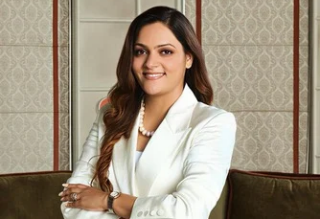 Victory for Amrita Gupta, who serves as the Director of Manglam Group and CEO of Manglam Spa & Resorts Pvt. Ltd., is defined through the processes of constant learning, belief, and venturing into the unknown.
“Working across real estate and hospitality has taught me that success is rarely one defining moment. It is shaped by the willingness to learn, the conviction to see an idea through and the courage to step into unfamiliar territory.”
She thinks that true success should not be limited to individual success.
“Today, victory means more than personal achievement. It lies in creating something that can grow beyond your immediate involvement, leaving an institution stronger than you found it and opening doors for others. The most meaningful measure of success is not simply what we accomplish ourselves, but what we enable others to achieve.”
Gupta sees the belief that women have to keep proving themselves competent enough to be entrusted with power as the Ravana they need to overcome.
“For me, Ravana is the assumption that a woman must continually prove her competence before she can be trusted with authority. Over time, repeated scrutiny and unequal expectations can become internalised, making women question opportunities they have already earned.”
She feels that while women need to become more confident, the onus of change cannot be entirely on their shoulders. The workplace needs to understand their capabilities and give them equal opportunity to lead.
“The answer is not simply to ask women to be more confident, but to create workplaces where talent is recognised and opportunity is not determined by gender.”
She adds, “Ravana’s real victory is when the world’s doubts become a woman’s own. Defeating it begins with changing both how women are perceived and what they believe about themselves.”
Conclusion
The success stories of these women leaders are proof that success can take many different forms. Success could mean setting up sustainable ventures, bringing about positive change, sharing success with others or inspiring the next generation of women leaders. The women leaders' stories further make it evident that the challenges that the Ravanas pose to women are quite different for each one of them. Some are challenged by self-doubt and social conditioning while others are challenged by bias at the workplace, mixed signals or proving themselves over and over again.
This year on Dussehra, they have this message to offer - success isn't just about getting to the top but having the ability to define success for oneself. It is about overcoming limiting beliefs and creating a work environment where talent is recognized and encouraged. In the end, success isn't about succeeding in spite of the challenges one faces all the time.
Current Issue

Most Viewed
- 1 Talented Indian Female Actors Who Also Moonlight as Successful Producers
- 2 7 Indian Female Podcasters You Must Know About
- 3 7 Powerful Independent Indian Women Journalists Who are Voices of Change
- 4 Ruchikaa Kapoor Sheikh: The Creative Mind Behind Netflix India's Popular Shows
- 5 7 Most Influential Women Educators India has had over the Years
- 6 11 Breakthrough Female Faces Ruling the Indian OTT Platforms
- 7 8 Timeless Female Indian Classical Dancers & their Legacy
- 8 Women's Health Startup HerMD Closing Doors Amid Industry Challenges
- 9 Real Meets Reel: A List of 11 Indian Movies based on Real Women
- 10 Rasha Hassan: A Visionary Leader On A Mission To Transform Dubai's Real Estate Landscape
- 11 5 Indian Women-led IPOs You Must Know About
- 12 11 of the Most Iconic 21st Century Women to become "The First Indian Woman"
- 13 India's 7 Funniest Women Stand-Up Comics You Must Follow
- 14 Aparna Purohit : Leading India's Most Popular OTT Platforms
- 15 How Leaders Can Balance Risk & Innovation in Today's Banking Landscape
- 16 Dr. K. Shilpi Reddy: Sculpting Healthier Futures For The Next Generation With Reforms In Obstetrics Care
- 17 Sylvia Dcosta: A Visionary Business Leader Pushing The Limits And Setting High Professional Standards
- 18 Top 5 All-Rounder Women Cricketers of India
- 19 How Tata AIA is Empowering Women with Insurance That Understands Their Needs


