

With Less Food & Lost Jobs, Indian Women were the Most Affected amid the Pandemic
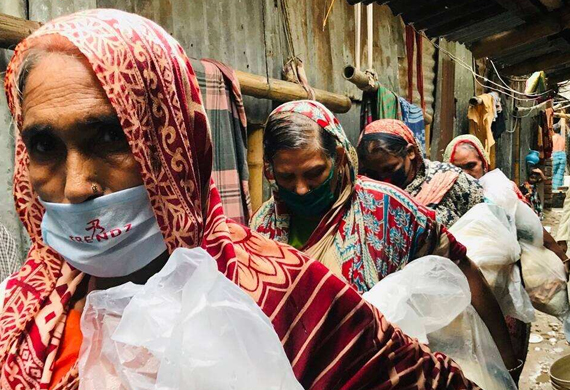
More than one in ten women in India, or nearly 3.2 crore, "reduced their food intake or ran out of food" during the Covid-induced lockdown last year, says a recent report.
The report, titled 'Impacts of Covid-19 on Women in Low-Income Households in India,' was conducted by social impact advisory group Dalberg and captures the experiences and perspectives of nearly 15,000 women and 2,300 men from March 24 to May 31, 2020, and the following months from June till October 2020 across the ten states of Bihar, Gujarat, Karnataka, Kerala, Madhya Pradesh, Maharashtra, Odisha, Telangana, Uttar Pradesh, and West Bengal.
According to the survey, about a tenth of the women surveyed reported eating less or running out of food, while 16 percent reported having limited or no access to menstrual pads and more than 33 percent reported being unable to access contraceptives due to the pandemic's disruption of public health outreach programmes.
While Kerala, Telangana, and Uttar Pradesh did well in terms of providing women with both pads and contraceptives, Bihar had the highest proportion of women (49 percent) with no or limited access, according to the report.
"The health repercussions on these women who, majority of in their reproductive age between aged 18-55, is going to be far more," SwethaTotapally, partner, Dalberg Advisors and the author of the report.
In recent months, India has experienced a devastating second wave, leaving the country dealing with the world's fastest-spreading Covid outbreak, which has overwhelmed its hospitals and crematoriums. While the study captures how the pandemic disrupted lives in India before the worst hit, it emphasizes how women's nutrition, health, and employment are the first to suffer when household expenses must be squeezed and are likely the last to recover.
What we’re hearing from grassroots organizations is that the second wave has compounded the effects that we were seeing in the first wave in multiple ways. We should be thinking about the generational impacts - how is the issue affecting women and girls today, and how are those impacts from today going to affect them for the next 15-20 years? And how do we address that accordingly?
Meanwhile, the report revealed that government programmes such as MGNREGA (1.2 billion), Jan Dhan (10 billion), and PDS (18 billion) assisted women during the crisis.
During the crisis, approximately 70percent of the women in the study relied on PDS for food and nutrition, more than any other channel. It is very needed to address the Gender barriers in the value chain.
It is critical to improve our government machinery so that it better supports women and girls during times of crisis. The lockdown also had a financial impact on women in India, who are already a minority in the paid labour force.
During April-May, the pandemic cost an estimated 4.3 crore women their jobs and income (57 per cent out of the 7.6 crore who were previously employed).As of September-October 2020, one out of every four women (6.4 crore women) had yet to meaningfully recover their paid work. An estimated 87 lakh women who were working prior to the pandemic were still unemployed as of October 2020.
Women made up only 24 percent of those working prior to the pandemic, but they accounted for 28 percent of all those who lost jobs and 43 percent of those who have yet to return to paid work.
The society will pay a high price if the pandemic forces more women out of the labour force, pushes families deeper into debt and poverty, and causes more girls to drop out of school, potentially leading to more child marriages.
The other findings of the reports are that approximately 47 percent of women, compared to 43 percent of men, reported an increase in chores and household duties. Unpaid care work increased for 41 percent of women and 37 percent of men.
During the pandemic, 27 percent of women reported getting less sleep than 18 percent of men. Muslim and migrant women, as well as single, separated, or divorced women,were among the hardest hit.
The report proposed “enlistment drives” in the government's flagship rural job guarantee programme, which is geared specifically toward women, in order to increase the “total person-days offered” under it. Combining menstrual pads with the government's free food distribution programme will increase access and usage, according to policy prescriptions.
"The impact of the pandemic on women in India is both devastating and unsurprising. Our study offers hope. It is clear that government entitlements have proved indispensable in helping women navigate the crisis so far, our findings demonstrate how such help can be even more responsive to the needs of specific segments, and they show how support can be re-imagined for the longer term," Totapally said.
Current Issue
Most Viewed
- 1 Talented Indian Female Actors Who Also Moonlight as Successful Producers
- 2 7 Indian Female Podcasters You Must Know About
- 3 7 Powerful Independent Indian Women Journalists Who are Voices of Change
- 4 Ruchikaa Kapoor Sheikh: The Creative Mind Behind Netflix India's Popular Shows
- 5 7 Most Influential Women Educators India has had over the Years
- 6 11 Breakthrough Female Faces Ruling the Indian OTT Platforms
- 7 8 Timeless Female Indian Classical Dancers & their Legacy
- 8 Women's Health Startup HerMD Closing Doors Amid Industry Challenges
- 9 Real Meets Reel: A List of 11 Indian Movies based on Real Women
- 10 Rasha Hassan: A Visionary Leader On A Mission To Transform Dubai's Real Estate Landscape
- 11 5 Indian Women-led IPOs You Must Know About
- 12 11 of the Most Iconic 21st Century Women to become "The First Indian Woman"
- 13 India's 7 Funniest Women Stand-Up Comics You Must Follow
- 14 Aparna Purohit : Leading India's Most Popular OTT Platforms
- 15 How Leaders Can Balance Risk & Innovation in Today's Banking Landscape
- 16 Dr. K. Shilpi Reddy: Sculpting Healthier Futures For The Next Generation With Reforms In Obstetrics Care
- 17 Sylvia Dcosta: A Visionary Business Leader Pushing The Limits And Setting High Professional Standards
- 18 Top 5 All-Rounder Women Cricketers of India
- 19 How Tata AIA is Empowering Women with Insurance That Understands Their Needs


