
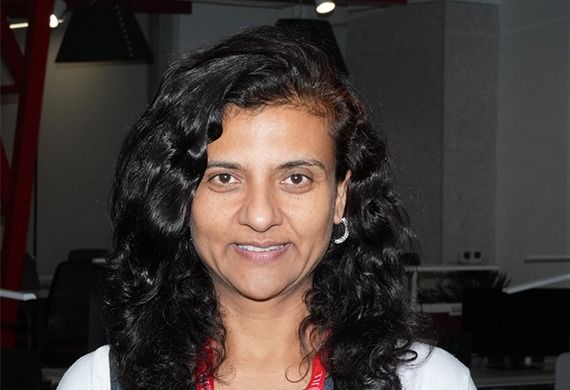

Surabhi Kunj, the Workplace Services and People Experience Leader of JLL, is a seasoned workplace strategist and people experience leader who holds an extensive experience of nearly 25 years. Coming from an architectural background, she has spent the last 15 years cantered around workplace services; working with service providers and helping Fortune 500 companies shape their corporate real estate strategies. Currently, she focuses on workplace strategy and transformation.
In conversation with Charulatha M, Senior Correspondent at Women Entrepreneurs Review Magazine, Surabhi talks about the post-pandemic shift as well as how evolving workforce expectations are redefining the meaning of a modern workplace.
She highlights the importance of cultural readiness and the crucial role of leadership in enabling inclusive transformation. With her holistic 360-degree approach to workplace strategy, Surabhi offers profound insights about purpose-driven work environments.
Read the full article to explore her perspective.
Workplaces today are no longer just about space but about purpose and connection. What, in your view, truly defines a meaningful workplace in this new era?
The workplace has evolved significantly, especially post-pandemic. Over the last 25 years, the world has become increasingly technology-driven while also facing economic volatility. Today, discussions around AI, job security, and shifting roles create added layers of complexity in workplace transformation.
Another major shift is the multigenerational workforce. India now has a very young employee base with distinct expectations, while millennials, Gen X, and even baby boomers continue to be active in the workplace. These experienced professionals are also adapting their behaviours to keep pace with rapid changes. Managing these diverse needs makes today’s workplace far more multi-dimensional.
My core focus has been understanding the cultural context of an organization and its people. After returning to India from the US three years ago, I’ve been helping companies adopt a holistic lens through what we call a 360-degree workplace assessment. In transformation projects, factors like wellness, inclusivity, and operational support systems play a crucial role in shaping culture. It’s not just about DE&I on paper but about how the workplace truly supports different groups—women, various generations, and diverse employees—through both physical spaces and day-to-day operations.
Sustainability is another critical driver. For me, it’s not about certifications like LEED or WELL; it’s about the authenticity and purpose behind calling a workplace “sustainable.”
Employees connect with values that genuinely resonate, and organizations need to build honest narratives around their impact. When efforts are transparent, it strengthens trust—especially among younger employees who expect openness and collaboration. Declaring “we are collaborative” isn’t enough; organizations must demonstrate it through action.
During all of this, technology continues to advance rapidly, influencing workplace tools and employee experiences. While companies adopt new systems at a fast pace, a human-centric approach remains essential. Ultimately, people—not tools—are at the heart of every workplace, and transformation must prioritize their needs, behaviors, and well-being.
When you start shaping a new workplace strategy, what usually reveals whether a culture is ready for real transformation?
Understanding culture is the foundation of any effective workplace strategy. Without that, you could simply design a space based on what worked elsewhere—say a 50,000-square-foot office with appealing features—but it may not align with the organization’s values, behaviors, or ways of working. Workplace strategy exists to bridge that gap: to decode how people work, what the organization stands for, and what its long-term goals are.
For example, a bank has very different cultural needs from Google or Amazon. Banking environments prioritize physical presence due to sensitive information, security, and the need for in-person mentoring and decision-making. Many technology companies, despite remote-work capabilities, also want strong in-office cultures. The pandemic forced everyone— including organizations that once believed remote work was impossible—to experiment. They discovered both advantages and disadvantages, which prompted cultural shifts across industries.
Culture is not static. It evolves with people, leadership styles, and regional contexts. A company’s culture in the US may differ from its culture in Delhi or Bengaluru. Leadership is one of the strongest drivers: leaders must embody the values they expect from their teams. A classic example is a leader insisting that all employees be on-site daily while they themselves work remotely—creating an immediate cultural conflict. Values must be lived, not merely stated.
Many workplace transformations involve identifying and addressing such cultural inconsistencies—aligning behaviors, etiquettes, and policies in a way that supports people without being overly rigid. Even the concept of “hybrid” has become too broad and now requires clearer definition for workplace planning.
In the Indian context, this becomes even more critical. India has become a hub for outsourcing and for Global Capability Centers (GCCs) because of the depth of talent available. A major part of workplace strategy today involves helping global organizations understand India’s cultural nuances and designing environments that work locally while supporting global standards.
After 15 years in this field, I see workplace strategy expanding beyond culture and design. Organizations now look closely at operational effectiveness, ROI, and future-proofing. It’s no longer just about creating a functional workplace—it’s about building a long-term, culturally aligned, human-centered ecosystem that enables business growth.
You have led several transformation journeys; can you share a moment when a small design or cultural shift sparked a big change in how people worked together?
There are many examples, and what we call a “minor” change is always contextual. If a change ends up having a large impact, then it was never really minor. Something that appears small on the surface can quickly turn into a major transformation.
For instance, I worked with a tech company relocating its headquarters from one city to another. Their leaders were constantly traveling, spending only 30–50% of their time in the office. The logical question was: Do we really need large, personalized cabins for leaders who are rarely present? The proposed solution was to convert them into flexible leadership rooms that anyone could use when needed.
While some leaders were completely fine with it—because they hardly used the space—others strongly resisted. A few felt they needed a permanent, private office due to the sensitive, proprietary nature of their work, especially those from legal teams. What seemed like a small optimization—reducing underutilized office cabins—became a much larger cultural and operational challenge.
Another example is when organizations tried to remove personal waste bins to encourage movement and healthier habits, or when they attempted to centralize printers because printing needs had dropped. These were small ergonomic or operational adjustments, but they still triggered resistance from groups who valued personalized spaces or convenient access.
So even the smallest changes can face pushback depending on who is affected and how they work. Every change sits on top of deeper organizational problems or habits. That’s why change management becomes essential—helping people understand the purpose, addressing concerns, and making the transition easier to adopt.
LAST WORD: Advice for Creating Work Environments Where People Feel Inspired
I’ve actually thought about this question quite a lot—it’s a tough one. The first value that comes to mind is ethics, especially when we talk about women in leadership. Along with that, compassion and empathy are essential qualities that should guide how women lead.
Given the challenges we see in the world today—people feeling excluded as part of minority groups, or employees feeling mentally stressed about the security of their jobs—leaders have a responsibility to create environments where people feel safe, valued, and supported.
When women lead with ethics, empathy, and compassion, it sets a powerful tone for the entire organization.
These values must show up in daily actions: in how we treat colleagues, how we support our teams, and how we navigate difficult decisions. By doing this, women in leadership can positively influence the broader ecosystem and inspire meaningful change.
Current Issue
Most Viewed
- 1 Talented Indian Female Actors Who Also Moonlight as Successful Producers
- 2 7 Indian Female Podcasters You Must Know About
- 3 7 Powerful Independent Indian Women Journalists Who are Voices of Change
- 4 Ruchikaa Kapoor Sheikh: The Creative Mind Behind Netflix India's Popular Shows
- 5 7 Most Influential Women Educators India has had over the Years
- 6 11 Breakthrough Female Faces Ruling the Indian OTT Platforms
- 7 8 Timeless Female Indian Classical Dancers & their Legacy
- 8 Women's Health Startup HerMD Closing Doors Amid Industry Challenges
- 9 Real Meets Reel: A List of 11 Indian Movies based on Real Women
- 10 Rasha Hassan: A Visionary Leader On A Mission To Transform Dubai's Real Estate Landscape
- 11 5 Indian Women-led IPOs You Must Know About
- 12 11 of the Most Iconic 21st Century Women to become "The First Indian Woman"
- 13 India's 7 Funniest Women Stand-Up Comics You Must Follow
- 14 Aparna Purohit : Leading India's Most Popular OTT Platforms
- 15 How Leaders Can Balance Risk & Innovation in Today's Banking Landscape
- 16 Dr. K. Shilpi Reddy: Sculpting Healthier Futures For The Next Generation With Reforms In Obstetrics Care
- 17 Sylvia Dcosta: A Visionary Business Leader Pushing The Limits And Setting High Professional Standards
- 18 Top 5 All-Rounder Women Cricketers of India
- 19 How Tata AIA is Empowering Women with Insurance That Understands Their Needs


