
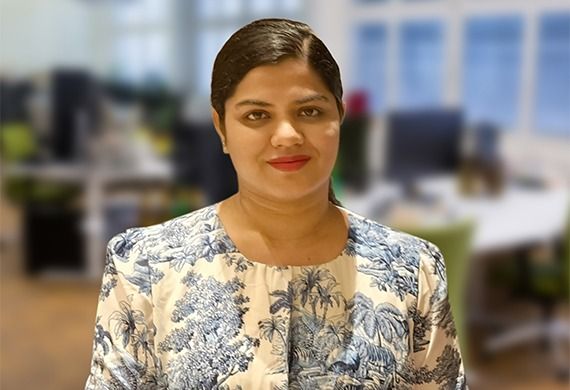

Marketing today rarely follows a linear path—and Neha Khullar’s journey reflects that evolving reality with clarity and depth in her conversation with Women Entrepreneurs Review Magazine. She shares how data, creativity, and storytelling intersect to build stronger brand narratives, while also highlighting leadership perspectives shaped by culture, intuition, and global experience.
Neha Khullar brings over 16 years of rich experience across education, sales, advertising, and brand leadership. Her career spans impactful roles with organizations like Info Edge, Dentsu, Razorfish, Royal Enfield, and Kenstar, where she has consistently driven growth by combining analytical thinking with creative strategy and consumer understanding.
Read the complete article below for deeper insights.
Q. In your experience, how do blending creativity, data, and storytelling redefine marketing leadership? Why is this approach particularly transformative for women aspiring to lead globally?
A. Today’s cluttered digital environment makes it critical to blend creativity, data and storytelling to lead marketing not just as a function but as a strategic growth engine. Data provides precision to storytelling and with the right creative angle, a brand easily sparks the right emotional cord with the customer. Today, we have access to rich and diverse customer data — from demographics like location, age, and gender to behavioural insights such as purchase timelines and decision patterns. The real value, however, lies not just in collecting this data but in interpreting it meaningfully.
By extracting sharp insights, we can craft compelling narratives that truly resonate with our audience and then activate these stories across the most relevant media channels for maximum impact.
Women are inherently emotionally intelligent; this approach is absolutely transformative for global women leaders as it leads to direct business impact to both short term and long-term growth of a brand.
Q. How have you, as a woman leader, navigated the balance between creative risk and data-driven decisions to craft strategies that truly inspire and lead?
A. As I reflect on my 16+ year professional journey, I realize that growth has always required bold decisions — whether it was onboarding the right brand ambassador or crafting a compelling brand narrative. But I’ve learned that risk doesn’t mean recklessness. Data must serve as a disciplined compass — an indicator that guides direction, sharpens decisions, and minimizes blind spots.
Thanks to digital transformation, we now have multiple, dynamic avenues to connect with consumers. From owned platforms to influencers amplifying your story, brands can now break narratives into meaningful moments aligned to different stages of the customer journey — an opportunity that simply didn’t exist earlier. Real-time A/B testing further strengthens this ecosystem, allowing teams to validate direction quickly and optimize with agility.
This environment creates psychological safety — empowering teams to experiment without taking irresponsible risks. At the same time, I have consciously protected space for intuition, because breakthrough ideas rarely emerge from spreadsheets alone.
The real balance lies in structured experimentation — where creativity is encouraged, data is respected, and accountability remains non-negotiable. That is what transforms inspiration into sustained leadership.
Q. With your global experience, how have you tailored storytelling strategies to resonate across diverse markets, and what lessons can women leaders draw about leading with cultural sensitivity?
A. While working on global brands, I’ve learned that any truly winning communication or project begins with a deep cultural understanding of the geography you’re operating in. What works in one market may completely miss the mark in another.
For instance, during Ramadan in Dubai, large-scale marketing events are generally avoided out of respect for religious practices and social norms. Every region carries its own cultural codes, sensitivities, and emotional triggers — and ignoring them can dilute even the strongest brand idea.
That's why a strong connection with local and regional teams is critical. They become your eyes and ears on the ground, guiding the narrative with real insight. While the core brand promise should remain consistent, its expression must feel locally authentic and culturally relevant.
For women leaders in particular, there's a powerful lesson here: cultural sensitivity is not just a marketing tactic — it’s a leadership capability. Leading across markets demands humility, curiosity, and the willingness to co-create with local teams rather than imposing a one-size-fits-all narrative from the center.
Q. How do you leverage emerging technologies and consumer insights together to craft marketing strategies? What frameworks can leaders use to translate innovation into measurable impact?
A. Today, almost every platform we operate on is powered by AI to decode consumer behaviour and trigger the right actions in real time. Paid media, for instance, is deeply driven by machine learning—ensuring that the right creatives are delivered to the right audience at the right moment. This precision not only improves efficiency but significantly enhances ROI.
From a strategic framework perspective, every marketing initiative delivers either long-term or short-term impact. Long-term efforts build brand equity while also contributing to ROI; short-term efforts are primarily ROI-driven. The key is to align every technology or innovation with the brand’s objective—whether it is brand-building or performance-led growth.
When technology is mapped clearly to business impact, measurement becomes sharper, decision-making becomes smarter, and the initiative earns both credibility and scale.
Five Marketing Leadership Lessons from Neha Khullar
1. The strongest marketing combines creativity, data, and storytelling.
Data uncovers customer insights, creativity turns them into compelling ideas, and storytelling builds emotional connections. Together, they position marketing as a strategic driver of business growth, not just communication.
2. Use data to guide risk—not replace creativity.
Successful marketers use data as a compass, not the decision-maker. Real-time analytics, A/B testing, and feedback loops enable experimentation while giving intuition and bold ideas room to thrive with accountability.
3. Global storytelling needs local relevance.
A strong brand promise should be adapted to local cultures and consumer behaviours. Partnering with regional teams ensures campaigns are authentic, culturally sensitive, and more effective.
4. Technology should support business goals.
AI, machine learning, and consumer insights deliver value when aligned with clear objectives. Leaders should balance initiatives that build long-term brand equity with those driving short-term performance and measure each accordingly.
5. Modern marketing leadership is as much about people as performance.
Great leaders foster psychological safety, encourage structured experimentation, and lead with empathy, curiosity, and cultural intelligence.
Q. From your journey of scaling brands globally, how can women leaders intentionally design narratives that amplify influence, foster visibility, and create meaningful legacy in their industries?
A. When your Ikigai — your deeper purpose — is clear, decisions become sharper and direction becomes effortless. Marketing yourself is not about self-promotion; it is about articulating your thinking, your vision, and the value you bring with conviction. It signals clarity of purpose and creates a pathway for others who aspire to walk a similar journey.
For women leaders especially, visibility must be intentional. Owning thought leadership spaces, aligning brand narratives with larger cultural conversations, and consistently demonstrating measurable impact builds authority over time. Equally important is documenting and communicating achievements with clarity, because influence grows when credibility is visible. Legacy is not created through isolated successes, but through sustained narrative ownership and consistent value creation over the long term.
LAST WORD: Advice for women leaders about integrating creativity, data, and storytelling to shape careers and leadership impact confidently
The customer was, is, and will always remain the king. That's why data must sit at the heart of every decision you make. Treat it as a guiding light—helping you understand where your audience is, what they care about, and how your storytelling needs to evolve. Define clear KPIs, measure consistently, and allow insights to refine both strategy and execution.
My advice to women leaders is to stop viewing creativity, data, and storytelling as separate capabilities. The future belongs to those who can seamlessly orchestrate all three. Strengthen your analytical muscle so your ideas command respect in decision-making rooms, but never dilute your creative voice—because that is often your most powerful differentiator.
Current Issue
Most Viewed
- 1 Talented Indian Female Actors Who Also Moonlight as Successful Producers
- 2 7 Indian Female Podcasters You Must Know About
- 3 7 Powerful Independent Indian Women Journalists Who are Voices of Change
- 4 Ruchikaa Kapoor Sheikh: The Creative Mind Behind Netflix India's Popular Shows
- 5 7 Most Influential Women Educators India has had over the Years
- 6 11 Breakthrough Female Faces Ruling the Indian OTT Platforms
- 7 8 Timeless Female Indian Classical Dancers & their Legacy
- 8 Women's Health Startup HerMD Closing Doors Amid Industry Challenges
- 9 Real Meets Reel: A List of 11 Indian Movies based on Real Women
- 10 Rasha Hassan: A Visionary Leader On A Mission To Transform Dubai's Real Estate Landscape
- 11 5 Indian Women-led IPOs You Must Know About
- 12 11 of the Most Iconic 21st Century Women to become "The First Indian Woman"
- 13 India's 7 Funniest Women Stand-Up Comics You Must Follow
- 14 Aparna Purohit : Leading India's Most Popular OTT Platforms
- 15 How Leaders Can Balance Risk & Innovation in Today's Banking Landscape
- 16 Dr. K. Shilpi Reddy: Sculpting Healthier Futures For The Next Generation With Reforms In Obstetrics Care
- 17 Sylvia Dcosta: A Visionary Business Leader Pushing The Limits And Setting High Professional Standards
- 18 Top 5 All-Rounder Women Cricketers of India
- 19 How Tata AIA is Empowering Women with Insurance That Understands Their Needs


