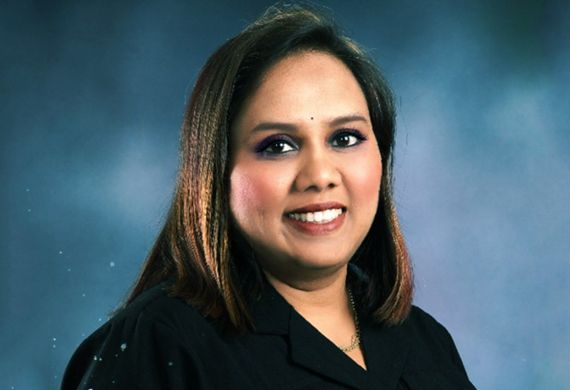

Sharmila brings over 20 years of extensive brand and marketing leadership across diverse sectors, including roles at Bisleri, ICICI Bank, Pidilite, Hatsun Agro, Radio Mirchi, and Future Group retail. She balances her corporate career with accolades in Painting and Handi-Crafts, and is actively involved as a swimming coach, empowering women and children with essential swimming skills.
In a recent conversation with the Women Entrepreneurs Review magazine, Sharmila discusses the evolution of marketing strategies across retail, FMCG, banking, media, and building materials industries. She talks about balancing long-term brand benefits with immediate revenue focus, foreseeing future integration for enhanced ROI amidst technological advancements and evolving consumer behavior.
How do marketing approaches & strategies evolve based on different industries such as retail, FMCG, banking, media and building materials?
Marketing strategies differ across industries due to unique consumer behaviors and market dynamics. In retail, strategies focus on enhancing customer experiences through personalization, omnichannel approaches, and loyalty programs. Key tactics include digital marketing, in-store promotions, mobile commerce, and data-driven decision-making.
FMCG marketing emphasizes high-volume sales, competitive pricing, brand loyalty, and mass marketing. Strategies involve heavy advertising, promotions, wide distribution, and sponsorships.
The banking industry prioritizes trust and customer relationships, leveraging digital transformation. Strategies include content marketing, social media engagement, mobile banking, and customer segmentation.
Media marketing focuses on high-quality content and multi-platform presence, using subscription models, advertising revenue, influencer partnerships, and analytics.
Building materials marketing targets B2B relationships, emphasizing product quality and participation in trade shows, technical content, direct sales, and a strong digital presence.
Each industry requires tailored marketing tactics to effectively engage their target audience.
How can businesses effectively strike a balance between the long-term benefits of brand building and the immediate revenue generation focus of performance marketing in today's competitive landscape?
Balancing long-term brand building with immediate revenue generation is crucial for sustainable growth. An integrated marketing strategy involves holistic planning, ensuring synergy between brand building and performance marketing. Key strategies include campaign coordination and cross-channel consistency, aligning campaigns for consistent messaging. Balanced budget allocation entails distributing resources between brand building and performance marketing, with dynamic adjustments based on data. Clear KPIs and longitudinal tracking measure the impact of both efforts. A robust content strategy mixes brand-focused and performance-focused content, tailored to audience segments. Customer journey mapping identifies effective touchpoints, combining brand awareness with conversion tactics. A test-and-learn approach emphasizes continuous experimentation. Leveraging technology and data, such as CRM systems and AI, enhances marketing efforts. This strategic approach drives immediate results while building a strong, enduring brand.
How can marketers create a unified metric framework to build brand equity and enable sales outcome?
Creating a unified metric framework that builds brand equity while driving sales outcomes involves integrating both qualitative and quantitative measures. Start by defining clear objectives for both brand building and sales, ensuring alignment. Set brand objectives like increasing awareness, improving perception, and fostering loyalty, alongside sales objectives such as driving conversions and enhancing customer acquisition. Select relevant metrics using a balanced scorecard approach, capturing brand equity (awareness, perception, loyalty) and sales performance (conversion rates, revenue growth, ROI). Integrate data sources through CRM systems, analytics tools, and surveys for a holistic view. Establish a unified reporting framework with custom dashboards and regular updates. Link brand metrics to sales outcomes through correlation analysis and predictive modeling. Continuously optimize strategies and ensure organizational alignment through cross-functional collaboration and shared KPIs. This approach can balance long-term brand building with short-term sales performance effectively.
How does the integration of emotional elements in branding, influence consumer decision-making and financial growth according to neuroeconomics?
Using emotions in branding significantly influences consumer decision-making and drives financial growth, supported by neuroeconomics a field combining neuroscience, psychology, and economics. Emotions, mediated by brain regions like the amygdala and hippocampus, enhance memory and create strong brand associations. They also affect the ventromedial prefrontal cortex, influencing consumers to prefer brands that evoke positive emotions, sometimes overriding rational judgment. Emotional branding fosters customer loyalty and can spur impulse purchases. Financially, it increases customer lifetime value (CLV) through repeat business and reduced churn, as loyal customers spend more and advocate for the brand. Brands leveraging emotional connections- can command premium prices and maintain pricing stability over time. Practical applications include using storytelling and sensory experiences to deepen consumer engagement.
How might the integration of brand building and performance marketing evolve in the future to maximize ROI, considering advancements in technology, consumer behavior, and the emergence of new metric?
The integration of brand building and performance marketing is set to evolve with technology advancements, shifts in consumer behavior, and new metrics. Advanced data analytics and AI enable predictive analytics and machine learning, allowing tailored marketing strategies that integrate brand messaging with performance goals. Real-time campaign adaptation ensures continuous optimization of metrics. Omnichannel integration creates unified customer profiles for seamless experiences, consistent messaging, and reinforced brand identity. Emerging technologies like AR/VR offer immersive experiences, while voice and AI assistants facilitate personalized interactions. Understanding emotional triggers and leveraging social media, builds brand credibility and drive sales. New metrics and measurement tools evaluate marketing effectiveness, and sustainability and ethical branding, fosters stronger connections and loyalty. By embracing these changes, businesses can maximize ROI and balance long-term brand equity with immediate sales outcomes.
Current Issue
Most Viewed
- 1 Talented Indian Female Actors Who Also Moonlight as Successful Producers
- 2 7 Indian Female Podcasters You Must Know About
- 3 7 Powerful Independent Indian Women Journalists Who are Voices of Change
- 4 Ruchikaa Kapoor Sheikh: The Creative Mind Behind Netflix India's Popular Shows
- 5 7 Most Influential Women Educators India has had over the Years
- 6 11 Breakthrough Female Faces Ruling the Indian OTT Platforms
- 7 8 Timeless Female Indian Classical Dancers & their Legacy
- 8 Women's Health Startup HerMD Closing Doors Amid Industry Challenges
- 9 Real Meets Reel: A List of 11 Indian Movies based on Real Women
- 10 Rasha Hassan: A Visionary Leader On A Mission To Transform Dubai's Real Estate Landscape
- 11 5 Indian Women-led IPOs You Must Know About
- 12 11 of the Most Iconic 21st Century Women to become "The First Indian Woman"
- 13 India's 7 Funniest Women Stand-Up Comics You Must Follow
- 14 Aparna Purohit : Leading India's Most Popular OTT Platforms
- 15 How Leaders Can Balance Risk & Innovation in Today's Banking Landscape
- 16 Dr. K. Shilpi Reddy: Sculpting Healthier Futures For The Next Generation With Reforms In Obstetrics Care
- 17 Sylvia Dcosta: A Visionary Business Leader Pushing The Limits And Setting High Professional Standards
- 18 Top 5 All-Rounder Women Cricketers of India
- 19 How Tata AIA is Empowering Women with Insurance That Understands Their Needs


