
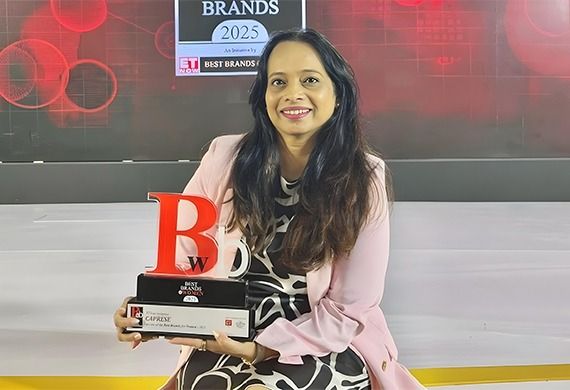

India's fashion accessories market is evolving at an unprecedented pace, shaped by digitally savvy consumers, omnichannel retail, and rapidly changing style preferences. In this dynamic landscape, brands must strike a delicate balance between creative innovation, commercial discipline, and a deep understanding of consumer aspirations to remain relevant and scale sustainably.
Barnds such as Caprese have been pace these evolutions owing to their consumer-centric approach and creative vision. In an exclusive interview with Women Entrepreneurs Review Magazine, Pushpita Gaur, Business Head, Caprese Handbags, VIP Industries, shares how leadership, intuition, and consumer-centric thinking have helped shape the brand's growth journey.
Pushpita Gaur is an experienced retail leader with a strong background in apparel and fashion, specializing in trend analysis, e-commerce, textiles, and market research. Through the conversation she highlights the importance of balancing creativity with business strategy and making bold design decisions to building agile teams and navigating the convergence of physical and digital retail. Drawing on her experience, she offers valuable insights into creating a future-ready fashion brand while staying true to its design identity.
Read the complete article for deeper insights.
Q. When you stepped into leadership at Caprese, how did you personally balance creative thinking with the commercial realities of scaling a large fashion brand?
A. Stepping into leadership at Caprese taught me that creativity must work hand in hand with commercial clarity. Design is the heart of the brand, but scale demands consistency, efficiency, and sharp execution.
My approach has been to anchor every creative idea in consumer insight and business viability. Whether it was launching innovative concepts like the Color Changing bags or introducing functional accessories such as purse hooks, the focus was always on adding value. Collaborations like Disney and Manish Malhotra helped us elevate aspiration while remaining accessible.
When design teams understand scale and business teams respect creativity, you create a culture where innovation thrives responsibly and growth becomes sustainable.
Q. Can you share a moment where your intuition as a design professional helped you take a bold retail or market decision that data alone couldn’t justify?
A. There have been moments where intuition played a critical role, especially when data reflected the past, but the consumer mindset was shifting. I remember taking a call to invest in bolder silhouettes and newer color stories for physical retail at a time when data leaned towards safer, proven styles. The numbers didn’t fully support the decision, but consumer conversations and on-ground observations told a different story. That instinct came from years of engaging with design, retail, and customer behavior.
Also, the launch of our Kashmir inspired collection “Tresna” was a never-done-before thing in Caprese but the design world was leaning towards India for Inspiration and hence the bold step to launch a craft based collection with a contemporary twist in Caprese which really paid off and this season we launched its second edition.The outcome reinforced my belief that data is a powerful guide, but intuition shaped by experience adds depth to decision-making. Especially in fashion, emotional resonance often shows up before it appears on spreadsheets.
Q. With e-commerce and physical retail growing together, how have your experiences shaped the way you lead teams to stay agile, creative, and consumer-focused at the same time?
A. With e-commerce and physical retail growing together, leadership today requires an integrated mindset. At Caprese, we lead teams to think of the brand as one seamless experience, whether the consumer encounters us online or in-store. Campaigns like the Emily in Paris Collection performed strongly across platforms because creativity was consistent, while execution was channel specific.
I encourage teams to stay agile by testing quickly, learning faster, and remaining deeply consumer focused. Store feedback, digital analytics, and social conversations all inform decisions equally. When teams feel empowered to collaborate across functions, creativity becomes sharper and response time improves. That balance has helped us stay relevant in a dynamic retail environment.
Q. How has your own leadership style evolved while managing trends, teams, and expectations in a highly competitive fashion environment dominated by constant change?
A. My leadership style has evolved from being execution-focused to becoming more people- and purpose-driven. In a fast-changing fashion environment, clarity and calm matter as much as speed. I’ve learned to lead with trust, allowing teams the space to experiment while staying aligned to the brand vision. Events like Lakmé Fashion Week and Caprese Fashion Fete were not just showcases of design, but reflections of collaborative leadership and shared ambition. Managing trends and expectations requires resilience and adaptability, but also empathy.
Today, I focus on creating an environment where teams feel confident to take ownership, learn from failure, and stay inspired despite constant change.
Q. How do you see India’s fashion accessories industry evolving today, especially the balance between fast-changing trends and building a long-lasting, meaningful brand?
A. India’s fashion accessories industry is evolving rapidly, driven by younger consumers who are trend-aware but also value authenticity. While trends change quickly, long-lasting brands are built on a strong design point of view and emotional connection.
At Caprese, we’ve seen that consumers don’t just want what’s new—they want, what feels relevant to their lifestyle. Collaborations like the Manish Malhotra Collection or globally inspired lines such as Emily in Paris allowed us to stay culturally current while reinforcing our design DNA.
The real balance lies in using trends as inspiration, not direction. When design remains intentional and consumer-led, brands can scale meaningfully without losing their identity.
Pushpita Gaur’s 5 Lessons on Building a Future-Ready Lifestyle Brand
● Let consumer insight guide creativity.
The strongest ideas are rooted in evolving consumer needs, not just design trends.
● Balance intuition with data.
Analytics reveal what worked yesterday, while experience and instinct help anticipate what customers will want next.
● Create a seamless omnichannel experience.
Consistency across digital and physical touchpoints strengthens brand recall and customer loyalty.
● Innovate without losing your identity.
Collaborations and trend-led collections should reinforce the brand's core values, not redefine them.
● Build empowered, agile teams.
Encouraging experimentation, cross-functional collaboration, and rapid learning enables brands to adapt to changing consumer expectations.
LAST WORD: Advice For Women Leaders to Grow in Fashion and Retail While Staying True to Their Vision and Values.
My advice to women leaders is to stay rooted in their vision while remaining open to evolution. Fashion and retail can be demanding, but authenticity builds long-term credibility.
At Caprese, our association with Kiara Advani significantly reshaped brand perception, making us more aspirational and contemporary, and contributing to being recognised as Best Brand for Women 2025 by Economic Times Now. That success came from staying true to who we are while embracing bold storytelling.
Women leaders should trust their instincts, invest in continuous learning, and not shy away from ambition. Confidence grows when values guide decisions, and that balance is what creates both personal and professional fulfillment.
Current Issue
Most Viewed
- 1 Talented Indian Female Actors Who Also Moonlight as Successful Producers
- 2 7 Indian Female Podcasters You Must Know About
- 3 7 Powerful Independent Indian Women Journalists Who are Voices of Change
- 4 Ruchikaa Kapoor Sheikh: The Creative Mind Behind Netflix India's Popular Shows
- 5 7 Most Influential Women Educators India has had over the Years
- 6 11 Breakthrough Female Faces Ruling the Indian OTT Platforms
- 7 8 Timeless Female Indian Classical Dancers & their Legacy
- 8 Women's Health Startup HerMD Closing Doors Amid Industry Challenges
- 9 Real Meets Reel: A List of 11 Indian Movies based on Real Women
- 10 Rasha Hassan: A Visionary Leader On A Mission To Transform Dubai's Real Estate Landscape
- 11 5 Indian Women-led IPOs You Must Know About
- 12 11 of the Most Iconic 21st Century Women to become "The First Indian Woman"
- 13 India's 7 Funniest Women Stand-Up Comics You Must Follow
- 14 Aparna Purohit : Leading India's Most Popular OTT Platforms
- 15 How Leaders Can Balance Risk & Innovation in Today's Banking Landscape
- 16 Dr. K. Shilpi Reddy: Sculpting Healthier Futures For The Next Generation With Reforms In Obstetrics Care
- 17 Sylvia Dcosta: A Visionary Business Leader Pushing The Limits And Setting High Professional Standards
- 18 Top 5 All-Rounder Women Cricketers of India
- 19 How Tata AIA is Empowering Women with Insurance That Understands Their Needs


