
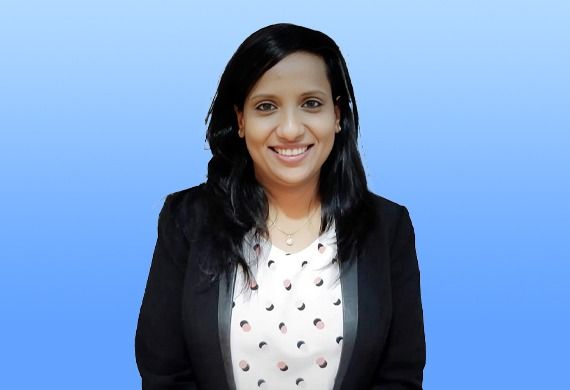

As the insurance industry accelerates its digital transformation, operational excellence has emerged as a strategic differentiator rather than a back-office function. Rising customer expectations, evolving regulatory frameworks, automation, and data-driven decision-making are redefining how global insurers build resilient, agile, and customer-centric operations.
In an exclusive conversation with Women Entrepreneurs Review Magazine, Mona Gupta, Head of GRS Capability Center Operations, Liberty Mutual talks about the evolution of operational excellence in the insurance industry. Mona is a global services and operations leader with over 25 years of experience across insurance operations, shared services, and transformation.
Through the conversation she reflects on her leadership journey spanning large-scale transformation initiatives across geographies. She shares how operational excellence has evolved from process improvement to a leadership philosophy, the role of empathy in driving high-performing teams, and why Lean thinking, governance, and human-centric leadership remain essential for building sustainable operating models in an increasingly complex insurance landscape.
For deeper insights on operational excellence and the future of insurance leadership, read the following interview.
Q. How do you see global insurance operations evolving today, and why has operational excellence become such a critical leadership lever in this transformation?
A. Over the years, insurance operations have shifted from being quiet, behind‑the‑scenes functions to becoming truly connected ecosystems. What I see today—especially at Liberty—is a real blending of technology, data, and human judgment. Customers expect speed, transparency, and empathy, and regulators expect rigor. That combination forces us to move away from old silos and work in a far more integrated way.
For me, operational excellence is what keeps everything grounded. It’s the piece that converts ambition into something tangible. It gives teams clarity, it brings discipline to decision‑making, and it removes the noise that usually slows innovation down.
Q. When you stepped into large, complex roles, what early leadership moments shaped how you personally defined operational excellence as a woman leader?
A. I still remember one of my early assignments where the operation felt completely overwhelmed—processes were fragmented, and people looked exhausted. My first instinct wasn’t to fix things myself; it was to sit with teams and understand what wasn’t working. Those conversations turned into quick, simple improvements that lifted morale almost immediately. That experience taught me that excellence is built in small, consistent steps—not big, dramatic moves.
As a woman leader, I also learned that empathy and discipline actually strengthen each other. Listening deeply doesn’t mean lowering the bar; it means you know where to raise it. Over time, operational excellence became less about frameworks and more about creating environments where people feel safe to learn, experiment, and connect their work to real customer impact. That’s when teams start believing in the journey, not just complying with it.
Q. As your responsibilities expanded across vendors and geographies, how did you balance scale, compliance, and people leadership without losing empathy or execution rigor?
A. When you start operating across different cultures and regulations, you quickly realize that “control” is not scalable—but clarity is. I focused on building structures that gave teams enough freedom to act, but within clear, shared guardrails. Things like standard metrics, transparent scorecards, and escalation pathways made sure everyone was moving in the same direction.
But empathy doesn’t come from frameworks. It comes from showing up. I made it a point to be present on site, to listen to cultural nuances, to understand what motivated each team. Those connections-built trust—and trust made the governance work.
Rigor came through rhythm: steady operating cadences, decision forums that held us accountable, and processes that didn’t rely on heroics. That balance—clarity, consistency, and human connection—is what helped us grow without losing who we are.
Q. When automation, vendor consolidation, and regulatory scrutiny converged in insurance operations, what personal leadership recalibration helped you move from managing outcomes to architecting sustainable operating models?
A. There was a point where it felt like everything was changing at once—automation demands, vendor realignments, tighter controls. It forced me to pause and rethink my approach. I realized we couldn’t keep responding to fires; we needed systems that were resilient by design.
That meant stepping back and focusing on principles instead of just outputs: clean data lineage, modular processes, and strong controls embedded upfront—not added later. I also started treating vendors as extensions of our ecosystem rather than external suppliers. When we started co‑creating solutions, the quality of outcomes changed dramatically.
On a personal level, I learned to invest more time in talent—building people who could think end‑to‑end, manage exceptions, and bring insight, not just execution. That shift—from firefighting to building foundations—gave us stability in an environment that was anything but stable.
Q. Through decades of transformation work, how did Lean and Six Sigma move from tools to a leadership philosophy that helped you scale teams, confidence, and long‑term impact?
A. Lean and Six Sigma were initially just assignments—projects, certifications, workshops. But over time, they became the way I looked at problems and opportunities. When you start thinking in terms of hypotheses, root‑cause analysis, and measurable outcomes, your leadership naturally becomes sharper and more grounded.
I invested heavily in building that capability across teams because I saw what it did—it gave people confidence. Once problem‑solving becomes a shared language, improvement stops depending on a few experts. It becomes part of the culture.
Today, for me, it’s less about the tools and more about the mindset: curiosity, structured thinking, and a bias for measurable action. That’s what sustains transformation long after a project is closed.
Mona Gupta’s Top Five Leadership Lessons in Operational Excellence
● Operational excellence is a business strategy.
It drives customer experience, compliance, and digital transformation—not just operational efficiency.
● Put people at the heart of transformation.
Listening, empowering teams, and balancing empathy with accountability create lasting change.
● Scale through clarity, not control.
Shared governance, transparent metrics, and trust enable consistent execution across geographies.
● Build resilience into the operating model.
Strong processes, quality data, and collaborative vendor partnerships prepare organizations for continuous change.
● Make continuous improvement a mindset.
Lean and Six Sigma are not just tools—they cultivate structured thinking, problem-solving, and a culture of ongoing excellence.
LAST WORD: Advice For Women on Accelerating Growth, Credibility & Long‑Term Leadership Impact in Large Global Operations
First, don’t dilute your ambition—own it with confidence. Look for roles that stretch you, that push you to understand end‑to‑end operations, financial levers, and cross‑cultural dynamics. That breadth combined with deep mastery of process, data, and risk becomes your strongest credibility.
Second, build a circle of sponsors and mentors. Sponsors open doors; mentors help you walk through them with clarity. And as you rise, bring others along—nothing strengthens leadership more than investing in the next generation.
Lastly, lead with authenticity. Be curious, be empathetic, and make decisions with conviction. Celebrate your wins, learn openly from failures, and let operational excellence be your platform to show the impact you can create. That’s how you build a career—and a legacy—that truly matters.
Operational excellence becomes a competitive advantage when leaders combine disciplined execution, people-centric leadership, and continuous improvement to build resilient, future-ready insurance operations.
Current Issue
Most Viewed
- 1 Talented Indian Female Actors Who Also Moonlight as Successful Producers
- 2 7 Indian Female Podcasters You Must Know About
- 3 7 Powerful Independent Indian Women Journalists Who are Voices of Change
- 4 Ruchikaa Kapoor Sheikh: The Creative Mind Behind Netflix India's Popular Shows
- 5 7 Most Influential Women Educators India has had over the Years
- 6 11 Breakthrough Female Faces Ruling the Indian OTT Platforms
- 7 8 Timeless Female Indian Classical Dancers & their Legacy
- 8 Women's Health Startup HerMD Closing Doors Amid Industry Challenges
- 9 Real Meets Reel: A List of 11 Indian Movies based on Real Women
- 10 Rasha Hassan: A Visionary Leader On A Mission To Transform Dubai's Real Estate Landscape
- 11 5 Indian Women-led IPOs You Must Know About
- 12 11 of the Most Iconic 21st Century Women to become "The First Indian Woman"
- 13 India's 7 Funniest Women Stand-Up Comics You Must Follow
- 14 Aparna Purohit : Leading India's Most Popular OTT Platforms
- 15 How Leaders Can Balance Risk & Innovation in Today's Banking Landscape
- 16 Dr. K. Shilpi Reddy: Sculpting Healthier Futures For The Next Generation With Reforms In Obstetrics Care
- 17 Sylvia Dcosta: A Visionary Business Leader Pushing The Limits And Setting High Professional Standards
- 18 Top 5 All-Rounder Women Cricketers of India
- 19 How Tata AIA is Empowering Women with Insurance That Understands Their Needs


